An Independence Day Double-Header: Summer Weather Is Here

It’s July 4, Independence Day. Happy Birthday, America! For all the problems that face you, you’re still the best in so many, many ways. One of those ways, which may seem trite to anyone but a storm chaser, is your spring weather, which draws chasers like a powerful lodestone not only from the all over the country, but also from the four corners of the world.

no images were found

This has been an incredible spring stormwise, but its zenith appears to have finally passed for everywhere but the northern plains. And right now, even those don’t look particularly promising. That’s okay. I think that even the most hardcore chasers have gotten their fill this year and are pleased to set aside their laptops and break out their barbecue grills.

Now is the time for Great Lakes chasers to set their sights on the kind of weather our region specializes in, which is to say, pop-up thunderstorms and

no images were found

squall lines. The former are pretty and entertaining. The latter can be particularly dramatic when viewed from the eastern shore of Lake Michigan, sweeping in across the water like immense, dark frowns on the edge of a cold front. If you enjoy lightning photography, the lakeshore is a splendid place to get dramatic and unobstructed shots. Not that I can speak with great authority, since so far my own lightning pictures haven’t been all that spectacular. But that’s the fault of the photographer, not the storms.

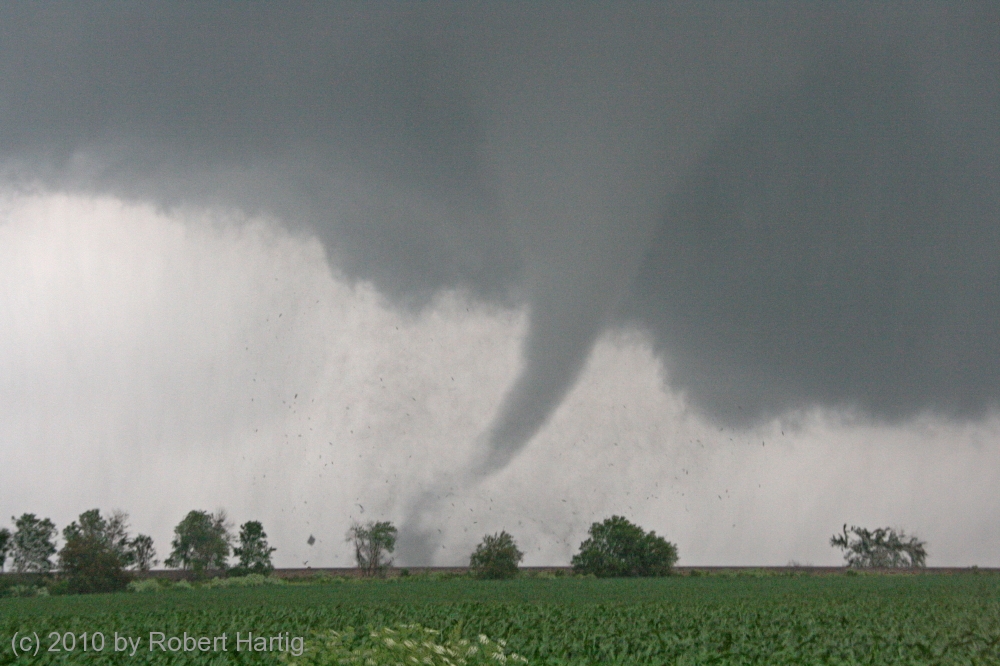
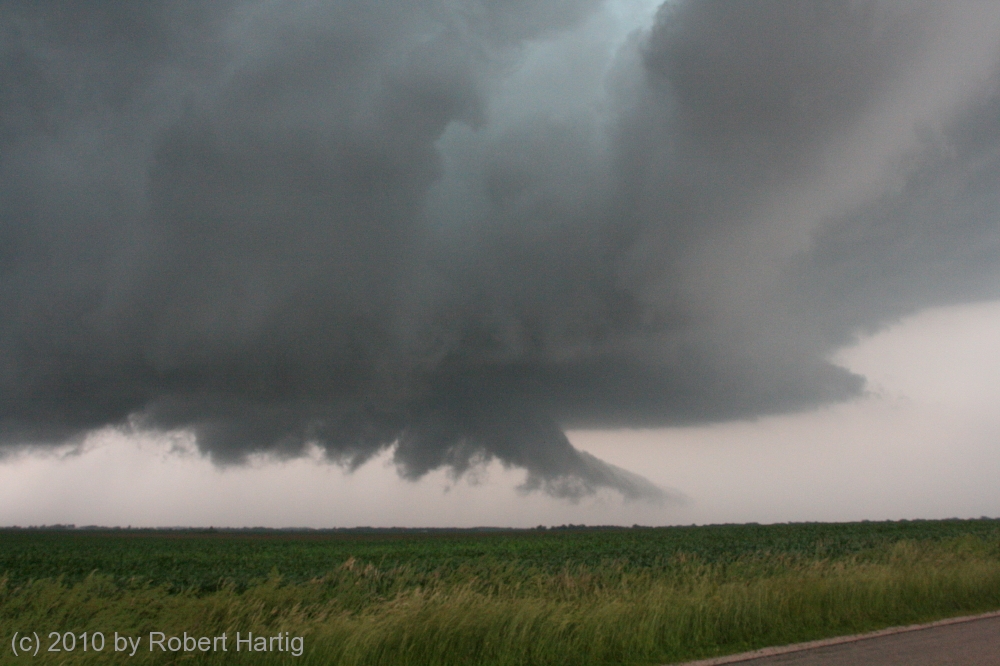
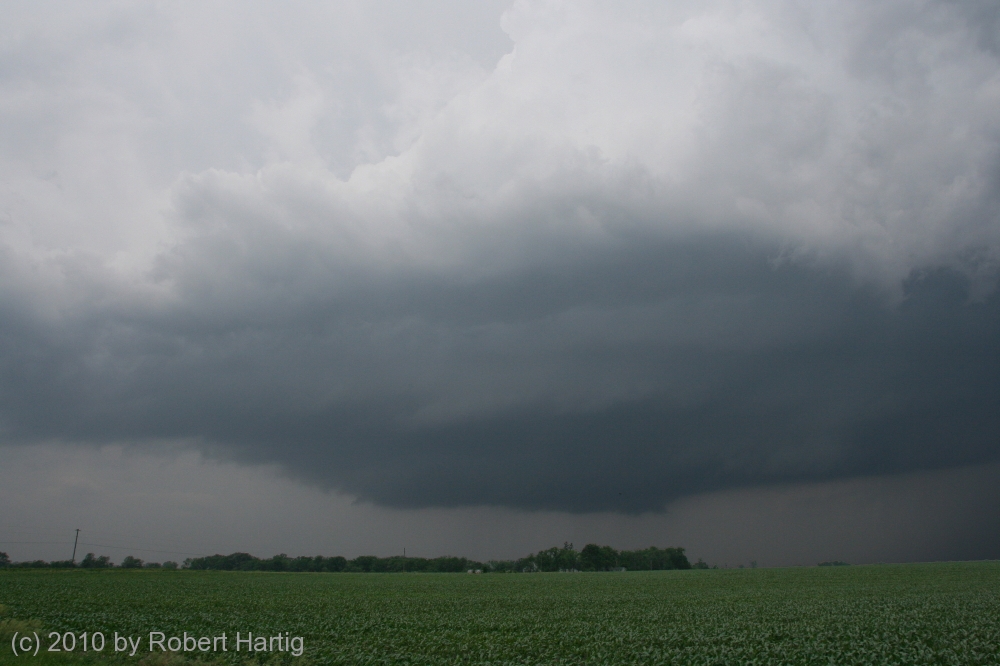
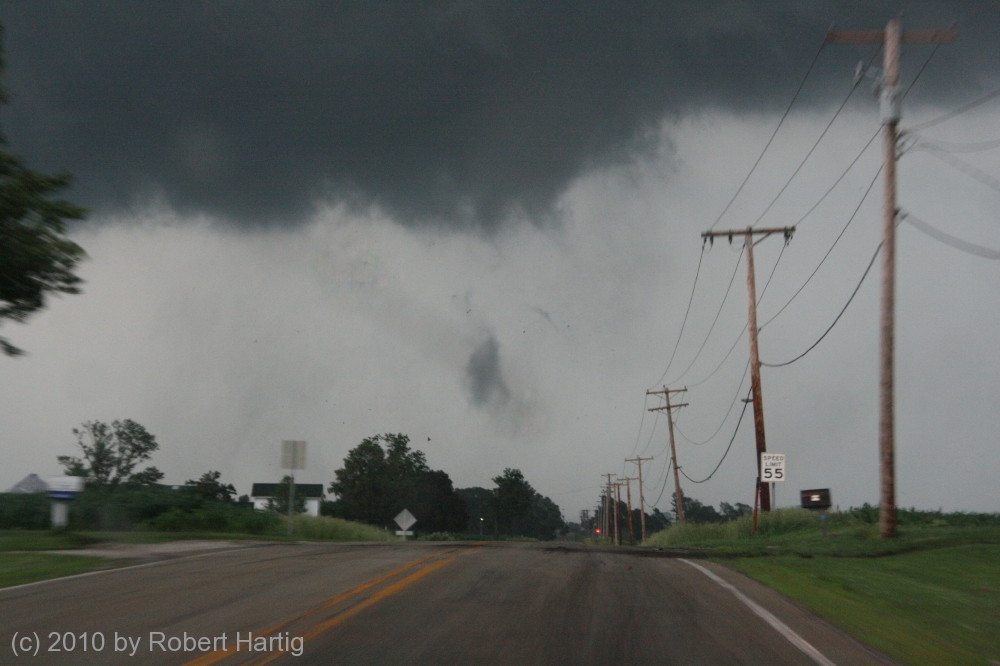
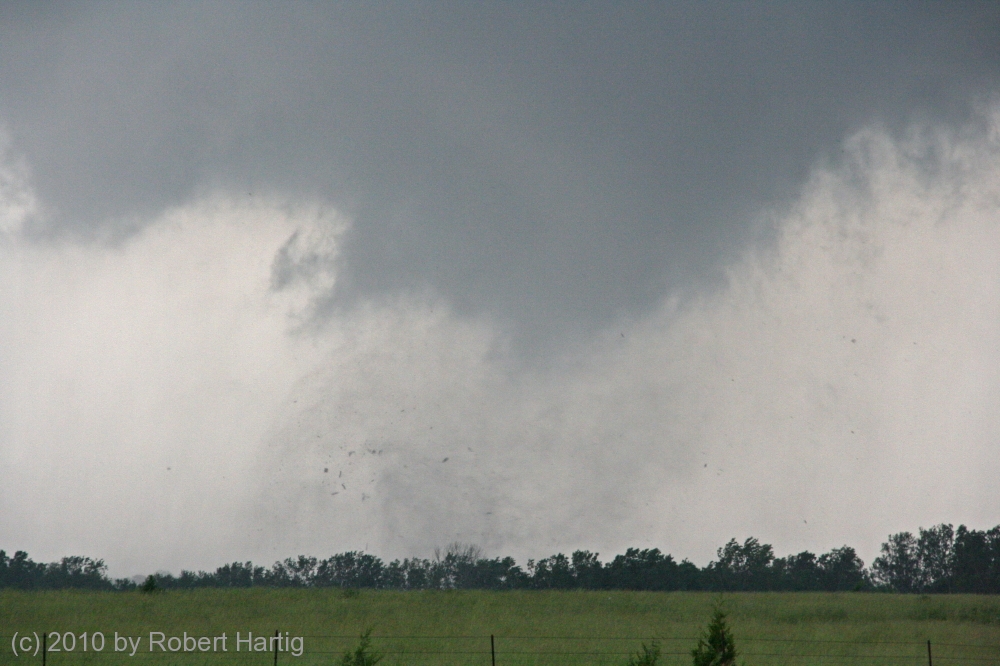
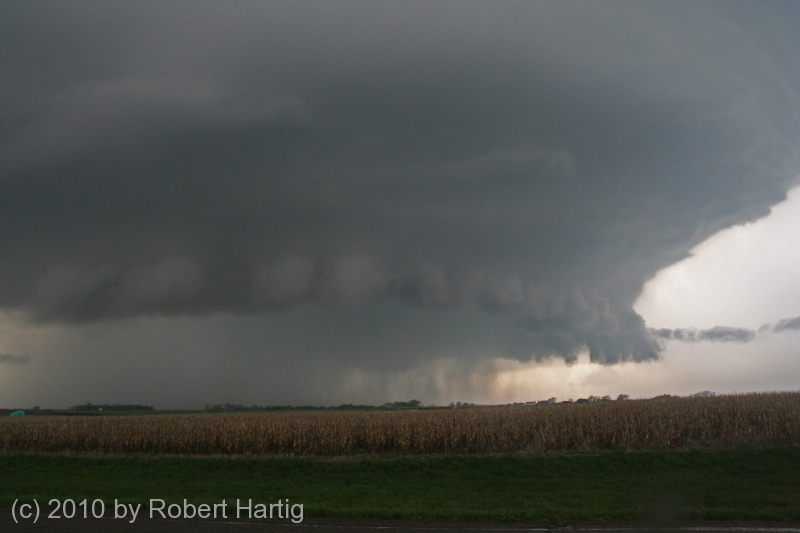
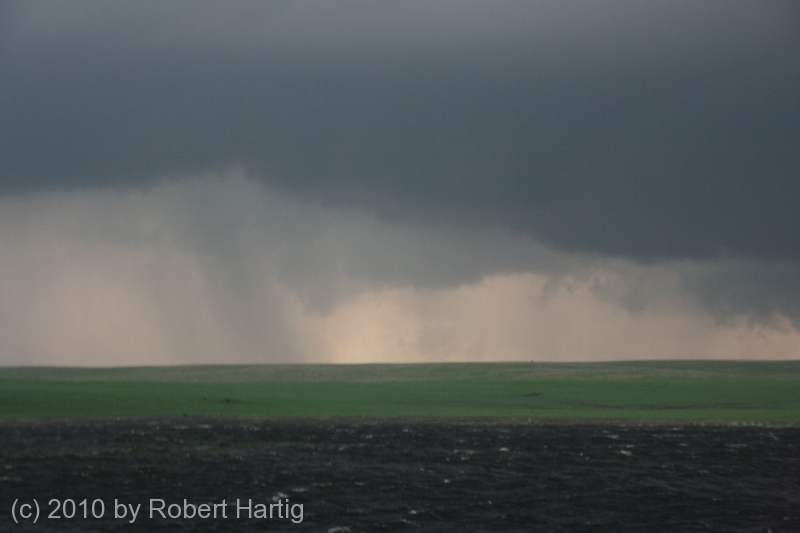
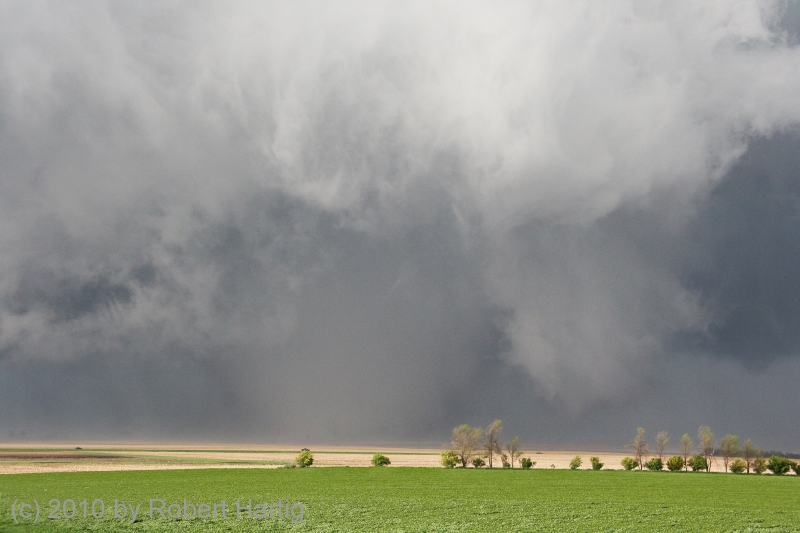
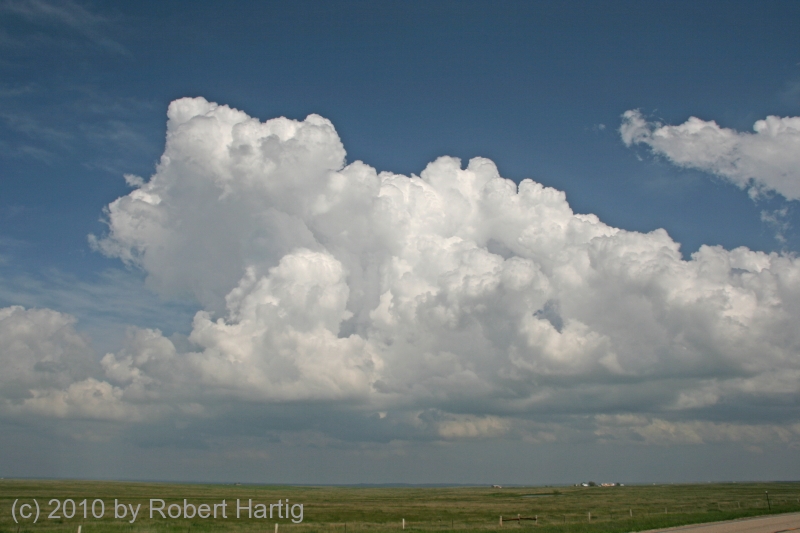
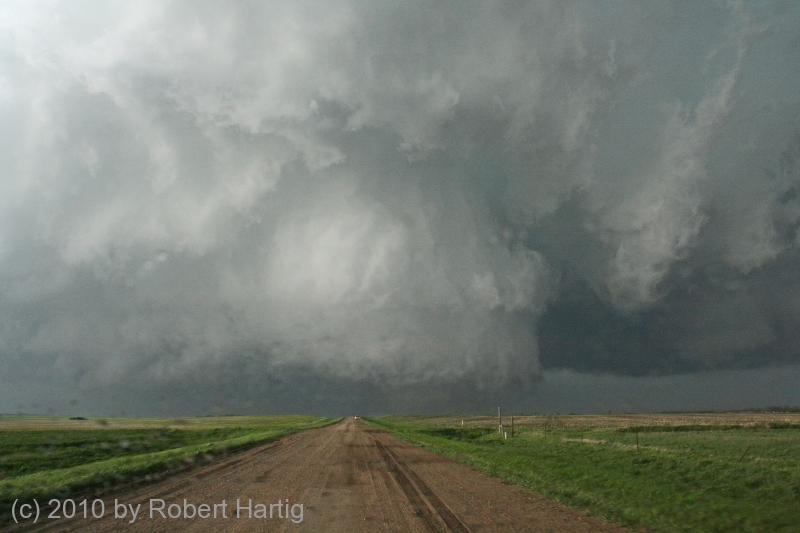
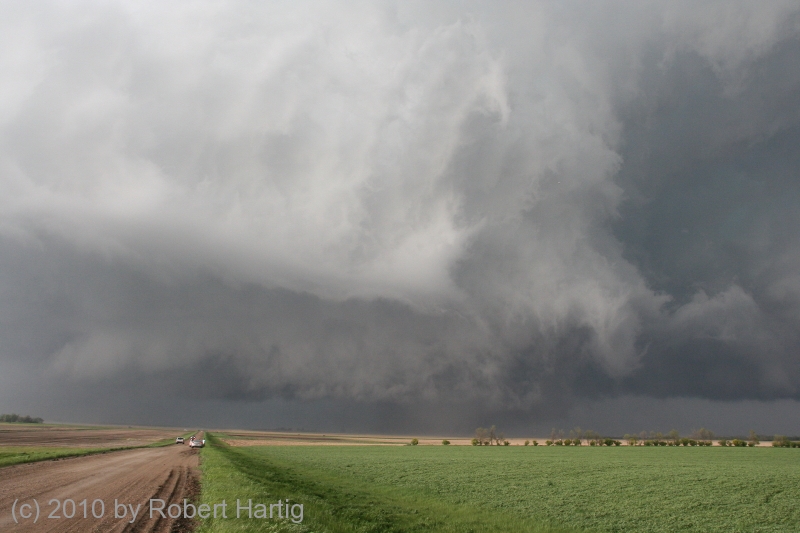
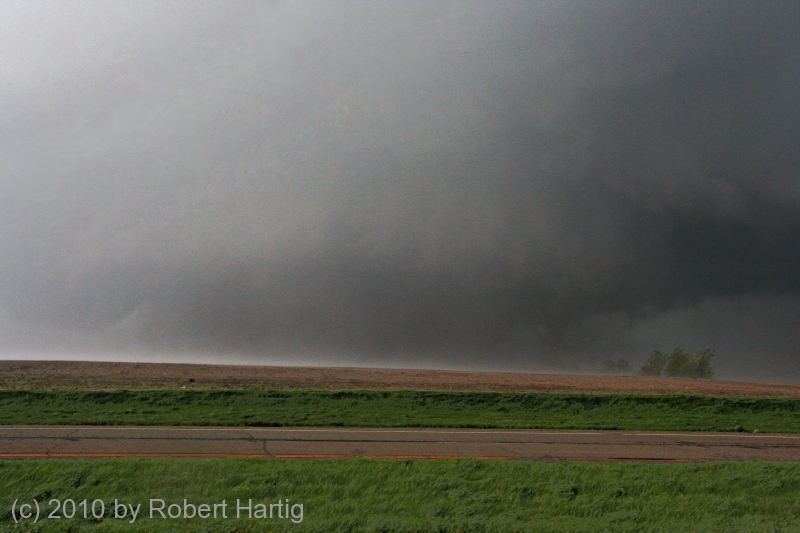
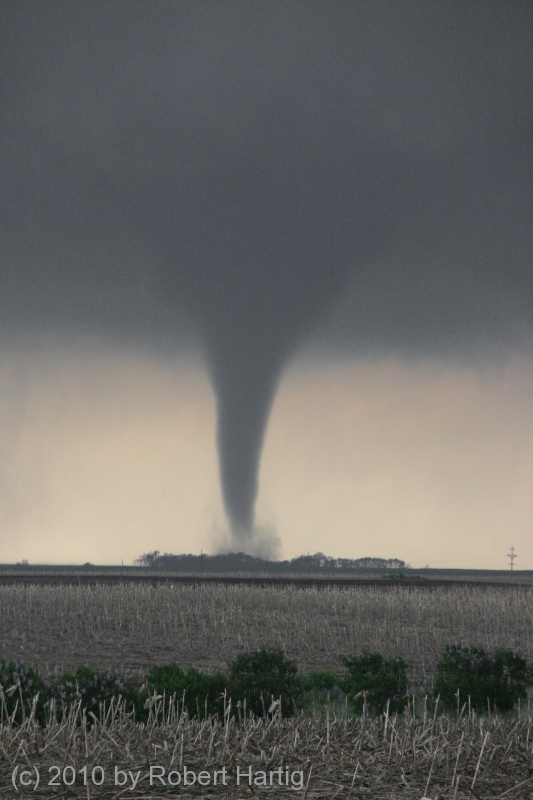
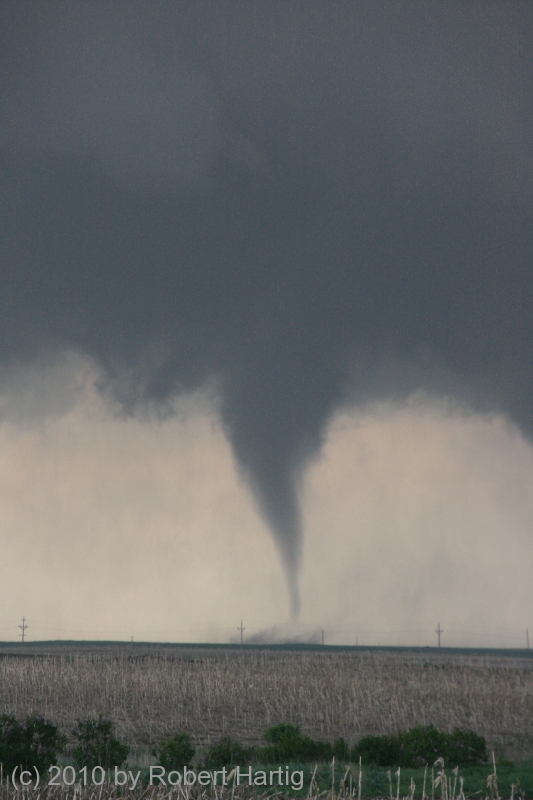
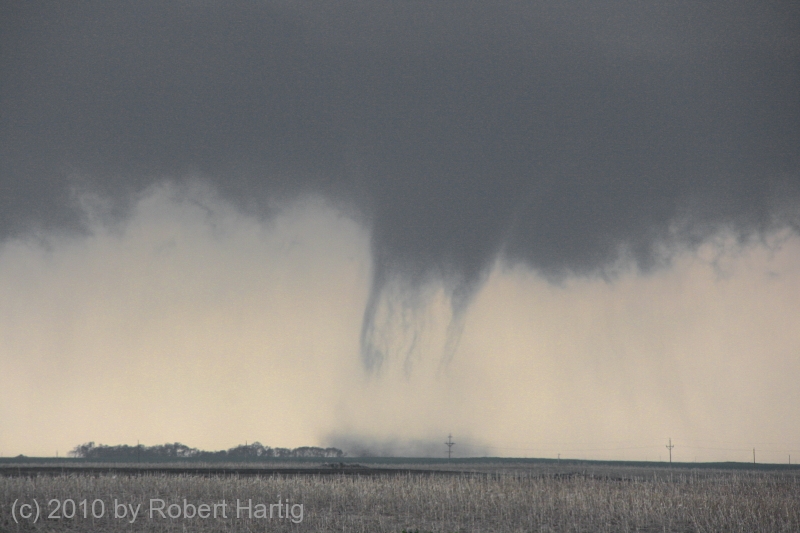
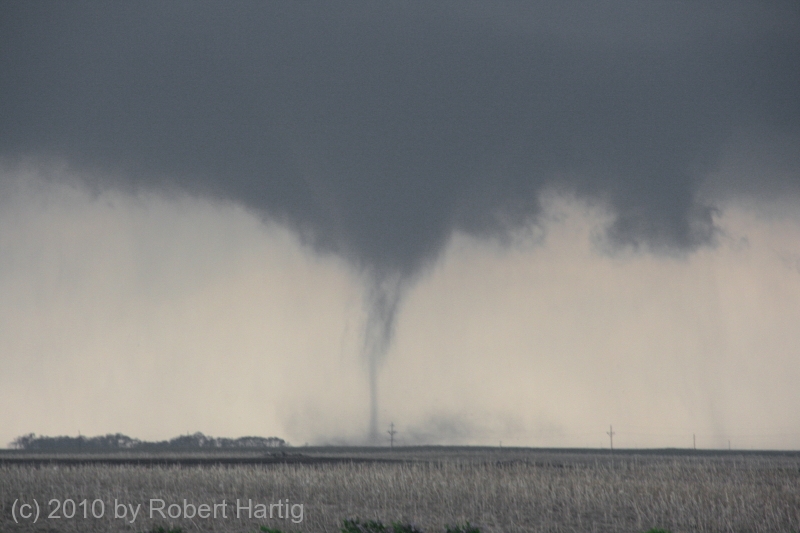
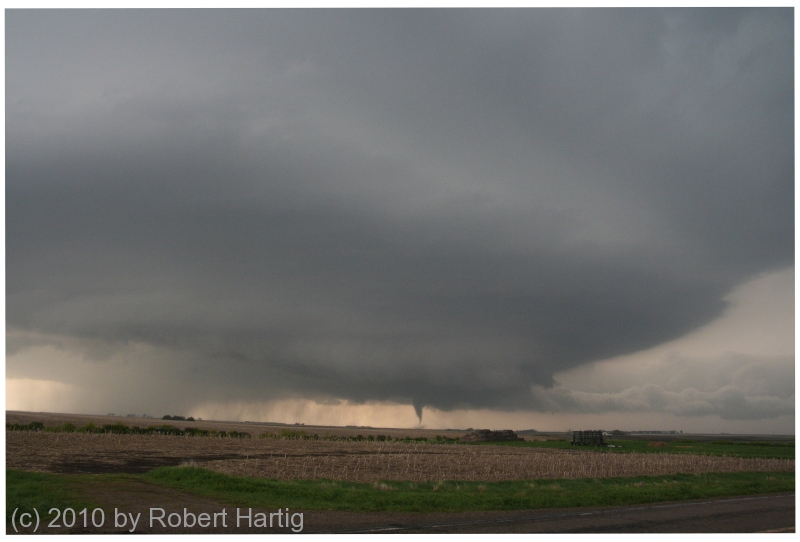
The images on this page are from previous years. So far this year I’ve been occupied mainly with supercells and tornadoes, but I’m ready to make the shift to more garden variety storms, which may not pack the same adrenaline punch but lack for nothing in beauty and drama.
July 4th is a date that cold fronts seem to write into their planners. I’ve seen a good number of fireworks displays in West Michigan get trounced by a glowering arcus cloud moving in over the festivities. But tonight looks promising for Independence Day events. Storms are on the way, but they should hold off till well after the party’s over.  That means we’ll get two shows–the traditional pyrotechnics with all the boom, pop, and glittering, multicolored flowers filling the sky; and later, an electrical extravaganza, courtesy of a weak cold front. A Fourth of July double-header: what could be finer than that?

Fiasco in the Farmer’s Field, Part 2

(Continued from Part 1) This was one steamed sheriff. He came across even-keeled enough, but he appeared to be seething just below the surface. We handed him our licenses and he took our information. Then he proceeded, in a sort of tightly controlled fury, to vent. It seemed that earlier in the evening, one of the numerous storm chasers who were tracking the tornadoes had blasted past this guy at over 90 miles an hour. Having his hands already full at the time, the sheriff couldn’t give pursuit. He was understandably infuriated at the chaser’s reckless driving.

Now we and the rest of our contingent in the field were getting the backdraft of this officer’s anger. Evidently he had concluded that storm chasers as a group thought they owned the road. I’m sure there was more behind his attitude than this alone, but the speeding chaser, whoever he was, certainly didn’t help matters any.

The sheriff had already arrested one of our group on the pretext of having written a bad check something like 20 years ago, and now he appeared to be deciding what to do with us. Ben and Adam once again did a great job of communicating with this man, who seemed to progressively cool down as we complied, listened, and affirmed his grievance. He made it quite clear, however, that our pilgrimage across the farmer’s field was going to cost us. If we didn’t fork over whatever yet-to-be-determined amount was required, then he would see to it that bench warrants were issued and we’d wind up paying a whole lot more.

On the whole, I heard plenty of anger and threatening and zero concern for our situation. In the end, though, the cop drove off without further incident and left us alone in the darkness to wait for our ride.

It occurred to me that, uncomfortable as our situation was, I had my travel bag with me and could at least exchange my wet footwear for some nice, dry socks, and my mud-splattered shorts for some clean jeans. Doing so made life more pleasant as we waited for Mike Umscheid to show up.

And the wait wasn’t so bad. It was a good opportunity to get to know Adam and Danny, whom until this day I had never met, and Ben, a fellow Michigan chaser I had first connected with just a few months prior. These are all young guys in their mid to late twenties, but they’re passionate, knowledgeable, and capable chasers with rapidly growing track records. I think it’s a safe bet that May 22 is one day we’ll all remember.

A couple hours passed and Mike finally pulled up. By this time, Ben and Danny had determined to withdraw some money from the ATM and post bail for the fellow chaser, a friend of theirs, who was sitting in the Ipswich jail. So off went those two with Mike, leaving Adam and I sitting by ourselves. A while later, up drove a police car with a special delivery: the chaser in question. It seemed that the charges had been dropped, the chaser had been released, and the sheriff’s deputy–a young guy with a refreshingly pleasant, friendly demeanor–was kind enough to drop him off with us at the Shell station.

This was another chaser whom I had never met until this day, and he had his own story to tell which I won’t get into here. He and Adam talked and I mostly listened. The man was naturally upset about being detained, but he said that the two officers who kept watch over him at the jail treated him well and enjoyed talking with him about storm chasing.

More time passed. It was getting onto dawn when Bart rolled into the parking lot–or rather, when my buddy Tom pulled in driving Bart’s vehicle. Bart was sound asleep in the passenger seat. The guy was utterly exhausted, but he revived when the three of us clambered in.

We headed back east to Aberdeen, where Bart and Mike Umscheid had secured hotel rooms for everyone. My chase partner Mike Kovalchick had a one-bed room, but believe me, at that point the prospect of sleeping on the couch was pure bliss.

I don’t know what time I finally awoke, but when I did, Mike was gone. He and the other vehicle owners were back out at the field, where the farmer–after getting a damage estimate from his insurance agent and securing agreements from all of the vehicle owners–hooked up his tractor to the vehicles and pulled them out.

Mike’s vehicle was a mess, but it was nothing that a trip to the car wash couldn’t cure. Bill and Tom took to the hoses, and I don’t know how many quarters they fed into the wash, but it was a ponderous quantity. The amount of clay caked on that Subaru was just unbelievable; there seemed to be a never-ending supply of it in the wheels, the wheel wells, and underneath the vehicle, but eventually it all came off. Then the four of us headed over to Walmart, grabbed a bunch of cleaning supplies, and went at the interior. When we were finished, Mike’s Outback looked fit for the showroom–sparkling clean, as pristine as if it were brand new, which in fact it was. This had been one heck of a break-in for it, but it had handled the rigors beautifully and come up smiling.

Mike mentioned that the farmer finally did understand why we’d driven onto his field. Once he saw the barn that the tornado had destroyed a short distance from where our road had dead-ended, he evidently got the picture of how things had been. On his part, he just wanted compensation for his damaged property and the time it took to haul out the vehicles. That was only fair. If someone drove up on my lawn in order to avoid colliding with a cement truck, I’d understand completely, but I’d still want help getting my lawn back in shape.

The next day, headed west on another chase, the four of us passed through Ipswich and I snapped a photo of the Shell station for memory’s sake. In case you were wondering why there’s a picture of a gas station at the top of this page, now you know.

If any two people in this whole affair deserve to have medals struck for them, those two are Bart Comstock and Mike Umscheid. If either of you gentlemen happen to read this post–thank you! You drove yourselves far beyond the dropping point to make sure that your fellow chasers were all safe and taken care of. I regret meeting you for the first time in such circumstances. Yet if things had been different, I’d never have gotten to see you guys rise to the occasion so magnificently. I and everyone else in that field owe you a debt of gratitude.

The whole incident is now five weeks behind me. It seems like a year. A lot of life slips by before you know it. But from that day’s fantastic chase, to the hair-raising ride across the field with tornadoes closing in, to the night-long vigil at the Ipswich Shell station, this is one story I’ll be telling for as long as I have a storytelling breath left in me.

Fiasco in the Farmer’s Field

So there we were, a whole bunch of storm chasers, stuck in the middle of a flooded field north of Roscoe, South Dakota. Why were we there? Believe me, it wasn’t for the beer.

It was Saturday evening, May 22, 2010. A few minutes earlier, caught down a dead-end road with a snake’s nest of tornadoes breathing down our neck, we had taken last-ditch, evasive action by bailing south down the fence line, and finally, cut off by standing water, out into the field until we could go no farther. Then we braced ourselves and rode out the storm.

It was the closest call I can imagine experiencing without going airborne. A funnel materialized right in our midst, barely missing one of the vehicles. Rear-flank downdraft winds in the neighborhood of 100 mph blasted us. But in the end the storm moved off, having destroyed an old barn north of where the road had dead-ended but leaving us none the worse.

Except that now we were stuck in a rain-soaked, flooded field. And a new set of problems began to emerge.

Most of the guys in the other vehicles were people whom I had never or only recently met, but whose names I was well acquainted with. Two of them, Bart Comstock and Mike Umscheid, became the heroes of the day–the only guys who managed to make it out of that morass with their vehicles and subsequently pushed themselves well beyond exhaustion to make sure that every last man-Jack of the rest of us was accounted for and found lodging for the night.

Now, I’ll be the first to say that I probably don’t have all the details straight. It was a complex scenario, and to this day I still don’t know who all was involved. To the best of my understanding, though, Bart notified local authorities that a bunch of chasers were stuck out in a field, and the authorities notified the property owner, and the property owner was majorly pissed.

Back in the field, the first news we got–in our vehicle, anyway–was that three tractors were on the way to pull us out. By this time, the sun had set and it was dark, with lightning from other storms in the area flickering all around. I didn’t relish the thought of spending the rest of the night out in the middle of nowhere, so I was glad to hear that help was on the way. But that hope soon got dashed when we learned that the farmer was mad as hell at us and had no intention of helping us out, or, for that matter, of letting us leave.

This just flat-out blew my mind. From my perspective at that point, the man had damn near gotten us killed by plowing over our escape route, and now he was angry at us for fleeing across his field in order to preserve our lives. What were we supposed to do, sit there and let the tornadoes hit us? If we hadn’t taken the action that we did, chances were good that we’d have wound up on his property anyway as a bunch of crumpled vehicles and injured or dead chasers. It amazed me that anyone would have such little regard for human lives.

Those were my thoughts at the time. In retrospect, I think the farmer simply didn’t understand what we had been up against, any more than I and my fellow chasers understood what he was up against. Seeing through another person’s eyes doesn’t come easily. We are hampered by the sheer force of our own perspective. We take limited information, process it through the filter of personal experience, and draw swift conclusions colored by self-interest without considering what other pieces of the puzzle may exist.

This particular puzzle was a large one and I’ll never know all the pieces that were involved. I just know there were a lot.

There were us chasers who, having survived the tornadoes, found that our ordeal was far from over. There was the farmer, who had just gotten word that a bunch of crazy storm chasers were stuck out in his field after driving across his newly planted wheat. There was a local sheriff with a lot on his plate after a large tornado had plowed through his area, who–partly due to an infuriating experience with a storm chaser earlier in the evening–used his authority in a way that, in my opinion, tarnished his badge.

There were also some drunken farmers who, as I understand it, tore an antenna off one of the chasers’ vehicles and tried to pick a fight with its owner. There were other locals who showed understanding, goodwill, and helpfulness toward both the farmer and the chasers. There was one from our number who got arrested on the pretext of a ridiculous charge, and there were the deputies who treated him with courtesy and interest during his brief detention at the Ipswich jail. There were lots of people, each with a story to tell and each bringing a unique point of view to the mix.

It’s never wise to jump to conclusions in such cases. It takes time for details to filter in and the big picture to emerge, or at least a better view of it than a person is likely to get at first glance.

Thanks to Bart and Mike, all of us eventually made it out of the field that night. We had to leave the vehicles behind, but there’s a point where nothing else can be done and all a body wants is to get some rest. Through a mix-up I won’t even try to explain, I wound up separated from my group and found myself trudging across the field with Ben Holcomb, Adam Lucio, and Danny Neal. Lugging as much of our belongings with us as we could, we walked along the fence line–now a slippery mud pit strewn with intermittent post holes–up to the road. A pickup truck was waiting there. We threw our stuff into the back and clambered aboard.

The driver of the truck turned out to be the land owner. Whatever his mood may have been, he was decent enough to give us a ride partway up the road. At that point, we were delayed by a bottleneck farther up, so we got a chance to talk with the farmer and with another of his neighbors who walked up to the vehicle.

Ben and Adam did a good job of engaging these guys. I was in no conversational mood myself, but I listened and heard enough to conclude that this had been a terrible spring for South Dakota farmers. A massive amount of El Nino rains had flooded large swaths of cropland, delaying or altogether scuttling planting in some sections. Considering how hard these folks work to make a living and what a tough deal this year was handing them, I began to understand something of how the land owner might have felt: a hellish winter, ruinous flooding, tornadoes blowing through and taking out the power grid, and now this–a bunch of crazy chasers stuck in his field after tearing through his wheat.

The farmer drove us partway back up CR 130, then left us to fend for ourselves. Fortunately, his neighbor in the pickup ahead of us was willing to give us a lift. He was a decent man, sympathetic toward both his fellow farmer and toward us. A storm spotter himself, he seemed to understand what we’d been up against. He told us that if it had been any other year, we’d have had no problem, but that this year, many side roads in the area were impassable due to the rain.

The man dropped Ben, Adam, Danny, and me off at a Shell station in Ipswich. Power was out in the town thanks to the tornadoes, which had taken down high-tension lines back down the road in Bowdle.

I had been in touch with one of my chase partners, Bill Oosterbaan, via cell phone, and I gave him another call to find out his status. He, his brother Tom, and Mike Kovalchick were all with Bart, who had run out of gas en route to Aberdeen. Like us, they were stranded. Fortunately, Mike Umscheid had gone to get gas for them, so it was just a matter of waiting till he returned. Then Bart would drop off my buddies at a hotel and come for us.

The time now was something like 1:00, and from the sound of it, we had a few hours to kill before Bart would show up. There was nothing to do but hunker down and wait. My legs were coated with mud from trying to push out Mike’s vehicle earlier in the evening, and my tennis shoes were little more than big, wet clumps of black clay. The other guys weren’t quite such a mess as I was, but they were wearing T-shirts and it was cold out.

It was at this point that the sheriff drove up to check us out. When he learned that we were some of the storm chasers who had gotten stuck in the field, he smiled one of those smiles that tells you the person behind it is not your friend. “I’ve been looking for you guys,” he said. “I need to see your driver’s licenses.”

(To be continued.)

Getting Set for a Backyard Chase

Last night’s bow echo certainly didn’t disappoint. I first spotted it in Wisconsin when it was a supercell putting down tornadoes near Milwaukee and thought, “That sucker is headed straight at us.” I watched as it hit Lake Michigan, maintaining rotation for a while but eventually morphing into a big bow echo. But what a bow echo! That northern book-end vortex really cranked as it moved inland and into the Kent County area. For a few scans of the radar, it looked like a small hurricane. Little wonder that it generated tornado warnings with a few reports of sightings by spotters and law enforcement.

But nasty a storm as it was, last night’s weather was probably just a prelude to what today, Wednesday, has in store. Veering surface winds taken into account, this could nevertheless be a tornado day for Michigan. The NAM shows a 70 knot 500 mb jet max blowing through the area, CAPE over 2,500, 70 degree dewpoints, and STPs to make a chaser happy.

Looks like it’ll be Kurt Hulst and me on this one. Bill is heading to Lansing to hang out with Ben Holcomb, and I think Mike Kovalchick is going to join them. That’s a good place to start. I’m not sure that I want to play quite so far east early in the game tomorrow, but I’m sure we’ll wind up well east of Lansing before the day is done. As of the 00Z run, it looks like the H5 will be nosing into West Michigan around 18Z, kissing an intensifying LLJ. Kurt and I had talked about setting up shop around I-96 and M-66. We’ll see what the 6Z run has to show us and play it from there.

At last, a Michigan chase with some real potential! And while I had guessed that storm motions would be in the neighborhood of 40 knots, the NAM decelerates them to a very manageable 25 knots. This could prove to be an interesting day, though I hope not a terribly impactful one. Southern Michigan has a lot of population centers, and I inevitably have mixed feelings whenever I see a big weather event shaping up for this area.

Interview with Paul and Elizabeth Huffman: Insights into a Historic Tornado Photograph

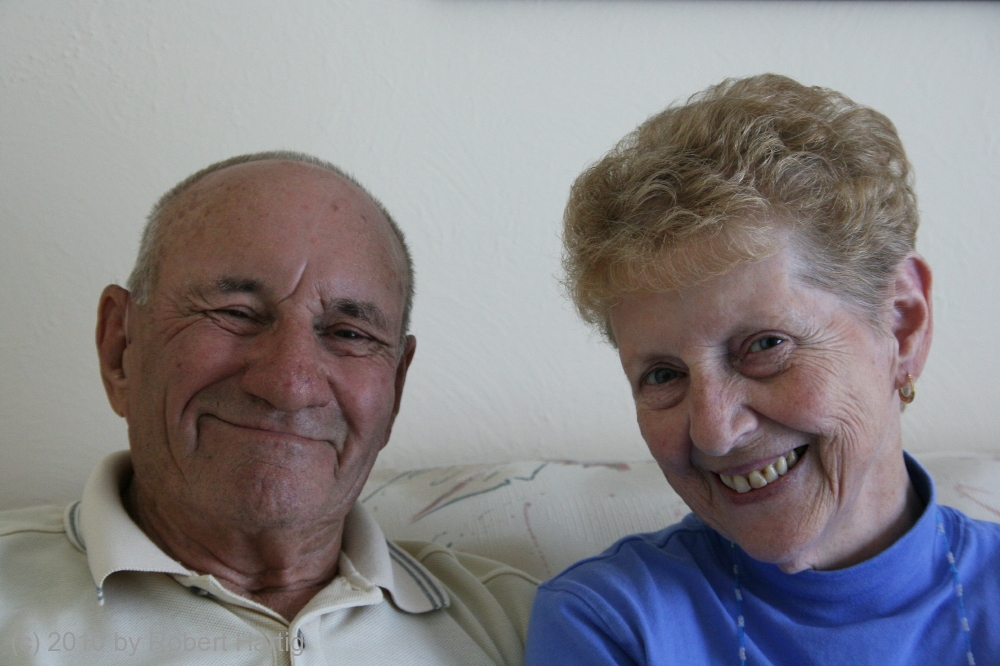
Meet Paul “Pic” Huffman and his wife, Elizabeth. A very photogenic couple, wouldn’t you say? And, I might add, a lovely one–two very nice, warm people who welcomed me into their house near Elkhart, Indiana, yesterday for a conversation I’ve been looking forward to a long, long time.

Forty-five years ago, on the evening of April 11, 1965, Paul and Elizabeth were homeward bound on US 33 when Elizabeth spotted what looked like a column of smoke off to the west. “Look at that smoke,” she told Paul. “Something’s burning.”

“That’s not smoke,” Paul replied.

Pulling the car off onto the shoulder, he grabbed his camera out of the back seat. Then, scrambling out of the vehicle and hooking his leg around the front bumper to steady himself in the wind, Paul Huffman began snapping photos as a tornado moved across the field, broadening and intensifying on its rapid journey toward the Midway Trailer Park less than half a mile up the road.

One of Paul’s photos, taken as debris from mobile homes exploded skyward, became not only the instant icon of the second worst tornado outbreak in Midwestern history, but also what is undoubtedly the most famous tornado photograph of all time. With the emotional impact peculiar to black-and-white photography, Paul’s photo depicts twin funnels straddling US 33 like a pair of immense, black legs. It is a chilling image, instantly recognizable to anyone interested in tornado research or severe weather history.

Researching for a book I’m writing on the 1965 Palm Sunday Tornadoes, I’ve come across several variations of Paul’s story by different writers. The discrepancies have been enough to leave me feeling frustrated. The Huffmans’ account strikes me as integral to a book on the outbreak, and as a matter of both responsible writing and simple respect, I’ve wanted to learn the facts and offer as accurate a writeup as possible. I was delighted last year, then, to learn that Paul would be one of the featured speakers at a Palm Sunday Outbreak commemorative event at the Bristol Museum.

Of course I attended the commemoration, where I connected with my friends Pat Bowman and Debbie Watters (my two “tornado ladies”) and also met Paul and Elizabeth for the first time. It was then that I requested an interview. Now, a year-and-a-half later, I finally got the opportunity.

When I arrived at their house, the Huffmans were standing outside surveying damage to their property from the previous day’s derecho. A small tree was down, a flagpole had gotten blown over, and a lot of tree litter had filled the yard. It seemed ironic that I was meeting Paul and Elizabeth on the wings of another bad storm.

They invited me inside, and we had a great chat that covered a lot more ground than just the tornadoes. In their early 80s, the Huffmans are an engaging twosome with plenty of stories to share. Paul, who served as a reporter for the Elkhart Truth, regaled me with several accounts from back in the day, including a flyover directly over a smokestack of the newly built Cook nuclear power plant, and a humorous mishap on the roof of a quonset hut. But of course, the main focus was his experience with the Midway tornado.

I won’t go into details here because it’s been a long day and I’m tired, and besides, I haven’t had a chance to review the interview tape. But here are a few noteworthy highlights:

* Paul never saw the twin funnels when they occurred. He was too busy snapping pictures, and he saw only the rightmost funnel in his viewfinder. Not until later, when he developed his film in his darkroom at home, did he realize what an unusual image he had captured.

* Among the larger pieces of debris raining around the Huffmans’ vehicle was a car which got flung overhead and landed on the other side of the railroad tracks that parallel US 33.

* The Huffmans never heard any of the tornado forecasts that were broadcast that day. But Paul, working outdoors earlier in that balmy afternoon sunshine, sensed that bad weather was on the way and mentioned it to Elizabeth.

* Ted Fujita interviewed the Huffmans at their house. Paul said that during his visit, Fujita seemed, oddly enough, to be more interested in Saint Elmo’s fire than in the tornado.

Paul’s overall work as a photojournalist won him a number of awards, but I’m sure that he and Elizabeth would agree that it was his one remarkable, serendipitous photograph of “The Twins” that gained him fame, if not necessarily fortune. It is strange to think how an ordinary, down-to-earth man can find himself in the right place at the right time, doing what he was designed to do–in Paul’s case, taking photographs–and wind up having an impact that shapes lives and vocations. It’s impossible to say how many people have been affected by Paul’s powerful and horrifying photo of the Midway tornado, but I know that it has helped to inspire a few notable careers in meteorology and media, not to mention many a storm chaser. It was a treat to finally get to sit down and talk with the man who took that picture, and to enjoy him and his wife not merely for their fascinating account, but also for the fine, intelligent, humorous, hospitable people that they are.

June 5 Storm Chase: Illinois Tornado Outbreak

We were close to the tornado, roughly a quarter mile south of it, paralleling it as it tore an eastward course through the Illinois fields. Dirt and shredded corn swirled around its base like an aura. As Kurt Hulst and I  pulled aside and stepped out of the car to take pictures, we could hear the roar. It wasn’t loud, just audible and big, very big, an intensely focused sound like an immense blowtorch or a rocket engine. Yet, close as Kurt and I were to the tornado, we were out of its path and beyond the range of any apparent debris, and I sensed no particular danger.

A brief staccato of blue flashes suddenly lit up the base of the funnel, accompanied by a loud bang, and chunks of debris flew skyward and centrifuged out. The tornado had hit a structure out in the field, most likely an outbuilding of some kind.

Fortunately, there was little real harm the twister could do out there in the broad Illinois prairie. Not yet, anyway. But a little way to the east lay Yates City, and two-and-a-half miles farther, the community of Elmwood…

The day had started off rather inauspiciously, with the previous evening’s aggressive SPC outlook degrading into a forecast for straight-line winds. The 12Z NAM, too, looked unpromising, and the RUC corroborated it, with mostly southwesterly surface winds veering with height to a unidirectional, westerly mid- and upper-level flow. A persistent batch of cloud cover from a mesoscale convective system threatened to minimize daytime heating and instability. In a word, the setup wasn’t one that suggested tornadoes.

But with a trough digging in from the west, rich moisture, great shear, and at least a semblance of clearing moving in from the southwest, Kurt and I decided to chance it anyway. Our friend and fellow Michigan chaser Ben Holcomb had alerted us the previous evening to the evolving weather situation, and after reading Friday night’s Day 2 Convective Outlook and scanning the NAM, which showed an impressive juxtaposition of the right ingredients, including high helicities stretching along I-80 from Iowa into Indiana, we knew that we had to go.

So off we headed for Illinois late Saturday morning. As Kurt pointed out, the forecast models don’t always have a good grasp on things. One thing we could tell from both the NAM and RUC, though, was that the best parameters now lay well south of I-80. Accordingly, we set our sights on Galesburg, and once there, we continued on, crossing the river at Burlington and heading west into Iowa.

I took a dewpoint reading of over 72 degrees on my Kestrel at New London. The air was juicy. But the clearing we had driven through in western Illinois was giving way to a an extensive mid-level cloud deck. Rather than continuing to forge farther west toward the cold front, we decided to backpedal eastward in the hope that convection would fire near the edge of the cloud shield. This idea became a moot point as the cloud cover rapidly expanded across the river into Illinois.  But better parameters still lay in our area. We were presently in an area of maximum sigtors and optimal 1 km helicity, and on the radar, a scattering of blue popcorn echoes suggested that localized convection was trying to get started. Anticipating that these features would all translate to the east, we drifted back in that direction.

We soon noticed a cloud base with a tower reaching up toward the higher cloud deck. It showed on the radar, as did another stronger one directly down the road from us. As we headed toward it, the second echo progressed from yellow to red. Not far to our northeast, we could see a rain curtain. Skirting it, we moved east of the developing storm cell, parked, and got our first good look at it.

The cell was organizing nicely and was already showing supercellular characteristics–nice separation of the  saucer-like updraft base from the precipitation core; a strong, crisp, tilted updraft tower; the first signs of banding, and a hint of an inflow stinger. Positioned on the southeast edge of the convective cluster in southeast Iowa, it was in a favorable position to

ingest moist inflow unimpeded by other storms as it drifted at 30 knots toward Illinois.

This was our storm. We tracked with it back across the river, watching it develop, watching the base lower and the first hint of a wall cloud blossom and put on muscle, watching it tighten as the RFD notch wrapped around it.

Just southeast of  Maquon, Illinois, we saw it: a cloud of dust billowing up from the ground with brief, streaming tendrils of condensation forming and dissipating above it. Tornado! It was a brief appearance of maybe a minute’s duration, but the storm was just getting started, mustering energy for the next round.

We didn’t have long to wait. A minute or two later, as we proceeded down CR 8, a slender elephant’s trunk of a funnel probed its way earthward, intensified, and began gobbling its way through the corn, closing in to within a quarter-mile of us before turning straight east.

This turned out to be a beautiful, highly photogenic tornado, all the moreso for the amazing display of lightning that accompanied it. Kurt took some great video of it which will give you a much better appreciation for how

electrified the tornadic environment was. At one point, at the 8:50 mark, you can see a bolt shoot directly from the funnel to the ground. I didn’t have the good fortune to witness the famed Mulvane, Kansas, tornado, but I’ve got to believe that this storm was similar in terms of its incessant lightning.

The funnel morphed through a variety of elegant formations, and the overall storm structure was beautiful. It was a stunning and mesmerizing sight, but with growing concern, Kurt and I realized that it was making its way toward Yates City and didn’t show any sign of weakening.

Fortunately, the funnel veered slightly to the northeast, passing just to the north of the town. At that point, it was an intense drillpress spinning furiously a mile distant. We closed the gap and tracked with it as it headed toward the larger town of Elmwood, just a couple miles down the road.

What was the funnel doing? It appeared to be shifting to the right. Oh my gosh! Elmwood was going to get hit! The tornado was beginning to rope out,

but not in enough time to spare the town. Taking a hard right, it plowed through the town center. Three-quarters of a mile ahead of us, power lines arced and transformers exploded, debris blasted into the air, and a large dust cloud billowed skyward.

It is a weird and awful feeling to witness a community get hit by a tornado. I’ve seen it happen twice before in Springfield, Illinois, and in Iowa City, but those were night time events. It’s different in broad daylight, when you can see what’s happening. The rather blurry photo shown here was taken just before the tornado crossed Main Street in downtown Elmwood. It’s not a very dramatic shot. You can see a few pieces of debris floating in the air and no more than a cloud tag to mark the presence of the tornado. But a second or two after the photo was taken, things got very nasty in that town. If there’s anything at all good to be said about what happened there, it’s that no one got killed or, as far as I’m aware, even injured.

A couple hundred yards south of Elmwood, the tornado dissipated. Gone, poof, vanished just like that. There’s a certain ugly irony about a force of nature that can wreak havoc in a community and then vanish a few seconds later without a trace. If the tornado had dissipated just thirty seconds sooner, a lot of people might have experienced just a good scare rather than a local disaster.

Kurt and I continued tracking with the storm as it made its way toward Peoria. The next tornado soon formed–a larger, bowl-shaped cloud with multiple vortices. This broadened out into a large tornado cyclone with multiple areas of rotation that produced, among other things, a brief but spectacular horizontal vortex. Sorry, I have no photos to show of it. It had gotten too dark, we were moving, and any picture I took at that point would have been blurred beyond recognition.

In Peoria, we got a bit snagged by roads and traffic, but thanks to Kurt’s great driving, we soon found ourselves heading east on I-74. As we crossed the Illinois River, I could see what appeared to be a large cone funnel to our north making its way across what was probably Upper Peoria Lake, silhouetted by frequent strobes of lightning.

Catching CR 115 at Goodfield, we headed north to Eureka, then continued east along US 24. We were still tracking with the storm, which was slowly weakening as the next tornadic supercell to its north began to dominate. It was still no pansy-weight, though, and at Chatsworth, in a final show of strength, it spun down a brief but well-defined rope tornado.

As our storm merged with the northern storm around Kankakee, Kurt and I caught I-57 and headed home. After May 22 in South Dakota, I really didn’t expect that I’d get another decent storm chase in. But this El Nino year, which got off to such a rotten start for storm chasers, now is paying dividends with some highly photogenic tornadoes.

And the season isn’t over yet. There’s no telling what the rest of June may hold. I doubt I’ll be making any more forays this year into the Plains, but if the Great Lakes region continue to light up, I’ve got my camera and laptop ready.

To see more photos from this chase, click here. And while you’re at it, check out the rest of my images of storms, tornadoes, wildflowers, people, and whatnot in my photos section.

Michigan in the Crosshairs Today?

Most of the time when I chase storms in Michigan, it’s as a wannabe sitting in my armchair gazing wistfully at my radar as I follow the action out west. Every once in a while, though, I get something right here in my own state that’s worth hopping into my car and driving after with my laptop and camera at hand and hope in my heart.

Today is shaping up to be such a day. It’s about time. June is upon us, and that means the peak tornado season has finally arrived for Michigan. Frankly, that term, “peak tornado season,” strikes me as glaring overkill when it comes to Michigan. But we usually have a few incidents every year, and today could be one of them. Perusing the last couple of NAM runs, including the 00Z, and running a few model RAOB soundings, I’m casting my eyes on the Flint-Pontiac area, where surface winds appear to remain, if not backed, at least southerly at 00Z tomorrow evening.

With dewpoints at or exceeding 65 degrees below a warm front draped across central Michigan, straight westerly mid- and upper-level winds with 45-50 knots at 500 mbs, and forecast SBCAPE upwards of 2,000 J/kg, there certainly look to be some decent ingredients in the vat. Insolation will be either the eye of newt that either makes the magic happen tomorrow or the missing ingredient that quashes instability thanks to blowoff from storms farther west.

no images were found

Attached are a couple soundings, the first for 23Z at Flint and the other for 00Z at Pontiac. Not bad-looking hodographs, particularly for Michigan. As you can see, the surface winds are southerly. Farther west, they veer to the southwest, though they by no means create a unidirectional scenario. Interestingly, while the STP and Stensrud Tornado Risk indices spotlight the area around Flint, F5 Data’s APRWX tornado index bullseyes Grand Rapids down toward Kalamazoo. Maybe that’s because a 500 mb jet max noses into this area by 00Z.

no images were found

Traditionalist that I am, I prefer backed, or at least southerly, surface winds if I can get them.  So as of the 00Z run, I’m eyeballing parts east, probably up around Flint near the warm front. The morning run may tell a different story. I just hope it’ll be a positive one.

Here’s to sunny skies, decent CAPE, and a good, productive backyard chase!

ADDENDUM: I wrote the above last night. The morning picture changes things a bit. Specifically, the satellite shows a nasty batch of CAPE-killing clouds blowing into the area from an MCS out west. That’s bad news. However, the clouds show some clearing expanding in their midst. That’s good news. Moreover, Mike Kovalchick sent me an HRRR model radar image showing a supercell popping up in mid-Michigan at 22Z. I’m sure that’s dependent on decent CAPE, which presumes enough clearing for good afternoon heating.

This latest info is good to have, but it doesn’t change my game plan, which is to wait and see what happens by the afternoon.

May 22 South Dakota Tornadoes: Part 3

There’s nothing funny about finding yourself trapped at the end of a dead-end road with multiple tornadoes bearing down on you. It’s not a scenario one anticipates when heading out on a chase, but it’s the one my chase partners Bill and Tom Oosterbaan, Mike Kovalchick, and I found ourselves in, along with seven other vehicles full of chasers, last Saturday in South Dakota.

Up until the moment when the road we were on ended abruptly at the edge of a farmer’s field, we were simply performing a routine maneuver: select an escape route and take it when the storm draws near. We and the other chasers had chosen 130th Street east of CR9 as our best eastbound option. It looked good on both DeLorme Street Atlas and Microsoft Streets & Trips: a nice through road connecting with 353rd Avenue three miles away. It was a perfectly logical choice, and things would have proceeded without incident had the maps been accurate.

What the maps didn’t show was that a farmer had recently plowed over the road, converting it to a field. We made that delightful discovery two miles down. The road had already begun to degrade, presenting us with a couple mudholes which Mike’s Subaru Outback plowed through without a problem. But the field was a show stopper. Suddenly, poof! No road. On an ordinary day, this discovery would have been an inconvenience. With tornadoes breathing down our neck, it was horrifying.

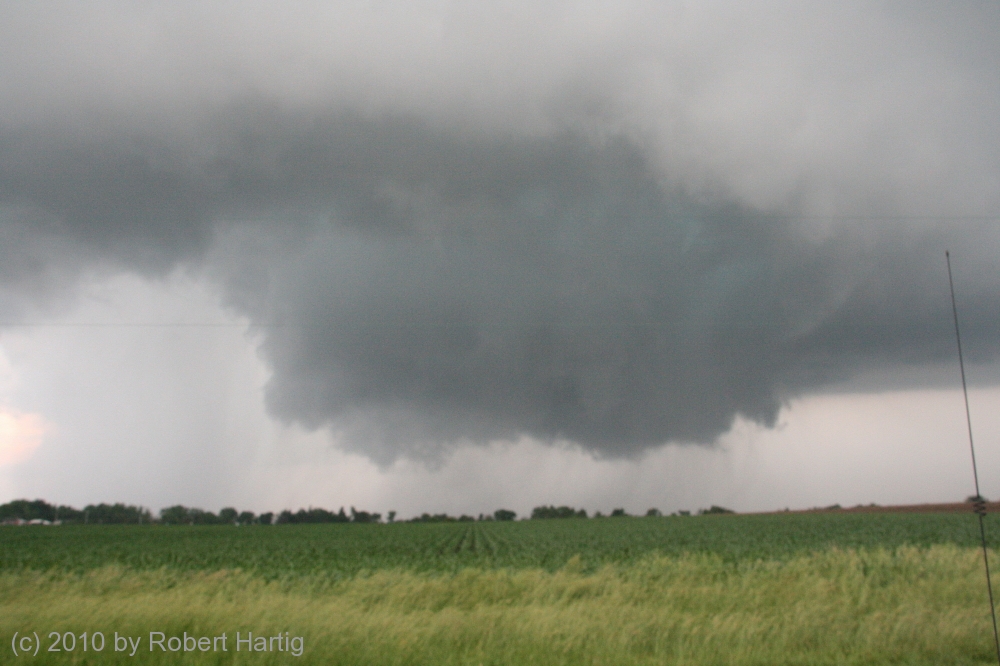
But I’m getting ahead of myself. Let me backpedal a bit to set the stage. After stopping to enjoy the eminently photogenic fourth tornado that followed the beastly Bowdle wedge (see previous post), the four of us headed north to CR2/125th St., then turned east. The storm was morphing into a high precipitation supercell (photo at top of page). We watched it drop a couple more

rain-wrapped tornadoes. Then it pulsed, catching its breath and gathering energy for the next round.

Dropping south down CR9, we pulled aside by a roadside pond to grab a few photos. The updraft area was a couple miles to our west, and while it didn’t presently seem to be tornadic, appearance can be deceptive. The cloud base was low, nearly dragging on the ground, with suspicious lowerings forming and dissipating. It looked like it could drop something at any time, and chances are it was even then producing random, momentary spinups.

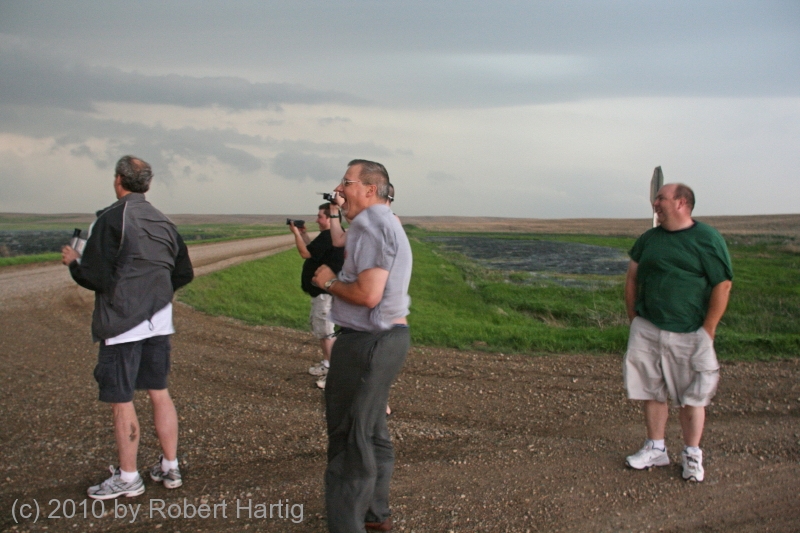
Hopping back into our vehicle, we proceeded farther south to the corner of 130th Street, where we once again parked. Here, we bumped into chasers Ben Holcomb, Adam Lucio, Danny Neal, and Scott Bennett. We had last seen these guys at a truck stop in Murdo; now here they were again, along with several other vehicles, all converging out ahead of the meso in the middle of nowhere. In the photo, left to right: Tom, Ben, Bill, and Scott.

As the storm drew closer, Tom pointed out that rotation was beginning to organize overhead. It was time to skedaddle. Back into Mike’s Outback we clambered, with Tom at the wheel, and headed east down 130th Street.

At this point, it’s important to bear in mind that every vehicle that showed up at our location had independently pre-selected 130th Street as a valid escape route. What followed did not begin as a desperate dash for safety, but as a calculated, run-of-the-mill tactical maneuver informed by commonly used mapping software. Most of the people involved were experienced chasers, some of them veterans. The reasoning behind our road choice was sound. Unfortunately, the information we based it on was not.

Thus it was was that two miles down the road, suddenly there was no road. At the front of a string of other chase vehicles, we were the first to make that

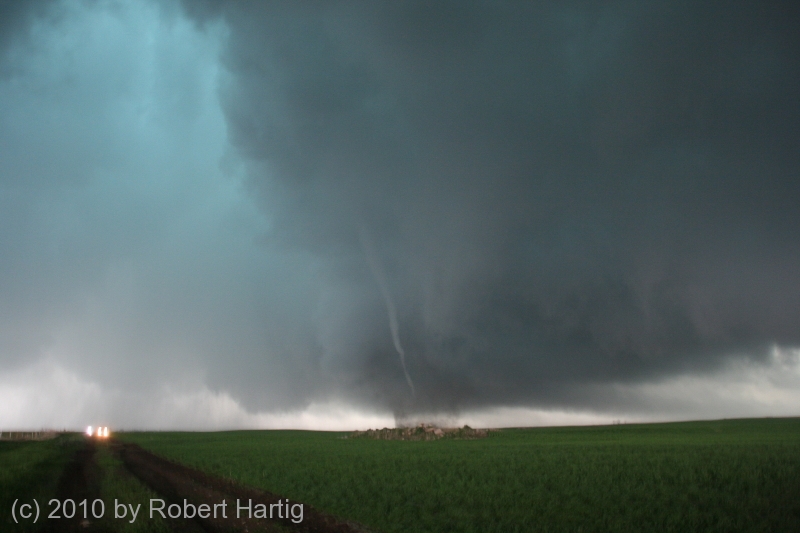
discovery. Tom turned around and started heading back, yelling to the next vehicles that the road was out. It was then that a tornado suddenly materialized in the field maybe half a mile to our west, just south of the road. It was a regular drill press, spinning furiously as it made its way toward us. It finally crossed the road and headed east-northeast a few hundred feet away, but even as it did so, another, thicker funnel snaked to the ground at roughly the same place where the first one had formed. I don’t think most people saw this second tornado; it moved toward us briefly, kicking up dirt, then dissipated, though I could still see swirling motions in the rain bands where it had been.

In the photo, besides the rope tornado, notice the lowerings farther back. These meant business. We were at the eastern edge of a broad area of rotation that was dropping not suction vortices, but multiple tornadoes of various sizes, intensities, and behaviors. In my observation, these were NOT moving in cyclonic fashion around a common center, but east with the parent storm–and straight at us.

A large cone appeared to the west, which, gathering strength, moved through the field to our north. By this time, it was clear that we were in a truly lethal situation, cut off to the east by a dead-end road and to the west by tornadoes.

Windy? Hell yes it was windy. The inflow was cranking like a sumbitch, and from the looks of things, it was only going to get worse. I looked around for a ditch, but there was absolutely nothing that could have offered protection. I noticed a stout post a few yards away and contemplated lying flat and wrapping my arms around it. Tom had the same idea. Mike was eyeballing a large pile of stones a hundred yards away, thinking it might provide some shelter, but it was too far a dash with no time left to make it in.

It was at this point that UK chaser Nathan Edwards drove off the road and began heading south into the field. He told me later that he was simply attempting to clear some room for other vehicles to move forward, hopefully edging just a little bit closer to out of harm’s way, but Nate’s move prompted the rest of us to follow. In a last-ditch gamble, the entire entourage of chase vehicles began fleeing south along the fence boundary.

The tornadoes were close. Really, they were on top of us. I watched as two funnels formed a hundred yards west of our vehicle, twisting around each other and moving toward us like the “sisters” in the movie “Twister.” The rain curtain was full of swirls and braids. And what was particularly unsettling was that, as we dashed across the farmland, the business part of the storm seemed to be expanding, reaching out after us. For a mindless force of nature, this storm was displaying as close as you can get to malevolent intent.

It dawned on me that if ever there was a time to pray, and pray hard, this was it. I’m a Christian–a bit of an iconoclast in that I don’t buy into a lot of Western church culture, but I love Jesus, I’m serious about following him, and conversing with God comes naturally to me. I don’t mean just in a pinch, but as a lifestyle. You can bet that at this point, I began praying most intensely.

A couple hundred yards in, we encountered a wet area and ponding and were forced to forge our way into the cultivated field. It was there that the storm caught up with us in earnest. End of the road for real. There was nothing left to do now but hunker down, pray, and hope.

Obviously I’m here to tell the story. All of us are, every last person. That none of us were killed or seriously injured, or for that matter sustained  so much as a scratch, is in my book God’s love and mercy, pure and simple. A video clip by Adam Lucio shows a tornado forming right in our midst, not ten yards from one of the vehicles. I never saw it, but Adam’s video is conclusive and sobering. We came so close, so very close. The rear flank downdraft alone had to have been in the order of 100 miles an hour. Yet nothing truly bad happened to any of us.

Some may call that a lucky draw; I call it answered prayer. Believe what you will, but there’s more to the story, an experience uniquely mine that I’ve shared with only a couple people so far. Look for it in my upcoming, final post concerning this incident. Whatever you make of it, I think you’ll agree that it’s uncanny.

That’s it for now, but this story continues. What followed with the farmer who owned the field, the sheriff and police, and other locals is for another episode, and it’s still not entirely resolved.

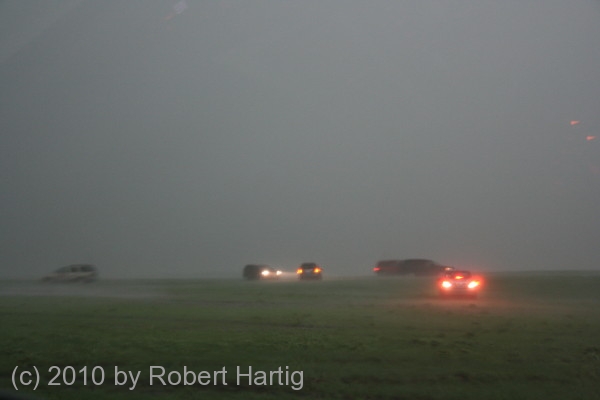
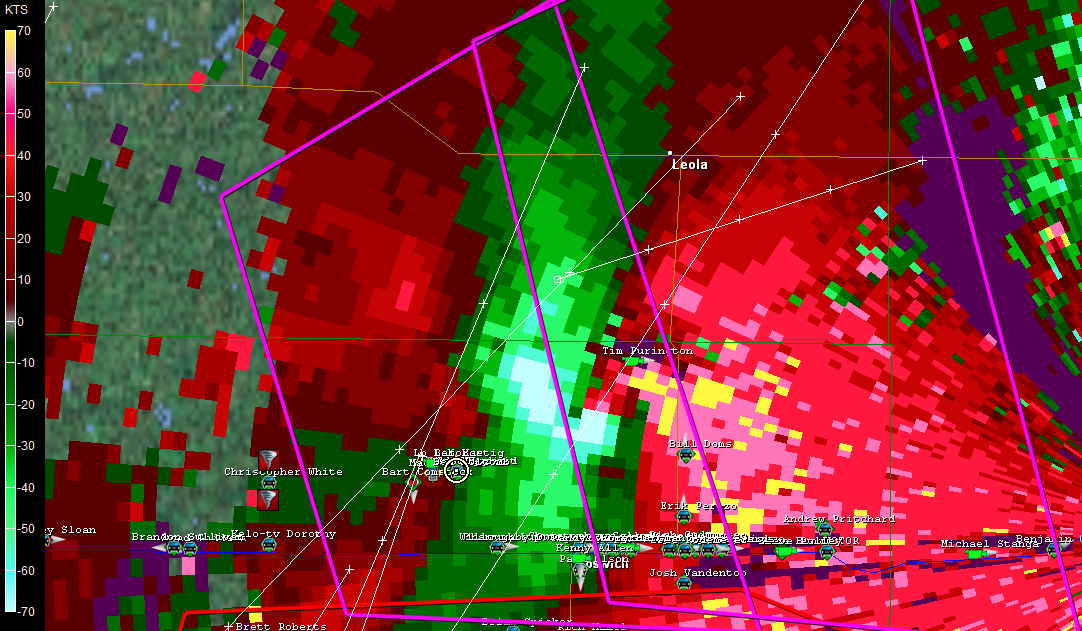
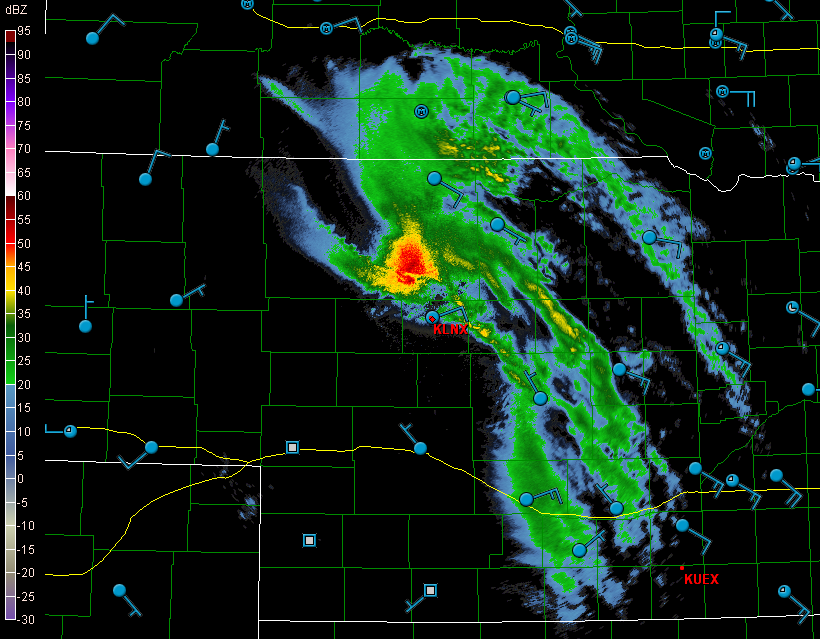
I’ll leave you with two images, both taken when the worst of the storm had just moved past us. One shows some of the vehicles getting slammed by the still-hellacious RFD. The other is a GR3 radar grab of the rotation and our location relative to it, shown by the circular GPS marker.

With that, I’ll sign off. Keep an eye out for parts four and five.

May 22, 2010, South Dakota Chase: On the Road

After catching breakfast in Chamberlain, South Dakota, we–Mike Kovalchick, Bill and Tom Oosterbaan, and I–are heading west along I-90. We have plenty of time to determine where we want to camp out this afternoon until storms start firing later today.

If you’ve kept track of the present weather system, then you know that it has had a number of serious detractors, the chief one being a nasty cap. To complicate things, the NAM and GFS were initially wildly at odds. But Thursday night the GFS began to agree with the NAM on opening up an uncapped corridor from Nebraska into South Dakota, and from there the model forecasts became progressively more promising. The SPC Day One Convective Outlook now shows a 10 percent  possibility of tornadoes extending from the Nebraska border north through the Dakotas. The hub of the activity will most likely be in South Dakota, which means that we are sitting in the catbird seat.

It feels great to finally get back out on the road and chase the Plains again. I’ve missed the big action so far this spring. This setup may not be the year’s big event, but it shows promise, and it coincides with a time when I’ve got the funds to go after it. Whether or not we see a tornado today–and tomorrow, and maybe Monday, as we follow this system’s evolution–we’ll at least see some nice storms. And, I might add, some beautiful countryside. It’s been a few years since I’ve been in South Dakota. It’s good to be back!