A Glance at Friday: Severe Weather in the Great Lakes

It now seems a sure bet that the eastern Great Lakes is due for a spate of severe weather. The SPC is presently making it out to be a linear event, as is typical of cold fronts sweeping through our region, but the wind profiles suggest the possibility of supercells and tornadoes.

If you go by the present, 12Z NAM run, central Ohio appears to be the sweet spot, with a variety of parameters converging over or near a bullseye of 2,000 j/kg SBCAPE. Here are a few maps for forecast hour 21Z to give you an idea. Click on the images to enlarge them. The first shows the aforementioned SBCAPE (shaded), sea level pressure (contours), and surface wind barbs. Not a bad bit of instability if this scenario pans out.

In the second image, you can see a nice overlay of 55-60 kt 500 mb winds (shaded) over 35-40 kt 850 mb winds (contours). The wind barbs are for the 850 mb level. The H5 winds veer still further to the west. I think it’s safe to say that shear won’t be an issue, and 1 km VGP, not shown, is as high as 0.4 in the area of heightened instability. Helicity maxes are well to the north, but I wonder what kind of effective SRH we’ll wind up with where it counts.

The third map shows a Theta-e lobe pushing up into northern Ohio with a surface lifted index between -4 and -6 perched squarely over the axis. That should get the job done.

In the last map, three different significant tornado parameters–the well-known STP, the APRWX tornado index, and the Stensrud tornado risk–all converge nicely over the same spot near Newark, Ohio. Three overlays can be a bit difficult to decipher, so let me help: the STP is shaded, the APRWX is tightly contoured like an onion, and the Stensrud has broader
contours, with its highest value circling the APRWX in a yellow ring.

All this to say, Friday may have some potential. I don’t get too excited about cold front events around here–not that we have many options in the Great Lakes, but a steady diet of squall lines has a way of lowering a person’s expectations. Of course, as soon as you let down your guard, along comes the exception to prove that storms in our area can and do deliver. Maybe this round will prove to one of those occasions. We’ll find out two days hence.

The Return of the Trains: Sax Reflections from the Railroad Tracks

It’s good to see the trains again.

As a jazz saxophonist who loves to practice his horn in his car parked by a set of railroad tracks out in the countryside, I noticed last year that something was missing. Used to be, I could count on seeing the distant semaphore light turn green and watching as the white pinpoint of a headlamp miles down the tracks brightened, drawing closer until I could hear the rumble and then the roar of the locomotive and the clatter of freight cars rushing past. I enjoyed that experience at least once, and normally two or three times, during most practice sessions.

But as the bottom dropped out of the economy and Detroit’s auto industry languished, the giant spigots that sent the trains hurtling along the pipeline between Lansing and Grand Rapids closed to a trickle. Those hundred-car, three-locomotive strings I was so used to became, just like that, a thing of yesterday.

Until lately. It gives me much pleasure to say that the trains are returning.

I still don’t see them with the frequency I used to, but I am noticing that there are more of them, and they are growing longer. Two days ago, parked by the tracks in Alto, I paused in my practice to watch as a train boomed by in front of me…and kept on booming. It was one of those hundred-car affairs, just like in the good old days, which really aren’t old at all but certainly were enjoyable.

Now those days seem to be on the way back. It may be a modest return, but the spigots are reopening. It’s heartwarming to think, as I sit by my beloved tracks working out my saxophone chops, that I’m once again likely to hear the sound of another horn, far off in the distance and growing closer, and to feel the powerful, exhilarating, reassuring rhythm of a train rushing by.

The Cap Won

I don’t know why so many storm chasers decided to chase in northern Missouri this last Monday. I could have told folks it had “cap bust” written all over it–didn’t fool me for a minute, as you can see by reading my post written the day before.

Ahem…right, so I got snookered too. The GFS was spot on about the cap, and the NAM way underforecast it. As a result, Missouri chasers wound up sitting under relentlessly empty skies waiting for convection to fire. It finally did in northeast Kansas–after dark. Storms ignited along a boundary (the warm front? ) and a couple went supercellular and even tornado-warned for a heartbeat before the cap re-exerted itself and squenched them.

The real action, ironically, took place in central Illinois and Indiana, well east of where most folks–including me–had expected. Supercells cut a swath along the warm front through Terre Haute, Indianopolis, and parts east and southeast into Kentucky, and a number of purple boxes lit up the radar screen. Nevertheless, SPC storm reports list only one confirmed tornado that touched down near Hillsboro, Illinois, northeast of Saint Louis.

Them’s the breaks. I didn’t chase that day, and I’m glad that I didn’t because I’d almost certainly have gotten skunked in Missouri when I could have driven straight south down US 41 to Terre Haute, not even having to mess with Chicago traffic, and waltzed on into the sweet zone.

Ah, well. I chased today–if chasing is what you can call a guaranteed grunge fest–down toward a warm front by the Michigan border. The trip was my compensation prize for not heading out when it really counted these past few days. The SPC had outlooked a five percent tornado risk this afternoon, and supercells were making their way northeast across Illinois toward Indiana. I figured that if they held together, I might catch them, but not surprisingly, they mushed out.

That was okay. I was chasing blind, with no radar and few expectations other than the hope that I’d at least see some lightning. I did, and called it good. The main storm season is still on the way, and there’s no need to fret over spilled milk when the cow is just priming its udder. It won’t be long now.

First Supercell of 2010 in Michigan

Michigan’s first supercell of the year rolled through southern Michigan this morning, prompting our state’s first tornado warning for 2010. The cell was a sweet little tail-end Charlie that showed bursts of decent rotation and triggered a series of TVSs. It is presently getting set to exit the state near Mount Clemens, leaving behind it a series of hail reports up to an inch but nothing more. It’s what one would expect given the cool temperatures, low dewpoints, and weak-to-borderline low-level helicity.

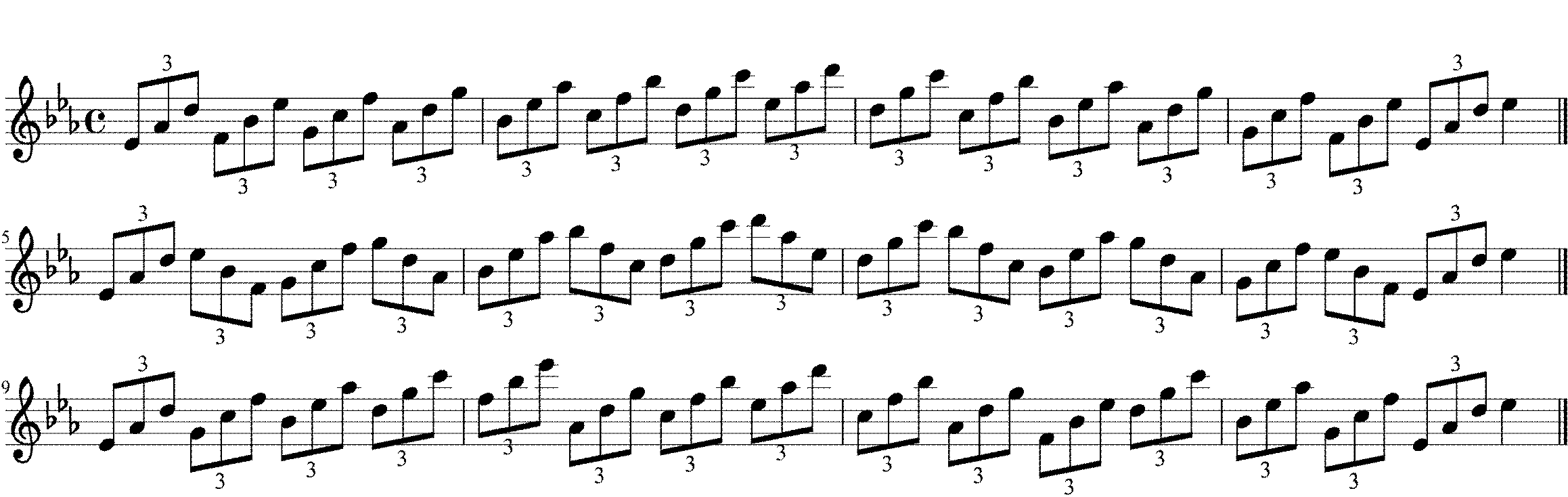
Here’s a GR3 radar grab of the storm as it was crossing US 127 south of Mason; click on it to enlarge it. A scan or two prior the cell had a nice hook to it, and you can still see the suggestion of a weak echo region with inflow coming in from the east.

Caledonia got nailed by the northern part of the line earlier. At 10:20 a.m., the sky was as dark as a black cat’s belly and the parking lot lights were on. There were one-inch hail reports in the area; my friend Kurt Hulst called to tell me that he had gotten marbles over at his apartment and wondered whether any of that had come my way. It hadn’t, but we got a truly massive downpour, really something to see. It’s going to bring a lot of green to an already nicely greening landscape.

More storms in the forecast for today. Yeah! Bring ’em on!

1965 Palm Sunday Outbreak Commemorative Event: Update

Here’s the latest on the 45-year anniversary commemoration of the 1965 Palm Sunday Tornadoes (click here for original notification):

  • Date: Sunday, April 11, 2010
  • Time: 3:30 EST
  • Location: Palm Sunday Tornado Memorial, corner of Amy and Cole Streets, Dunlap, IN, south of Elkhart. Click here for Wayfaring Map.
  • Event organizer: Debbie Forsythe-Watters

The event will feature a number of speakers, including Dan McCarthy, this year’s keynote speaker. Dan is the meteorologist in charge at KIND, the National Weather Service office in Indianapolis. He is the author of 40th Anniversary of the Palm Sunday Outbreak: How It Changed Preparedness & Forecasting, a presentation which he delivered at the 9th Annual Ohio Severe Weather Symposium.

Lest that sound a bit intimidating to those who aren’t weather weenies, Dan is a great guy. I haven’t met him in person, but we’ve connected on Facebook and swapped a few emails, and he strikes me as a very likeable, down-to-earth person who knows how to talk to his listeners, not above them. I don’t know what he has in mind, but I very much doubt he’s going to deliver a college-level weather lecture. Rather, I suspect that he’ll have some understandable and fascinating insights to share on the second worst Midwestern tornado outbreak in modern history.

It’s also possible that Paul and Elizabeth Huffman may show up. Paul is the press photographer who took the famous shot of the twin funnels hitting the Midway Trailer Park two miles south of Dunlap. He and his wife are elderly, and their attendance will depend on how they’re feeling that day. It’s an unpressured arrangement between Debbie and the Huffmans, so we’ll keep our fingers crossed and leave it at that.

In any event, if you have any stake in the 1965 Palm Sunday Outbreak, don’t miss this event. Come expecting to connect with people who in one way or another were affected by the Palm Sunday Tornadoes. If you’re a survivor of the tornadoes, you’ll meet others who also lived through them, and you’ll have stories to share. If you lost a loved one in the storms, you’ll meet others who know what it was like to endure such a loss—who still, after all this time, feel the ache and understand yours. If you’re a child or relative of someone who experienced the tornadoes, you’ve heard some of the stories; this will be your chance to hear others, and to gain insights into your mother or father, aunt or uncle.

No matter who you are, if you’re interested in the 1965 Palm Sunday Tornadoes and you live in the area, in northern Indiana or southern Michigan, I think you’ll find this a worthwhile and memorable afternoon.

First Crack at Severe Weather (Has the GFS Ever Lied?)

no images were found

Here on the last day of February–just one day before meteorological spring begins–temperatures are finally settling into a warming trend here in Michigan. With plenty of snow still on the ground but the promise of better days in sight, and with me feeling my repressed itch for severe weather beginning to surface too insistently not to scratch, I’ve cast a wistful eye on the long-range GFS.

At 180 hours out from today’s 6Z run–in other words, on March 7, early afternoon–things look interesting. Not inspiring, just something to keep an eye on. If you’re a

no images were found

fellow storm chaser, you know the drill, and you know how the models change. With that caveat, while I haven’t been an avid follower of the GFS these days, I seem to recall that it was painting a somewhat similar scenario last week.

Anyway, here are the surface maps for sea level pressure and surface dewpoints at 18Z, March 7. Click on the images to enlarge them. Obviously the moisture could stand improvement, and I wonder whether sea surface temperatures in the Gulf will be warm enough to deliver, but let’s see what happens from here.

Wavespray on Lake Michigan

no images were found

If March coming in is anywhere nearly as leonine as February going out, it will be a March lion indeed. Today the wind was blowing hard out at Holland Beach, churning Lake Michigan into a grand spectacle of roiling billows, crashing surf, and smoke-like spume torn from the wave tops and carried along on the gale.

It was a marvelous sight. Lisa preceded me out onto the pier, and when I caught up with her, she was standing there, laughing as the waves burst

no images were found

against the ice shelf and threw blasts of icy water toward her. That’s my kind of gal! Someone who takes joy in the wild side of nature.

Unfortunately, the water got all over my camera and onto my lens, so the latter part of my photos are somewhat distorted by water droplets. But I don’t mind terribly, because the effect is actually rather moody. I guess if I was going to have something go wrong with my photos, I would pick that.

no images were found

Speaking of photos, the four here were all taken from the beach and out on the pier. Click on them to enlarge them.

In taking them, I got more soaked than I realized; and the wind chill being what it was with the northwest wind blasting in off the big lake, I rapidly got much colder than I ever expected. But it was worth it to get some shots of Lake Michigan’s raw, unfettered side.

no images were found

I haven’t edited these images. I’m slapping them up here just as they are–maybe not works of art, but a taste of the kind of effect the shoreline is capable of delivering when the gales blow hard across the big waters.

Getting Ready for the Skunk Cabbage

Here’s some news that will put joy in your heart: skunk cabbage days are almost here! (And all the people shouted, “Hurrah!” and donned their festive garments.)

It’s true. Sometime within the next three weeks or so, the odd, purple cowls of Symplocarpus foetidus will start pushing up through the mud and matted leaves of the wetlands where they grow, generating enough heat to melt their way through the ice and snow and provide a microclimate for early insects. Here in the Great Lakes, the skunk cabbage is the year’s first wildflower, and I always get happy when I see it begin to show. It’s a charming little plant, though there’s nothing particularly pretty about it. This plant doesn’t care about “pretty.” It’s all about character and nail-toughness. Skunk cabbage has the grit of a pioneer.

It also has the smell of a pioneer, as you’ll find out if you ever hold a piece of the broken flower or leaf up to your nose and get a whiff. It smells a lot like an armpit that hasn’t been washed in a month. Taken all around, this is not the kind of wildflower you’d feel inclined to gather a bunch of and take home to stick in a vase. But, appearing with the robins and redwing blackbirds, it is nevertheless a welcome harbinger of the warmer months. I’m surprised that some Michigan town hasn’t claimed it and instituted an annual skunk cabbage festival. Not too surprised, though.

Speaking of warmer months, they don’t seem to be in any hurry to put in an appearance, and I’m starting to wonder whether Punxatawney Phil might not have been conservative in his forecast of another six weeks of winter. Another major winter storm is poised to dump another 6-10″ of snow on West Michigan this evening through tomorrow, and more snow is in the forecast for the next ten days.

Snow, snow, and yet again snow. If you like the stuff, just stick around. Sooner or later, Michigan always delivers.