Painted Trilliums and a Mid-Week Storm Chase

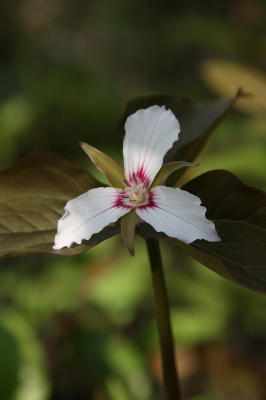
Painted Trillium

The painted trillium, trillium undulatum.

You’re looking at one of Michigan’s rarest wildflowers, the painted trillium.

With plans for a picnic in place and nothing but sunshine in the forecast for today, Lisa and I headed east with our cameras for a Michigan Nature Association preserve near Port Huron. The location is one of a handful where the painted trillium grows in this state, keeping company with the red trillium, which is also uncommon but far more widespread than its painted cousin.
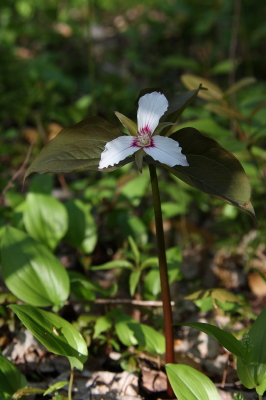
Good luck finding this in the Michigan woods!

Good luck finding this in the Michigan woods!

Out east in the Appalachians, the painted trillium is fairly common. But in Michigan, if you ever catch a glimpse of this plant, count yourself fortunate indeed. The images in this post are a prize, and it was a double blessing that I got to share the experience of capturing them with Lisa, who loves the outdoors as much as I do.

But enough eye candy. Turning from wildflowers to weather, Wednesday looks to be shaping up as a chase day in Illinois. It’s nice to see the action coming close to home. The question right now isn’t whether there will be a severe outbreak, but where will be the optimal chances for tornadic activity. With a strong cold front moving in, a squall line seems inevitable. But with the winds veering strongly from the surface up to 500 millibars, hodographs are nicely curved and helicities ought to be formidable. Play the warm front? Maybe. It’ll certainly be a tempting target, within easy reach of Grand Rapids. But I want to see what happens with clearing. It would be nice to see a buildup of CAPE in northern Illinois.

Wait and see is the name of the game. Right now all eyes are on the NAM and GFS. But Wednesday morning will tell. I’m crossing my fingers and toes and hoping to see signs of clearing on the satellite.
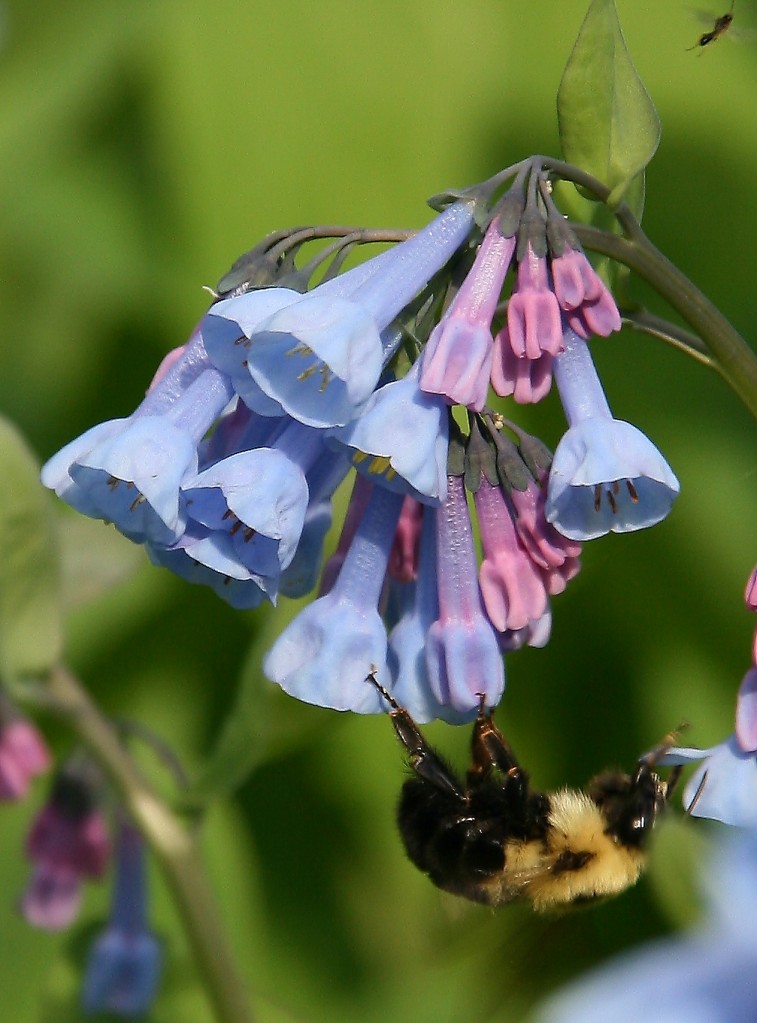
Hiking at the Virginia Bluebell Plant Preserve

After over a week indoors in the throes of an ugly chest cold, it felt wonderful to finally get outside today and take a hike out at the Virginia Bluebell Plant Preserve on the Coldwater River. This location, a cooperative between Trout Unlimited and the Michigan Nature Association, is one of my favorite places. It’s got nothing to do with storm chasing or jazz saxophone, but I’m okay with that and you should be too. It can’t hurt to broaden out in this blog every now and then, and there’s nothing like a beautiful natural setting to refresh the soul.

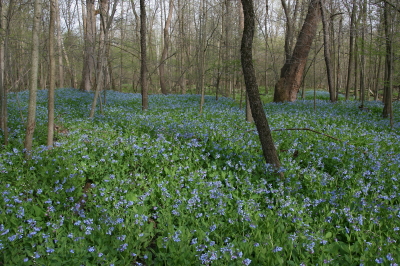
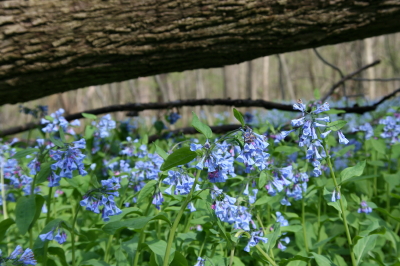
The Virginia bluebell is rare in Michigan, but where it does grow, it tends to grow abundantly, and this preserve is a prime example. I’ll say no more, but will let the photos tell the story.

Sunlight plays on a clump of Virginia Bluebells.

Sunlight plays on a clump of Virginia bluebells.

A bumblebee busies himself with a cluster of bluebell blossoms.

A bumblebee busies himself with a cluster of bluebell blossoms.

Virginia bluebells carpet an open woods at a Michigan Nature Association preserve in southeast Kent County.

Virginia bluebells carpet an open woods at a Michigan Nature Association preserve in southeast Kent County.

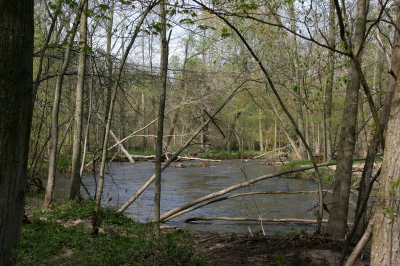
The beautiful Coldwater River borders the eastern side of the preserve.

The beautiful Coldwater River borders the eastern side of the preserve.

Remembering May 3, 1999

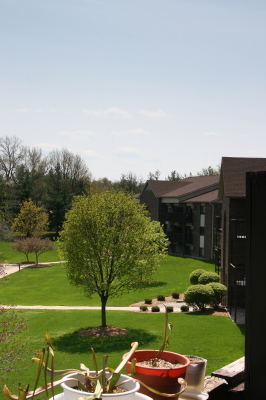
View from the balcony.

View from the balcony.

Looking at my recent posts, it dawns on me that it has been a while since I brightened things up with a few photos. The above is a purely gratuitious shot of my small apartment complex in Caledonia, Michigan, taken from my balcony. In the foreground, you can see some of The Kids–that is, my carnivorous plants. They’re long and lank right now from being forced to gather what sun they’ve been able to sitting indoors by the sliding door. April’s temperature fluctuations have permitted only occasional forays outside, but I think that at this point they’re there to stay. Now the bright, direct sun can do its work, strengthening their stems so that in another month or two, new leaves on the pitcher plants should stand up straight and tall.

Actually, the Sarracenia oreophila has already been doing just fine in that regard. Once I took it out of refrigeration, it wasted no time sending up a fine crop of stout, trumpet-shaped leaves. Unfortunately, hornets are drawn to the taller pitcher plants like crazy, and they don’t take kindly to being trapped in them. I’ve had to tape several of the oreo leaves after they collapsed due to hornets chewing holes through the sides in order to escape. I’ve got to believe that hornets aren’t the normal fare for Sarracenias in the wild. My plants occupy a habitat three stories above ground level, not exactly the same kind of ecosystem as an Alabama mountain bog or a southern savannah.

Anyway, as you can see from the photo, today is gorgeous here in Michigan, with temps in the upper sixties–on the cool side of warm. A body can wear shorts or jeans, a T-shirt or a long-sleeve; either works perfectly on a day like today. Me, I’m in shorts. I have no plans to go anywhere, since I’m still a bit wheezy from my cold, but it’s nice to just sit here and look out the window at blue sky, white blossoms, and tress leafing out.

Ironically, this picture-perfect May day is the tenth anniversary of the 1999 Oklahoma Tornado Outbreak. On this date, the infamous Moore/Bridge Creek Tornado tore a path from west of Amber to Midwest City, taking 36 lives and becoming the last tornado to be rated an F5 under the original, now passe Fujita scale. A wind max in this tornado of 301 mph, give or take 20 mph, recorded by the Doppler on Wheels (DOW) remains the fastest tornado wind ever measured to date, placing the Bridge Creek tornado at the upper end of even the most extreme tornadoes. Powerful as it was, another monstrous tornado which plowed through the town of Mulhall that same day may have been even stronger.

It’s hard to fathom winds of that velocity. It’s faster than most BB guns. To help you visualize such a wind speed, if a piece of lumber was blowing at you at 301 mph from a house disintegrating 450 feet away, you’d have approximately one second to duck. Granted, the DOW reading was 105 feet above ground, and the surface winds were likely to have been somewhat slower. But I doubt that information would have been very reassuring to residents of Bridge Creek that day as they watched the storm bearing down on them.

What a cheery thought. I think I’ll return to today’s bright sunshine and enjoy it. Storm season is at hand, my cold is on its way out, and I hope to get out to the Plains in another couple of weeks and chase some supercells. But for now, it’s May 3 and the day is beautiful here in Michigan. Who could ask for more?

The Last Snows of Winter

As I begin this post, it’s snowing outside.

Spring has sprung, and it’s snowing.

All irony aside, there’s nothing particularly unusual about that this time of year. Late March through mid-April are prone to the residual effects of winter. Fuzzy catkins may cover the pussy willows in the marshes, skunk cabbages bloom in the swamps and wet woods, and robins pogo across the lawns in search of earthworms, but that doesn’t mean the snows are entirely done with us.

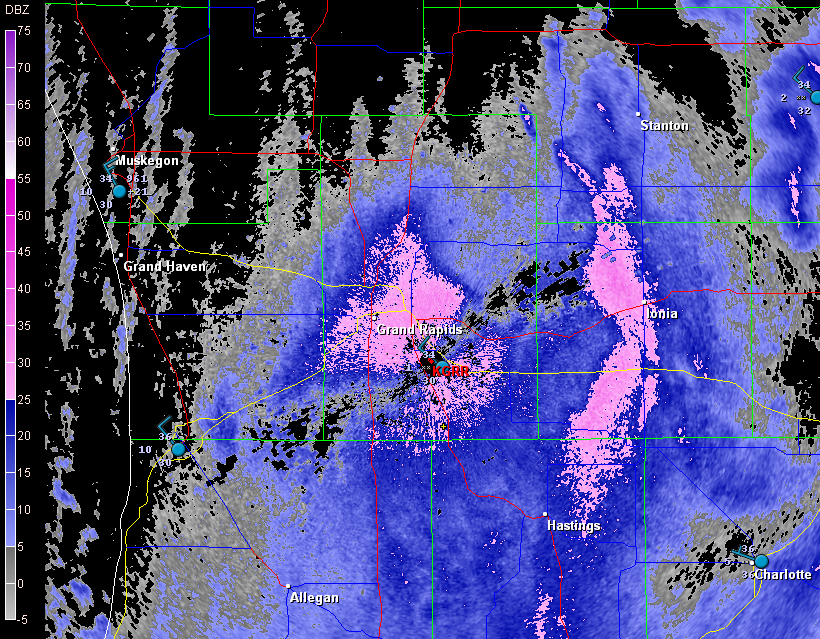
See for yourself. Here’s the radar for my area from just a few minutes ago.

GR2 radar scan shows a snowy afternoon in West Michigan.

GR2 radar scan shows a snowy afternoon in West Michigan.

I don’t mind. Even though the forecast through the week calls for colder temperatures and an occasional dusting of the white stuff, I know it’s all just transitory. We’ve already seen 70 degree temperatures and had our first lightning storm. Today is just winter being a poor loser.

Me, I’m looking ahead. The wildflowers and the weather systems are waking up together, and with the year’s first, shakedown storm chase in Tornado Alley already under my belt, I’m content in knowing that the main action is now mere weeks away.

Bring it on. I’m ready!

Winter Has Ended. Welcome to the Spring!

In a few short hours, it will be spring. To be more precise, at 7:44 a.m. Eastern Time, the vernal equinox will occur. In a moment of time, the exact center of that enormous ball of gas we call the Sun will cross Earth’s equator, and in that second, winter 2009 will die and this year’s spring will be born.

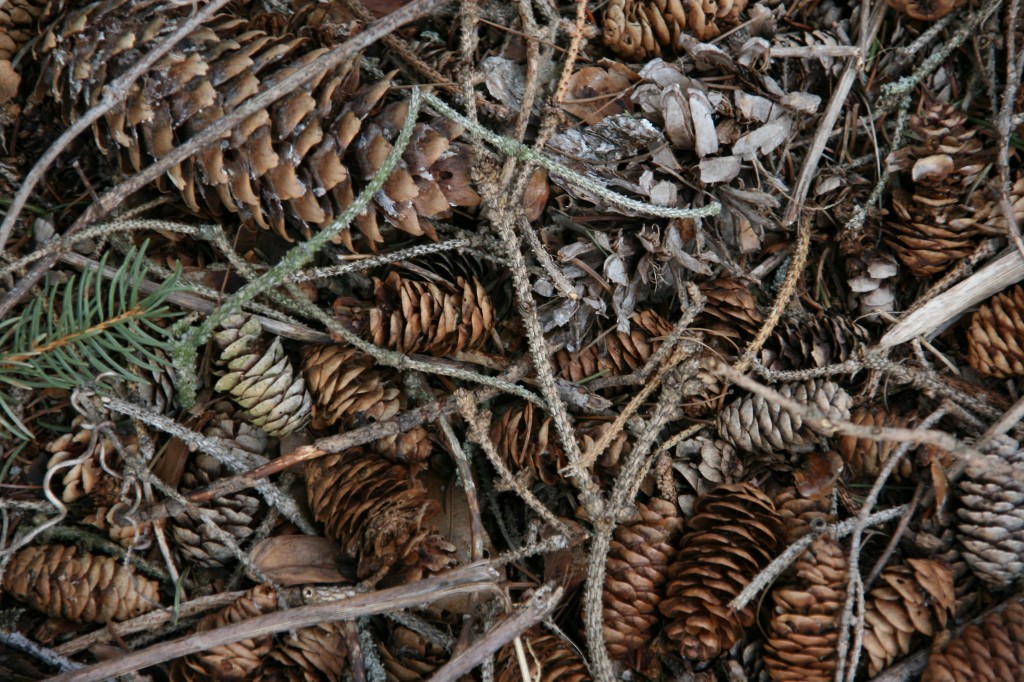
To celebrate, I thought I’d post a couple of photos. The first is of a medley of pine cones and twigs, artfully woven together by Mother Nature on a bed of needleleaf duff in a grove of evergreens. The forest floor can render some surprising and sublime collages; this one, covered by the snow until only recently, is one of the finest I’ve seen.

Pine cones turn the ground beneath an evergreen grove into a work of art at a roadside park near Ionia, Michigan.

Pine cones transform the floor of an evergreen grove into a work of art at a roadside park near Ionia, Michigan.

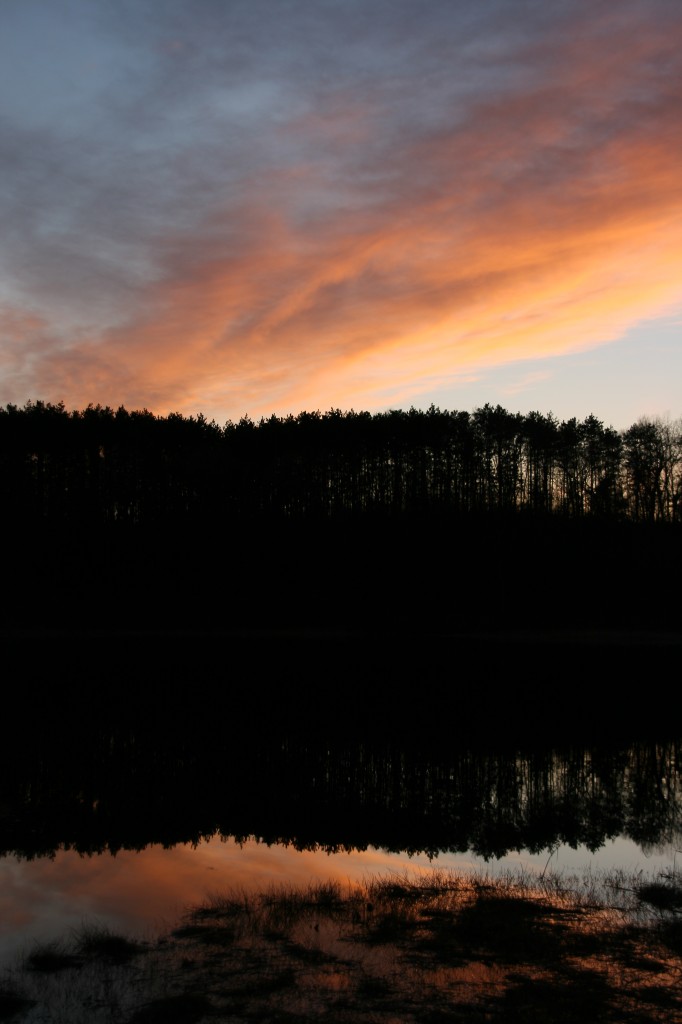
The following is a sunset image that I took Wednesday evening at Shaw Lake, just south of Middleville. The lake is surrounded by an incredible example of a rare wetland known as a prairie fen, inhabited by wild orchids and carnivorous plants. It’s an otherworldly place, truly beautiful, and unfortunately, also terribly abused by fishermen who have enough energy to bring in their bait containers, beer cans, and other trash, but evidently not enough muscle, brains, or strength of character to carry their empties out.

Excuse my mini-rant. The photo is of the next-to-last sunset of winter, 2009. It feels more like a sunrise in a sense, with its promise of lengthening days and the rebirth of the green months.

A plume of cirrus lights the sky at sunset at Shaw Lake in northern Barry County.

A plume of cirrus lights the sky at sunset at Shaw Lake in northern Barry County.

A Beautiful Day in Michigan

IT’SSPRINGIT’SSPRINGIT’SSPRING!!!

It’s SPRIIIIIIIINNNNGGGGG!!!!!

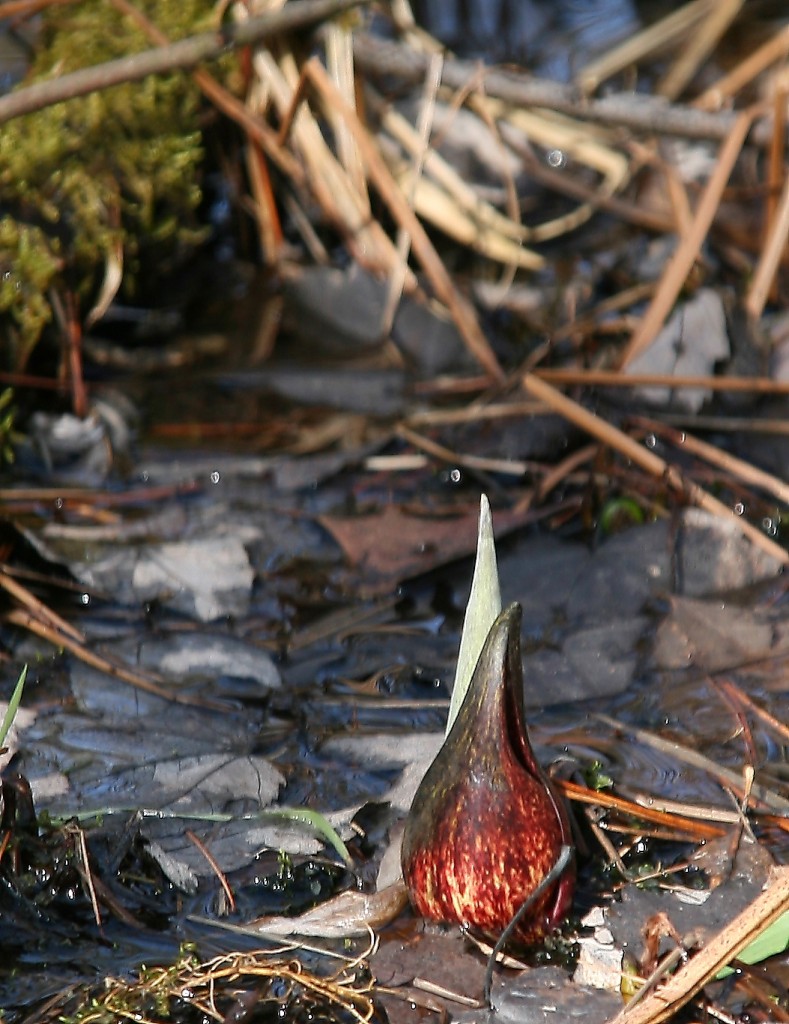
Okay, maybe it’s not quite spring officially–still another five days before the vernal equinox–but when I see skunk cabbages blooming in the swamps, then as far as I’m concerned, spring has arrived. Everything else is just a formality.

Skunk cabbage, earliest of the Michigan wildflowers

Skunk cabbage, earliest of the Michigan wildflowers.

With its odd-looking purple cowl shielding a flower spathe within, the skunk cabbage is nothing you’d want to put in a pot on the windowsill, but it’s nevertheless one of my favorite wildflowers. It’s a quirky little plant with plenty of character, plucky enough to lead the procession of the spring wildflowers in Michigan.

I came upon the one above while hiking a wetland trail in Yankee Springs the other day. The afternoon was beautiful, a bit chilly but on the leading edge of a warming trend that will put the temperatures into the fifties by today and as high as sixty degrees by Tuesday.

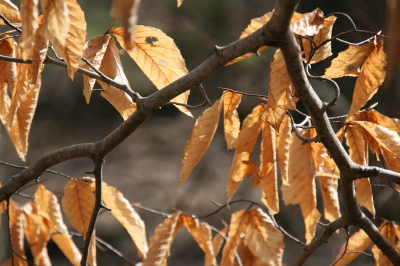
On a broad, blue day filled with the promise of warmer seasons to come, even last year’s vanishing remnants were transfigured by the sun. A bough of old beech leaves hung like Japanese lanterns in a shaft of sunlight.

Old beech tree leaves catch the sunlight.

Old beech tree leaves catch the sun.

Of course “the kids”–my collection of carnivorous plants–are out on the deck. I removed them from the refrigerator three weeks ago to boot them out of hibernation, and they have responded with a vigorous rush of flowers and leaves. The Venus flytraps are now open for business, and the Sarracenia oreophila isn’t far behind, with an exuberant array of young traps already ten inches tall and nearing the point when they’ll pop open.

White mold wiped out most of my flytrap seedlings during the winter, but a good hundred or so have survived. It’ll be interesting to see how much they increase in size this growing season.

All that to say…YAHOO!!! It’s SPRIIINNNGGG!!! Maybe not by the calendar, not quite yet, but don’t tell that to the robins because they don’t care, and neither do I. Just take a walk in the woods and you’ll know. Spring is here at last.

Severe Weather Forecasting Workshop and Southern Plains Drought

It’s Thursday, and I’m in Louisville, Kentucky, with my buddy Bill. He’s got business here, and I’m taking care of business here on my laptop, and then we head to Norman, Oklahoma, for a severe weather forecasting workshop with Tim Vasquez. At times like this, I’m grateful for the freedom and mobility that come with being a freelance writer. As long as there’s work for me to do, I can do it pretty much anywhere provided I have my laptop and Internet access.

I’ve been hoping to catch a little early-season convective excitement this Saturday. Not sure that’s going to happen, though. The wild card seems to be moisture, but capping may also be a problem. It would be a shame to make the journey to Oklahoma and not see a little decent, Great Plains weather. Of course, that’s not the focus of the trip–the forecasting workshop is–but still, a supercell or two would be nice. Unfortunately, it looks like a cold front will provide the lift that finally busts the cap, and that suggests “linear.”

Sunday is the workshop, so I don’t much care what the weather does that day. I’ll be in class.

Monday may offer another crack at things, and it may be our best opportunity. It’s too far out to say (for that matter, Saturday is still a bit too far off yet to feel either good or bad about it), but assuming that the southern Plains at least get a bit of rain to relieve their dry spell and give the ground a good soaking, moisture may not be the question mark that it is for Saturday’s setup.

Frankly, the current forecast discussion on Stormtrack is the first time I’ve given serious thought to the effect of soil conditions on convection. I had always thought of ground moisture and evapotranspiration as just enhancements to the return flow, not potential deal-breakers. To my mind, a nice, deep low pulling in rich dewpoints from the Gulf of Mexico would more than compensate for dry regional conditions. But more than one seasoned Great Plains storm chaser has looked at the current drought conditions in Texas and Oklahoma and opined skeptically about the chances for 2009 being a good chase year in the West unless the region sees some rain.

Ah, well. The season hasn’t even begun yet, so I’ll take what I can get and hope for better as we move into May and June. Right now, it’s nice to simply see the sun shine, feel fifty-degree temperatures, and know that winter is drawing to a close.

Monte Montgomery Concert Tomorrow Night

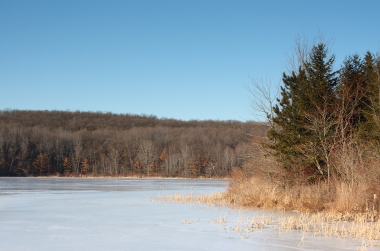
Whew, I have let waaaay too much time elapse since the last time I posted an entry in this blog. Let me mollify you with a nice, bright, sunny image from this cold, early March day. The following photo is one of a number that I took out at Pickerel Lake near Grattan Township in east-central Kent County. It’s a beautiful area, and with spring rapidly rolling in, today was a great day to capture the beauty of the icy landscape while I still can.

Pickerel Lake

Pickerel Lake

Cold as this day has been, there’s no question that warmer weather is moving in. By Thursday, temperatures here in the Grand Rapids area should be in the forties. But I won’t be here. I’ll be with my storm chasing buddy Bill down in Louisville, Kentucky, where he’ll be meeting with some of his clients while I do my own business on my laptop. Then from Louisville, we head out to Norman, Oklahoma, for an all-day severe weather forecasting workshop with Tim Vasquez on Sunday. I’m really looking forward to it!

On the way out there, I hope to catch some early season action. The GFS is calling for a low to be positioned in Colorado or somewhere out there, and with a little luck, we’ll see the right combination of moisture, lift, and kinematics to make life interesting somewhere between Louisville and Norman. Arkansas looks likely. We’ll see.

More immediately, and on the musical side of things, tomorrow night is the Monte Montgomery concert at the Intersection in downtown Grand Rapids. The concert got rescheduled from its original date last September due to illness, and now the time has arrived.

I’ll be playing with the Ed Englerth band as the opening act for Monte.  We rehearsed last night and sounded tight, and today I took my horn to the shop and got a leak tightened down, so all in all, I feel good about playing tomorrow.

If you’re in the neighborhood, come on out to the concert. Ed’s material is strong, and if you’ve never heard Monte, prepare to be stunned. The man is a brilliant guitar player, rated one of the all-time top 50 by Guitar Player magazine. The show starts at 7:00 p.m. Admission is $10 (cheap!),  and worth every penny. See my events calendar for more details.

Storms of 2008 DVD

I just received my new Storms of 2008 DVD in the mail a couple days ago, and I have to say, it’s fabulous! Having been thoroughly smitten with its predecessor, Storms of 2007, featuring its remarkable coverage of the historical Greensburg, Kansas, EF5 tornado, I was skeptical that any subsequent effort could live up to such high standards. But I have to say, this latest in the celebrated “Storms of…” series has more than met the challenge. Simply put, this is a stellar work, and if you’re at all a fan of storm chasing, you need to buy it, period.

And when you make your purchase, know that your $24.95 goes directly to helping disaster victims across the United States. The “Storms of…” series is an organized effort on the part of the storm chasing community to make a tangible difference in the lives of people who have been directly affected by severe weather and other natural disasters.

Judging by the remarkable footage in this DVD–often sublime and at times mind-boggling–you’d never guess that it is a grassroots effort. Yet, as with all the videos in the “Storms of…” series, Storms of 2008 is strictly a product of the storm chasing community. As such, it is a tour de force of the remarkable talent pool within that community. Videographers, meteorologists, seasoned storm chasers, gifted amateurs…all these and others besides have worked hard and long to produce a world-class video and a true labor of love.

The history-making Super Tuesday Tornado Outbreak that scoured Dixie Alley on February 5…the late-May tube-fest that blotted SPC storm reports with red for the better part of a week…the beautiful Dighton wall cloud…the Quinter EF4 duo…the tragic Parkersburg, Iowa, EF5…they’re all here plus a whole lot more, complete with synoptic analyses and topnotch narration.

Am I saying that you have absolutely gotta, gotta, gotta purchase this exceptional DVD? Yup, that’s what I’m saying. Just do it, okay? You can thank me later for being so pushy. Your money will help to make a real difference in people’s lives, and trust me, you’ll love what you get in return. Storms of 2008 is the definitive anthology of last year’s convective Armageddon in the United States. Buy here. Or visit the Storms of 2008 website to obtain more information and view a video trailer.

To the devoted cast of producers, editors, and engineers who faced the challenges and frustrations of making Storms of 2008 happen–BRAVO! And thanks!

Of Sunset Calendars and Skunk Cabbage

February. Ah, February. From the beginning to the end of this month, we gain an hour and twelve minutes of daylight here in Caledonia, Michigan. That’s thirty-seven minutes in the morning and thirty-five minutes in the evening. Sunset on the 28th will be at 6:31p.m. I call that a pretty good deal, and I’m pleased to see warmer temperatures this weekend giving us a taste, however temporary, of longer, pleasanter days to come.

It’s amazing how much the sunrise/sunset times vary from north to south and east to west in a single state. I won’t cite examples, but if you’re curious enough to find out for yourself, here’s a link to the U.S. Naval Observatory chart to help you do so. Time is stated in military format for the time zone of the particular town you choose, whether EST for Shamokin, Pennsylvania, or MT for Denver, Colorado.

Anyway…the days really are getting longer. Believe it or not, the beginning of the spring wildflower parade isn’t all that far away. It starts subtly, though, and humbly, with the lowly skunk cabbage. I love this odd-looking little plant that sends up its mottled, marroon-and-green hoods in the swamps, often amid melting drifts of snow. Smell a broken piece from any part of the plant and the aroma of burnt rubber and raw onions will quickly tell you that the name skunk cabbage is an apt one. But the plant is nonetheless one of my favorites, both because of its quirky nature and because it is a true harbinger of spring.

As is true of most people, there’s far more to the skunk cabbage than meets the eye. In fact, I smell a post coming up for a future WaterlandLiving blog. Can’t wait to see this pioneer of the wildflowers start putting in its appearance, possibly as early as the end of this month and certainly by mid-March. Once I spot the skunk cabbage, I know that spring is underway at last. And I’m ready for spring, aren’t you?