Sax Practice by the Airport–Now Verboten?

It seems that practicing the saxophone now poses a threat to homeland security.

Surprised? Not nearly as surprised as I was when I first found out last night.

I surely wasn’t aware of the risk I presented when I parked my car near the railroad tracks at the end of Kraft Avenue, a stone’s throw from the hurricane fence that circumscribes the perimeter of the Gerald R. Ford International Airport. I’ll grant you, it’s an unusual location for a person to hang out at, but it’s by no means anything new for me. I’ve been parking there with varying frequency for roughly 25 years, practicing my saxophone and watching the trains go by.

Of course I’ve been checked out numerous times by the police. I haven’t minded at all; rather, I’ve appreciated that the cops have been on their toes and diligent in doing their jobs. The officers, in turn, have invariably been courteous and usually friendly, and often enough I’ve enjoyed some pleasant conversations with them. Once they determined that I was eccentric but harmless, they always drove off and left me to practice my horn in peace. Over time, a number of them came to recognize me. (Cop, peering in at me: “Oh, it’s you. Enjoy your evening!” Heads back to car and drives away.)

I’ve never had any problems at that location. Not ever. Until last night, that is, when suddenly and inexplicably everything changed.

What I’m about to share is not a rant. I’m not angry, just sad. Maybe once I gain a better understanding of whatever federal laws and/or local ordinances I’m dealing with, I will feel angry at having been jerked around. Or maybe I’ll just have a better understanding of what happened. Right now, though, I have the sense that the policeman I encountered last night was simply doing what he believed was the right thing. He didn’t project a nasty, belligerent, or power-drunk attitude; he was simply adamant that I had to leave my practice spot by the railroad tracks and not practice there in the future.

Just like that. It’s kind of like being told that the old fishing hole where you’ve fished for a quarter of a century is suddenly off limits. You’re given a reason, but it doesn’t ring true, and you get the sense that something you value has been taken from you without your ever having a voice in the matter.

Why all of a sudden? If homeland security was really the issue, which is what I was told, then why did none of the scores of other police officers I’ve encountered in that location over the long years ever mention it to me? Even in the tense months following 9/11, no cop ever requested that I relocate due to security concerns. Not that security–albeit not homeland security that I’m aware–hasn’t always been an issue in that spot. Some of the cops told me that vandalism had sometimes been a problem, and on a couple of occasions I was able to answer questions by the police concerning other visitors at the site. I’d like to think that my presence there has proved, if anything, helpful at times rather than a liability.

So here’s what happened: I was hashing out the Charlie Parker solo to “Dewey Square” yesterday evening when a police car pulled up behind me and the spotlight appeared in my mirror. No sweat; as I’ve mentioned, I’m used to having law enforcement check me out. I set down my horn in the passenger seat, handed the officer my driver’s license upon his request, and then waited while he ran a background check on me. He returned to my vehicle in a couple of minutes and handed me back my license, and at that point I figured things were clear and I could get back to my practicing.

Not so. The cop informed me that I was trespassing (perhaps because I had pulled off the road closer to the tracks, where I could see the semaphore lights, but that had never been an issue before); that I was parked in a high-risk zone less than 100 feet from airport property; and that in order to avoid compromising homeland security, he needed me to move.

Say what?

I reiterated to the officer–I had already mentioned it to him when he first appeared at my window–that I had a long and trouble-free history of practicing at this site; that I was here because the place was convenient and I enjoyed watching the trains go by; that I had been checked out countless times by the police over the years and never experienced any problem; that some of the cops had become familiar with my unusual but harmless habit; that never once had any of them asked me to move; and that this was the first time anyone had ever mentioned the issue of homeland security.

The officer in turn suggested that I relocate to the airport viewing area on the far side of the airport, where I could watch the planes. I appreciated that he was trying to offer what to him seemed like a reasonable solution, but I repeated that I liked to watch the trains. Again he raised the security issue.

“Look,” I said, “I’m not out to argue with you. I’ll leave if you insist. But I’m trying to wrap my mind around what you’re telling me, because for as many years as I’ve been coming here, and as many times as the police have checked me out, this is the first time I’ve ever been told me to leave.”

The officer said he was sorry, but that I would have to find another place to practice. Henceforth I would have to consider this location off limits.

Wow. After 25 years, suddenly out of the clear blue somebody sticks a “No Fishing” sign right in front of my nose at the old fishing hole.

Very well; I had made my case, and it’s my policy not to argue with law enforcement officers. They are, after all, the embodiment of the law, and even when I don’t agree with them, I will comply with them. As I’ve already said, this cop didn’t come across as nasty, just inflexible, and I don’t know what realities he was dealing with. Perhaps a recent change in local ordinances, or even federal law, required him to deal with me differently than what I had experienced in the past.

Then again, maybe nothing at all had changed and the guy was just being a jerk. I don’t know–right now. But I will make a point of finding out. If I need to secure some form of permissions from CSX or the airport, I’ll pursue that avenue. I hate to have a convenient and enjoyable practice place that I’ve resorted to for so many years get suddenly and seemingly arbitrarily yanked out from under me.

Even more, though, I hate the erosion of freedom that such an event reflects.

Sandhill Cranes

The GFS continues to show hopeless ridging throughout most of October. I hardly pay any attention to the long-range forecast models these days, just mention this as a note of idle interest. A trough does finally seem to shape up around 300 hours out per the 6Z run, and it could make life interesting within reach of Great Lakes storm chasers on the 27th and/or 28th. But I don’t have the heart to wishcast that far out; I just don’t believe it’ll happen..

As for the saxophone, I’m extremely pleased with my personal progress. But while I’ve been practicing a lot, my sessions have involved material I’ve already covered in previous posts, and I’d imagine the results interest me far more than they would you.

Lacking anything of great import to write about concerning either jazz saxophone or storm chasing, my radar is scanning for a topic that’s at least conceivably related to either of those two interests. Yesterday’s earthquake in Norman, Oklahoma, would do well except I wasn’t there. I hear it was a loud one, but I’ll leave the reportage to those who actually experienced the shakeup. As for me, I need something closer to home. Like sandhill cranes.

Here in Michigan, now into November is the time of year when the cranes congregate in great numbers in suitable locations that offer nearby sources of both food and cover. Sometime next month they’ll take off for warmer climes in southeastern Georgia and Florida. Meanwhile, this ridging that has quashed the so-called “second season” for storm chasers has provided glorious weather for the sandhill cranes and sandhill crane watchers. The Baker Sanctuary northeast of Battle Creek and the Phyllis Haehnle Memorial Sanctuary near Jackson are well-known staging areas for massive numbers of the birds. However, I’m fortunate to have a location much closer by where over 100 cranes hang out, foraging in a field across the road from a marsh where they shelter for the evening.

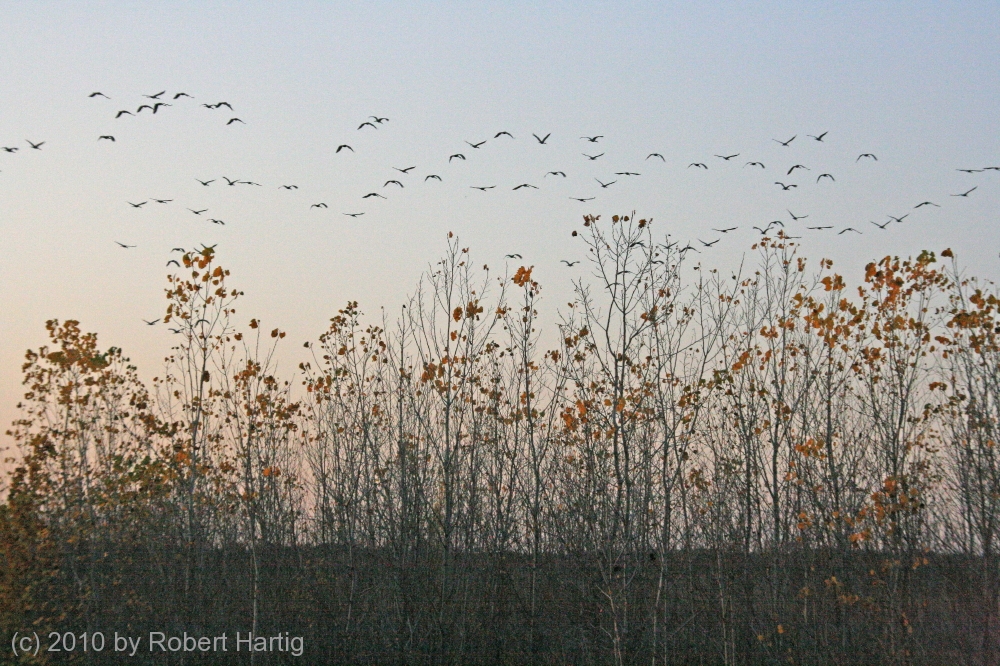
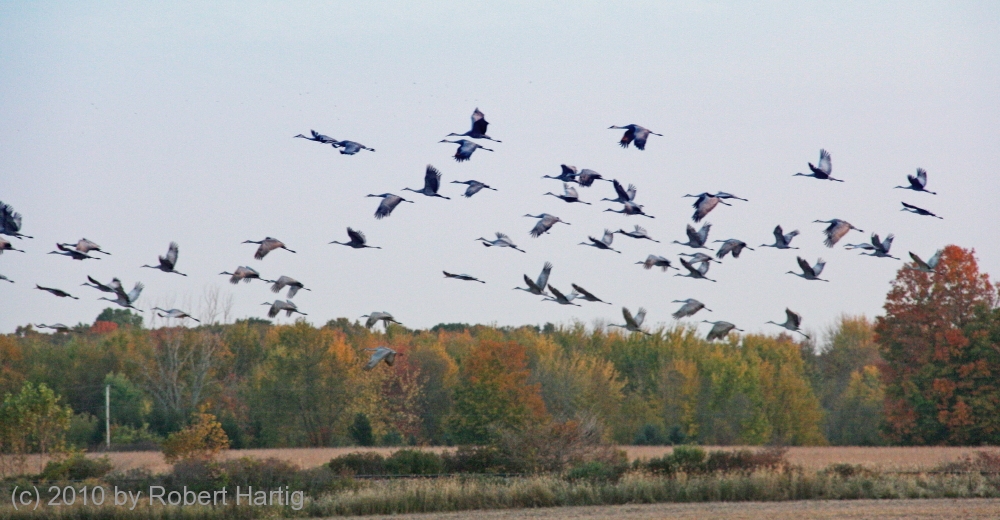
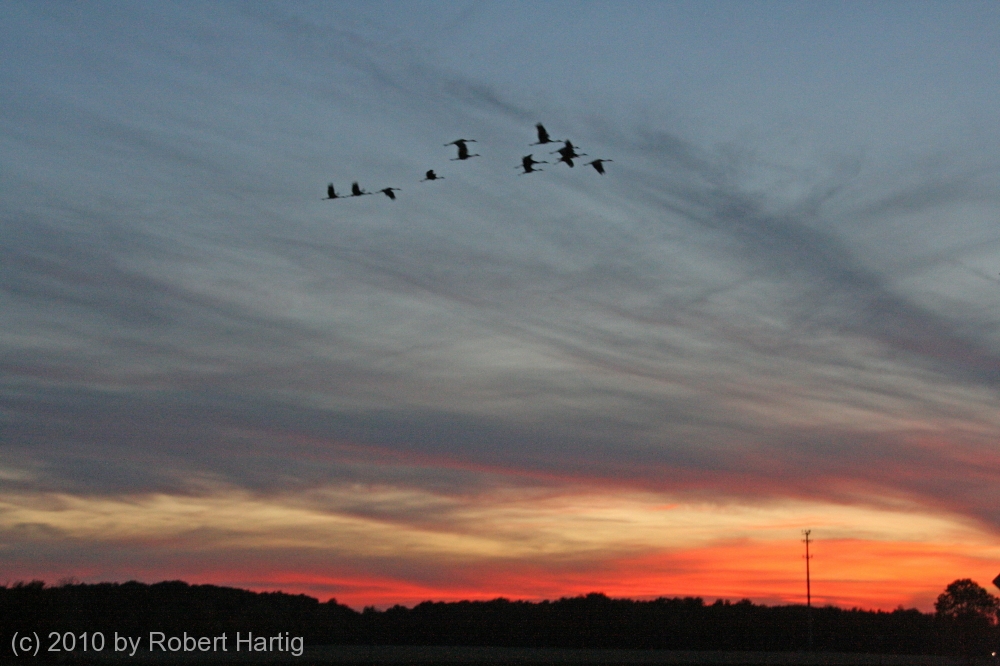
Mom and I went out there Sunday evening. It was a blessing to spend the time with my sweet 85-year-old mother, watching the sandhills feed; listening to their captivating, ratcheting calls; witnessing their sporadic, comical, hopping dances; and waiting for them to take off and fly overhead en-masse into the marsh at sundown. Here are a few photos for you to enjoy.

Guest Post: Saxophone and Storms

Every once in a while I like to feature a post by a guest blogger from the worlds of either storm chasing or jazz. Today let me introduce to you my buddy Neal Battaglia. Neal is a tenor man who maintains a wonderful blog on jazz saxophone called SaxStation.com. The site covers acres of territory of interest to saxophonists. If you’re not already familiar with it, then you owe it to yourself to check it out.

After contemplating the nature of my own site, with its odd blend of wild winds and woodwinds, Neal is here to share his thoughts in a post titled…

Saxophone and Storms

By Neal Battaglia, SaxStation.com

Initially, storms and saxophones seemed an odd combination to me.

On this site, I would read Bob’s posts on saxophone, but not always the ones about storms.

However, when I thought about it for a minute, a number of musicians enjoy nature and are inspired by it. And storms are some of the most extreme examples of nature.

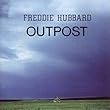
One of my favorite trumpet players, Freddie Hubbard, had a record called “Outpost.” The cover shows a lone farmhouse out in a wide-open plain with a storm beginning to brew overhead. When you listen to the tracks, you really hear the movement of the storm–the lead-in to it, the calm in the middle, and the conditions afterward.


My all time favorite saxophone player, Stanley Turrentine, recorded an album called “Salt Song.”  On it is a tune that I like a lot called “Storm.”

These two masters both took musical ideas from many places, reminding me that music is a reflection of our experiences. Your life comes out to be shared with the audience when you improvise on saxophone and write music.

In October of 2009, I took three planes across the country to Nashville and eventually arrived in the backwoods for a “music and nature” class. It was an awesome experience.

The guy in charge of that class recorded an album called  “‘Thunder.”

Nature in general and storms specifically seem to act as a muse for musicians. They are something that we all experience (although possibly less if you’re an extreme city slicker). And music transcends language barriers.  So you can feel storms by listening.

No Second Season? Please Say It Ain’t So!

I’d been looking forward to the shift in weather with fall’s arrival, but now that autumn is officially here,  I dunno, boys and girls. I’m beginning to suspect that the mythical “second season” may not materialize for storm chasers this year–not in the Great Lakes, anyway. You folks out west will no doubt get your little romp, but up here in the tundra land of Michigan instability appears to be a thing of the past. I have to remind myself that it’s been only a week since one heck of a squall line blew through and caused extensive tree damage in my area. A couple of days later, though, as the system lifted out of the region, the moisture gave way to the relentlessly dry, crystal-blue skies of autumn, and I have the unsettling feeling that the die has been cast for the remainder of the year.

Today’s 4-8 day outlook from the SPC doesn’t make me feel any better about our immediate prospects:

 VALID 021200Z - 071200Z

   ...DISCUSSION...
   MODELS ARE IN GOOD AGREEMENT WITH THE PATTERN EVOLUTION THROUGH
   ABOUT SUN/D5 WITH LARGE TROUGH AMPLIFYING ACROSS THE GREAT LAKES AND
   ERN STATES AND AN UPPER RIDGE OVER THE ROCKIES. THIS PATTERN WILL
   RESULT IN A LACK OF INSTABILITY E OF THE ROCKIES WITH HIGH PRESSURE
   AT THE SURFACE. 

   WHILE THE TROUGH IS FORECAST TO LINGER IN SOME FORM OVER THE ERN
   CONUS...THERE IS MUCH DIFFERENCE ASSOCIATED WITH THE BREAKDOWN OF
   THE RIDGE AS A NEW TROUGH AFFECTS EITHER THE PACIFIC NW/GFS
   SOLUTION/ OR THE ENTIRE W COAST/ECMWF SOLUTION/.  REGARDLESS...THERE
   IS LITTLE CHANCE OF SEVERE WEATHER GIVEN MEAGER MOISTURE AND
   INSTABILITY.

   ..JEWELL.. 09/29/2010

“Lack of instability..little chance of severe weather…meager moisture…”–mmmph, doesn’t sound very promising, does it? I console myself with the thought that autumn has barely begun, and a nice fetch of moisture can still come chugging northward on the leading edge of some great dynamics to make life interesting. It happened as late as November 10, 2002, in Van Wert, Ohio. It happened just three years ago on October 18, 2007, across the Midwest, including here in Michigan. So my rule of thumb is, don’t pack away the laptop until the snows fly.

Still, as daytime temperatures retreat into the mid 60s and dewpoints drop to 50 degrees and below, it’s kind of hard to believe that the end of the parade isn’t long gone, and that last week’s wind event wasn’t just the cleanup crew. Good thing that this season’s “Storm Chasers” series will be airing soon and letting us all relive the glory days of 2010. After that, though…man, it sure is a long stretch from here to next March.

The Giraffe Test: You Only Fail If You Pass It

No doubt you, like 99 percent of the civilized world, have taken the Giraffe Test. So you’re well aware that…

What, you say you haven’t taken the test? Mercy me. We need to get you up to snuff, then, because this thing is important. Purportedly devised by Anderson Consulting, the Giraffe Test measures various of your abilities to reason in a way that allows you to function on a level above, say, protoplasm.

But not so fast. My friend Pat Bowman emailed the test to me a few days ago, and having taken it, I’ve concluded that the test itself suffers from a few gaps in logic. In fact, whoever designed the Giraffe Test is–I shall put this delicately–crazy.

Below is the test. After the answer provided for each of the four questions, you’ll find my own response, which I think is a bit more real-world than the one furnished by the test developer.

THE GIRAFFE TEST

First Question: How do you put a giraffe  into a refrigerator?

Stop and think about it and decide on your answer before you scroll down.

Now scroll down

.

.

[Note: Don’t you find this scroll-down business annoying as hell?]

.

The correct answer is: Open the refrigerator, put in the giraffe, and close the  door. This question tests whether you tend to do simple things in an overly complicated way.

My Response: You’ve got to be kidding. WROOOONG! Wrong, wrong, wrong! We are talking about a freeking giraffe here, not a jar of mayonnaise. So unless your refrigerator is the size of a giraffe, you haven’t got just a major project on your hands, you’ve got an impossible one. Unless, of course, you kill and butcher the giraffe, in which case, still, no way are you ever going to pack all that meat into your standard refrigerator. Even if you’ve got a honking huge freezer chest, you’d better have lots of friends and family whose mouths water for giraffe, because you’re going to be giving plenty of it away.

Just for chuckles, though, let’s say you actually own a fridge that will accommodate a live giraffe–a fridge twenty-one feet tall, fifteen feet wide, and eight feet deep, sitting out there on the back forty next to your meth lab. Do you seriously think that a creature as big as a giraffe is going to willingly comply with being stuffed inside a cold, dark, airtight container? At the very least, you’re going to need a tranquilizer gun, plenty of helpers, protective gear to go around, and all the equipment necessary to implement successful giraffe refrigeration. And by the way, have you got a permit for that giraffe? The US Department of Agriculture will take a dim view of your activities if you don’t.

The so-called “correct answer” reveals the test developer’s tendency to hugely oversimplify complex issues. Whoever came up with that response is clearly in middle management.

Next Question: How do you put an elephant into a refrigerator?

Did you say, Open the refrigerator, put in the elephant, and close the  refrigerator?

Wrong Answer.

Correct Answer: Open the  refrigerator, take out the giraffe, put in the elephant and  close the door. This tests your ability to think through the  repercussions of your previous actions.

My Response: Okay, I’ll play along. And nope, Right Answer. It was a different refrigerator. For this task, I had to go out and purchase one the size of an elephant. The question actually reveals the test designer’s failure to think through the repercussions of his or her lack of specificity regarding the respondent’s refrigeration options.

Third Question: The Lion King is hosting an animal conference. All the animals attend–except one. Which animal does not attend?

Correct Answer: The Elephant. The elephant is in the refrigerator. You just put him in there. This tests your memory.

Okay, even if you did not answer the first three questions correctly, you still have one more chance to show your true abilities.

My Response: Wrong again. I let the elephant out. He was going utterly berserk in the refrigerator. What did the test designer expect–that the elephant would just sit there and placidly suffocate to death while the Lion King organized his little fete? I’d have had to to deliver the carcass to the conference on a flatbed truck.

The last I saw of the the elephant, he was heading into the forest and presumably arrived at the meeting intact and on time. The correct answer, then, is that none of the animals is missing from the Lion King’s … omigod, the giraffe. I don’t even want to look.

Moving on, this test has one last opportunity to demonstrate some semblance of sanity. Let’s see how it fares with …

The Final Question:

There is a river you must cross, but it is used by crocodiles and you do not have a boat. How do you manage it?

Correct Answer: You jump into the river and swim across. Have you not been listening? All the crocodiles are attending the Animal Meeting.

This tests whether you learn quickly from your mistakes.

My Response: Is there something wrong with simply walking across the bridge like I did? The “Correct Answer” reveals the test designer’s tendency to overlook the obvious, and thus, to do simple things in an overly complicated way.

According to Anderson Consulting  Worldwide, around 90% of the professionals they tested got all questions wrong, but many preschoolers got several correct answers. Anderson Consulting says this conclusively disproves the theory that most professionals have the brains of a  four-year-old.

Send this out to frustrate your smart friends.

Or, alternatively, send this article to the smarty-pants at Anderson Consulting, who have demonstrated that, unlike most professionals, they obviously do possess the brains of a four-year-old.

Remembering September 11, 2001

On this rainy September afternoon, a departure from the normal focus of Stormhorn.com on jazz saxophone and storm chasing is appropriate. Nine years ago today, the weather was quite different from this present, somber overcast. Here in Michigan the skies were that crisp, crackling blue you get as autumn moves in. It was beautiful in New York City, too–a cloudless morning except for the thick, hot plume boiling out of the Twin Towers and spreading a pall of shock, horror, grief, fear, and anger across our nation.

Like any American old enough to watch and absorb the breaking news that day, I have my personal memories of September 11, 2001. I was sitting in my cubicle at Zondervan Publishing House when an email circulated from one of the employees saying that a plane had flown into the World Trade Center and that the aftermath looked terrible.

“How tragic!” I thought, not realizing that “tragic” barely qualified as an understatement for the holocaust that was beginning to unfold. I envisioned an accident involving a small, twin-engined private plane, not a commercial jet used as a missile by terrorists. Not until another email arrived announcing that the second tower had just been hit did I realize something much bigger was afoot. How big I still didn’t know, and even as I began to find out, I had a hard time wrapping my mind around the enormity of what was happening in Lower Manhattan.

Downstairs in the atrium, I joined a large group of employees who stood, transfixed, around a large television. Work? Who could work, and what manager would require us to? Together we watched incredulously as the towers burned. We gasped as first the South Tower collapsed, and then the North. “All those people!” sobbed one woman. I didn’t weep; the images on the TV screen seemed surreal to me, beyond emotion. I felt no sorrow, just disbelief and a kind of stunned, sick hollowness in my gut.

That day, over 2,500 people who entered the Twin Towers on what seemed like any other workday lost their lives. Heroes emerged in a moment of time–brave, ordinary firemen rising to the occasion, saving lives at the cost of their own when the steel girders buckled and the buildings plunged. And as that ghastly drama played out in New York, another jet crashed into the Pentagon and yet another fell from the sky in Pennsylvania.

How does one respond to so defining a moment in the history of our nation? How should one feel, what does one do, when an ordinary day becomes a day of infamy engineered by demon-possessed religious zealots? In my case, like others at Zondervan and across America, I labored through the rest of my workday in a state of numbness that made it impossible to accomplish anything, and then headed home.

Afterward, I headed to the weekly meeting of my Vineyard church home group. On the way, I drove past two women out for an evening jog. There they were, running down the sidewalk, talking and laughing as they ran, exactly as if nothing extraordinary had transpired during the course of their day.

How, I wondered, could they laugh? Evil had descended upon our country, an outrage whose aftershocks had not even begun to be felt. How could two people act so cavalierly, as if life simply goes on?

Of course I was making snap judgments based on fleeting input. I had no idea what was actually going through those womens’ minds or what the day had been like for them. In any case, each of us processes crisis differently, and there’s no manual for human behavior on a day such as 9/11. The fact is, life does go on because it must, benumbed and forever altered but moving forward nonetheless.

The ability for individual Americans to laugh and proceed with their day-to-day affairs, even as we grieved as a nation, was perhaps the most immediate victory we could enjoy–a proclamation to those monsters masquerading as men that yes, you’ve hurt us, but by the grace of God, you will never, ever subdue us.

To those who lost their lives nine years ago today: We will never forget.

To the selfless firemen, policemen, and other public servants who bought their badges of heroism at the ultimate personal cost: We thank you for your sacrifice and honor your deathless deeds.

To those whose hearts still ache over the loss of their loved ones in the tragedy of September 11, 2001: May God comfort you.

To all my countrymen who read these words: Let us always remember. And let us live our lives as the priceless gifts from God that they are, with purpose, integrity, freedom, charity, and an eye on blessing others. Perhaps the best way to honor those who died on 9/11 is to do what we can, in small ways or in great, to make our own lives count for something bigger than ourselves.

–Bob

Praise Team or Praise Family? Some Thoughts for Worship Ministry Leaders

The single, most far-reaching improvement you can make in your praise team involves the “C” word, “connecting.”

Worship ministry leaders, let me speak frankly. I’ve been a disciple of Jesus for 30 years now, and most of that time I’ve served in praise bands of various kinds. So when I write, it’s from an insider’s perspective, and a fairly seasoned one. It’s from that point of view that I’m telling you, something vital is missing from many–I daresay most–evangelical praise teams today.

Actually, two things are missing. Let me pose a question: How much of your weekly rehearsal times do you set aside for your team to connect with each other and to pray together?

In my experience, the answer for a lot of teams, truthfully, is, not much. Sure, the team members exchange greetings and a bit of conversation prior to practice, and the leader begins the rehearsal with a quick prayer asking God to bless the team’s efforts and vowing to give him all the glory. But when it comes to really connecting with one another and with God, deliberately and intimately, rehearsal times are typically two hours wide and half an inch deep.

I understand that there’s music to be learned and practical affairs to be discussed. But ladies and gentlemen, this is probably the only day of the week other than  Sunday when you’re all together. If you don’t devote a substantial part of it to growing not just as musicians, but as a little family who cares for each other and seeks God together, then what is it, really, that makes you a ministry? For that matter, what is it, other than the music you’re playing and the venue where you’re playing it, that sets you apart from any secular band? Because ministry lies in the moment and in your ability to relate to each other as complete people, not just as components of a band who fill neat little roles with set expectations–who play your parts and then go your separate, disconnected, and quite possibly painful and lonely ways.

Ministry starts in your midst as you prioritize what God values most, and that’s not music. It’s your brothers and sisters. It’s family. Jesus revealed God as our Father, not our band director.

I submit that making time for each other and for God is every bit as important as practicing tunes, and more. Except for the occasional new tune, you already know the material–you’ve been playing it for a long time. Chances are you know the music a lot better than you know each other. So, worship director, if you want to take your team to the next level of ministry, here’s where your greatest, most potentially life-changing opportunity lies. Not in your programming. Not in sound checks. Not in massaging a new, creative twist into a particular song. The single, most far-reaching improvement you can make in your praise team involves the “C” word, “connecting.” I’m not saying the other things aren’t important. I’m just saying that there’s something else that’s more important, and if you don’t get that in place, then none of the rest matters. Not really.

I think we evangelicals need to change our ministry model from that of a praise team to a praise family. And I think we need to invest the idea of rehearsal time with greater depth and breadth, as a time not only to tighten down the tunes and their order in next Sunday’s service, but also and more importantly, to grow closer together and to God in ways that give substance to the teachings and heart of Jesus. He didn’t say that the world would know we’re his disciples by the music we play, but by the love we have for one another. Moreover, the request that Jesus’ disciples asked of him was, “Lord, teach us to pray,” not, “Teach us to play.”

So, here’s my proposal: What would happen if your team devoted the first half-hour to 45 minutes of your rehearsal time to enhancing your relationships and your prayer life? Before you ever flip on a switch, tweak a dial, or pick up an instrument, you sit down and share your lives with each other with an honesty, care, acceptance, and mutual appreciation that goes beyond just scratching the surface. And you pray–not just the team leader, but all of you, one by one, organically–from your hearts with a hunger for God that far exceeds, “Lord, we come to you and give you praise and ask that you bless our practice time, and we give you all the honor and glory, amen.”

I challenge you to try it once and see if something good doesn’t happen. Then do it again, and again, every time you come together as a praise team. Persistence will bear fruit, and I believe that the fruit will in time ripen into something far better, more powerful, more Christlike, and more genuinely ministry, than you can imagine.

Show me a praise team that has something like what I’ve just described in place and I’ll come running to join it. I’ve played a lot of music over the years with a lot of very talented musicians, both Christian and secular, so I couldn’t care less how hot a band sounds.  Music isn’t a draw for me; spiritual and relational depth are. If you can offer me that, then I’ll gladly offer you my saxophone in return–along with all the rest of who I am as a person and brother in Christ–if you’ve got room for me in your praise family.

Warmest West Michigan Summer in 55 Years

This summer of 2010 has been the warmest summer in West Michigan since 1955, according to WOOD TV meteorologist Bill Steffen. Temperatures in the 90s have predominated, with dewpoints in the upper 70s,  and Lake Michigan water temps–in the mid 70s this morning–have been as high as 80 degrees. That’s like swimming in bathwater, and I’m not even referring to the lake–I’m talking about just stepping outdoors.

We made it as high as 93 degrees yesterday, and it looks like hot temperatures are going to hang around for a few more days until a weak cold front modifies things a bit and hopefully brings a few storms to make life interesting. I’m all for hot and sticky under the right circumstances, but a glance at RAOB model soundings for RUC and NAM shows utterly placid conditions. Winds at 500 millibars are doddering along at a geriatric 10-15 knots, and the rest of the atmosphere is keeping pretty much the same pace.

The great storms of May and June are so far past that they seem like ancient history. Who all besides me is ready for a nice, deep trough to come sweeping across our area? Patience, patience, lads and lasses. The fall season is coming. This stifling heat and humidity will soon get stirred up with episodes of cooler air sweeping in from Canada, and the weather machine will kick into gear once again. Then we can all fire up our laptops and Rain-X our windshields for one last blast before the snows fly.

Great Lakes Waterspout Season Is at Hand

Now is the time of year when waterspouts start putting in an appearance on the Great Lakes. I had largely forgotten about spouts until a few days ago when my friend and fellow weather weenie Mike Kovalchick mentioned them in an email. Bing! A light blinked on in my head: That’s right! Waterspouts!

I’ve never seen a waterspout. But then, until last year about this time with my buddy Kurt Hulst, I’d never made a point of going out after them. Kurt and I busted that day, but maybe this year I’ll get lucky, provided I increase my chances by taking more opportunities to chase spouts.

I have zero experience forecasting waterspouts. Thankfully, there’s a snappy little graph called the Waterspout Nomogram that simplifies the process. Developed by Wade Szilagyi of the Meteorological Service of Canada, the Waterspout Nomogram provides a quick visual aid for determining when certain critical parameters are in place for four different classifications of waterspout: tornadic, upper low, land breeze, and winter.

The tornadic variety is self-explanatory, and any storm chaser with some experience making his or her own forecasts should have a good feel for when that kind of waterspout is likely. Mike favors the 500 mb cold-core, closed low setup, which to my thinking may be a variant of the first in producing low-top supercells. The remaining two, land breeze and winter, seem to involve different dynamics. For all the waterspout categories, one of the constraints is that for spouts to occur, winds at 850 mbs have to be less than 40 knots, something I find particularly interesting in the case of supercell-based waterspouts.

In any event, I’m hoping that this year is my year to finally witness a spout or two. Michigan chasers and weather weenies, it’s time to pay attention to the marine forecasts. The “second season” can include action right along the lakeshore even when nothing’s popping anywhere else. Make sure you bring your shotgun just in case a waterspout gets too close for comfort (written with a wink and a grin).