Backing Winds: Really Necessary for Tornadoes?

That’s right, fellow storm chasers, you read my headline right. I’m about to raise a few eyebrows by tossing out the possibility that backing winds–or, more precisely, what we normally consider to be backing winds as depicted on forecast maps–aren’t always vital to tornadic storms.* This isn’t speculation as much as it is observation. Over the years I’ve seen a number of tornadic events develop in the midst of southwest surface flow, enough to think that the absence of southeasterly winds on the forecast map isn’t always a deal breaker.

What is indispensable are the conditions that southeasterly boundary layer winds tend to create. I’m thinking of ample deep-layer moisture and sufficient low-level storm-relative helicity. Those are what count. If they are present, it doesn’t much matter which way the wind blows from our perspective. The atmosphere sees things differently and doesn’t care what we think. It just does what it does.

Let me quickly say, I’m a huge fan of southeasterly surface winds. I love to see them on forecast maps. And I’m aware that winds can back locally in ways that the maps don’t portray. What I’m really talking about here is forecasting using the tools we have to work with, which continue to improve. Until last year, for instance, I’d never heard of the HRRR. It’s a marvel. But generally speaking, in contemplating the prospects for a chase day we’re still dealing with pretty broad brush strokes, and the farther we live from Tornado Alley, the better we need to be at determining how those strokes will play out.

A Regional Thing?

In writing about forecasting matters, I still feel very much like a neophyte who may be getting into matters that are over my head. I’m no Jon Davies or Chuck Doswell. I’m not even a meteorology student. But you know the old saying about fools, angels, and where they tread.

My sense of things is that as we move east of the Mississippi, southeasterly surface winds become less important for moisture fetch–and, I might add, southwesterly 850s aren’t such a terrible thing. Why? For one thing, moisture sources in the Gulf of Mexico no longer lie to the southeast, but to the south, and even to the southwest in eastern parts of the CONUS. Also important, the desert southwest isn’t nearly so proximate an influence. Thus, H85 winds that would kill a setup with dry air advection in Oklahoma can carry moisture up into Illinois and Indiana. Moreover, that moisture is apt to follow a curvy path–one that can, for instance, take it first northwest from the Gulf, then north, then northeast up into the Great Lakes.

All that to say that the trajectory of moisture transport can look different in different parts of the country.

As for helicity, does it really matter whether you’ve got southeasterly, or even southerly, surface winds as long as 0-1km SRH is in the neighborhood of 150 or greater? Years of reading convective outlooks leads me to believe that the SPC doesn’t think so.  What I’m saying here is no doubt old hat to them. But it may seem a bit out of the box to at least some storm chasers, particularly those whose thinking has been conditioned by setups in the southern and central Great Plains. The whole concept of storm-relative helicity suggests that the term backing is, well, relative, a matter of how winds relate to a storm as it moves, not to the compass. That’s why right-turners produce. A few days ago in Pennsylvania, overall storm motion was consistent with unidirectional winds from the west; yet a rogue supercell deviated to the right and spun up a tornado near Greensburg.

A Few Examples

Seeing is believing. Here are a few maps that show surface conditions around the time of tornado incidents east of the Mississippi.
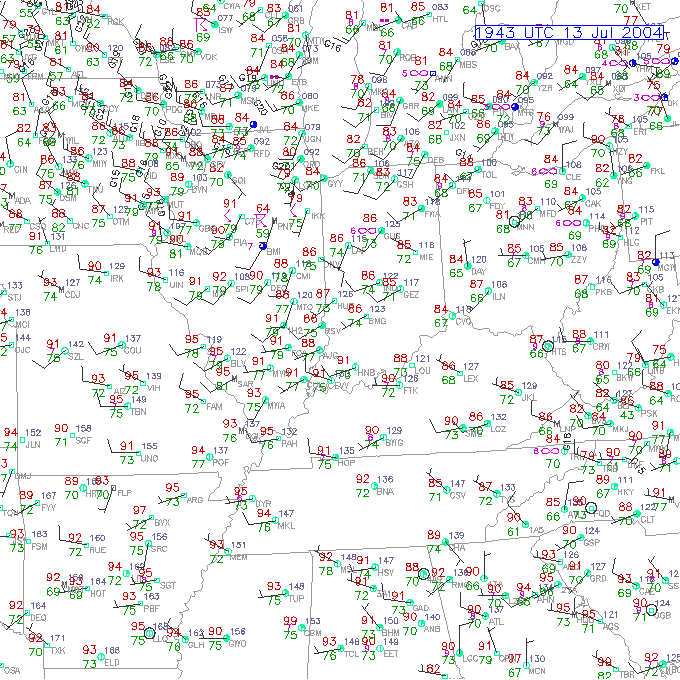
july-13-2004-roanoke-ilThe July 12, 2004, Roanoke, Illinois, tornado is an example of a classic northwest flow event. Rated F4, the tornado was large, long-lived, and not the first violent tornado to occur in northwest flow during the warm season in Illinois. Four years earlier, the disastrous 1990 Plainfield F5 was fueled by massive CAPE amid northwest flow.
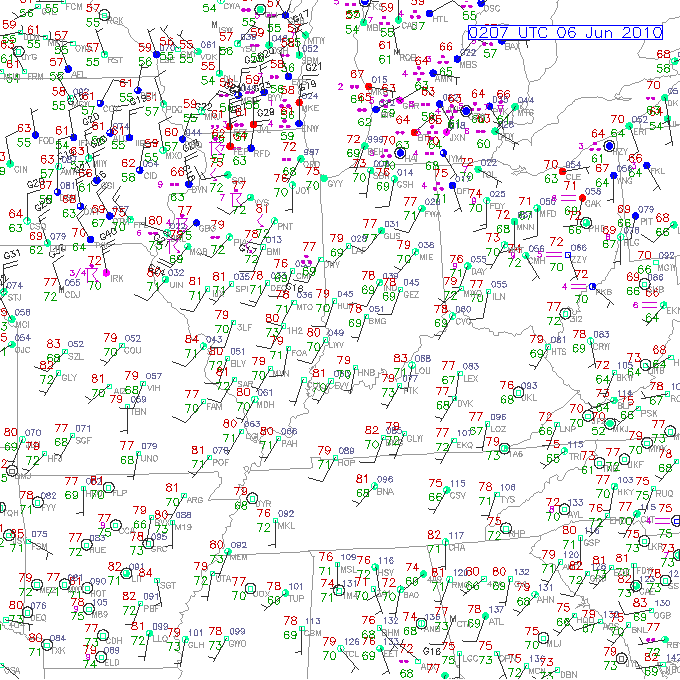
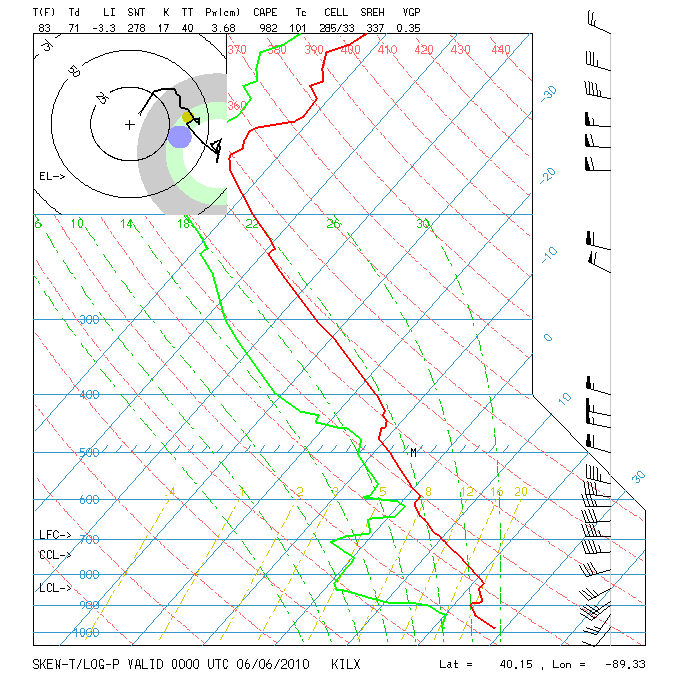
june-5-2010-elmwood-iljune-5-ilx-pm-soundingThe June 5, 2010, central Illinois outbreak was a sort of quasi northwest flow situation. Mid-level winds were predominantly westerly with just a slight northerly component to them. The surface and 850 winds were unquestionably veered. Besides the surface map, I’ve also included the ILX 00z sounding, which preceded tornadogenesis by roughly an hour.
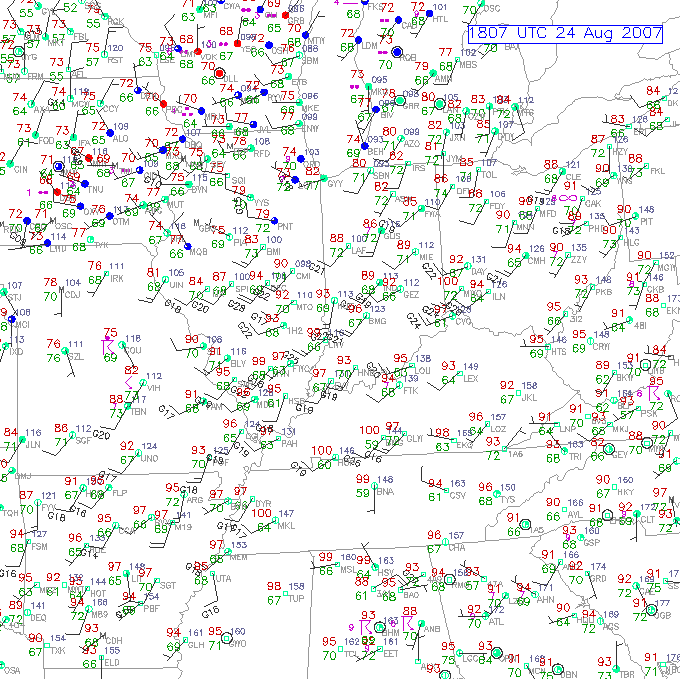
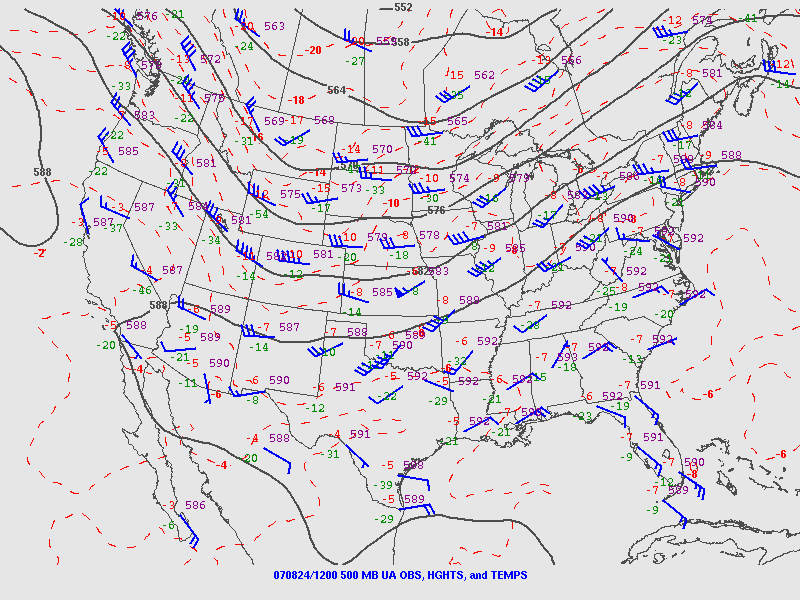
august-24-2007-pottervillepotterville-500mb-12zFinally, the Potterville, Michigan, tornado practically dropped in my lap, but I ignored what the radar was showing me because I was too dumb to believe my eyes even when the dynamics were plainly visible in the clouds right over my head. This was not a northwest flow event; in fact, as you can see by comparing the surface and 500mb maps, it looked to be unidirectional from the southwest, with directional shear increasing as the trough moved east and mid-level winds became more westerly.

You can find plenty more examples besides these, I’m sure. My point is simply this: Don’t be too quick to write off a synoptic setup because of veered surface winds in the forecast, particularly east of the Mississippi. If moisture is in place and there’s reason to hope for adequate SRH, then it can pay to take a deeper look. Things could pop. They’ve done so before and they’ll do so again.

_______________

* ADDENDUM, March 3, 2013: The term “backing” has a couple of different applications. I used it a bit naively in the title and copy to mean southeasterly surface winds, which is the meaning by which I first came to understand the word. That becomes apparent quickly  in the article, but it bears explaining. If I were writing this  post today, I’d simply say “southeasterly” and erase any uncertainty of what I meant.
Storm Chasing for TV 8: Taking It to the Next Level

I met this afternoon with WOOD TV 8 meteorologists Kyle Underwood and Matt Kirkwood to discuss chasing storms for TV 8. I’m excited about the prospect of taking what has hitherto been a longstanding hobby of mine, albeit one of passionate focus, and upgrading it to the semi-professional level.

When Ben Holcomb left Michigan last year for the grand storm chaser’s Mecca of Oklahoma, he offered to hook up several of his Troll compatriots with TV 8 to fill his vacancy. One of those chasers was me. At the time, gracious as Ben’s offer was, I nevertheless felt I had to decline due to a pathetic lack of equipment. But the thought of the opportunity kept nagging at me, so I finally decided to take a chance and purchase some stuff I really can’t afford out of the sense that I can’t afford NOT to do so. My gut instinct, which I hope is right, is that my investment will pay for itself over the storm season. Thus, motivated by the possibility of having my avocation become self-sustaining, with tax writeoffs on mileage and expenses as an added incentive, I dropped a healthy chunk of cash on the following items:

  • ♦ Panasonic HDC-TM700 video camera with 32 gig internal memory
  • ♦ 32 gig HDSC memory card
  • ♦ Logitech Pro 9000 webcam for live streaming video

The cash outlay is not one I take lightly at a time when my money is tight. It’s a good barometer of how seriously I take storm chasing. But after speaking with Kyle, I’m impressed that WOOD TV appears, on its part, to be equally serious about developing a topnotch crew of local chasers. Commitment matched with commitment is a good thing.

Besides my purchase of equipment, over the past few weeks I’ve also invested a good amount of my time and a bit more cash studying for my HAM radio test, which I took and passed last Friday. Today I finally found my new call letters in the FCC list, so I’m now officially good to go as a HAM operator.

Additionally, per Lisa’s recommendation, I’ve registered with Vimeo, and after giving it an introductory look-over, I feel good about that resource as an online video repository. Vimeo should allow me to start embedding my footage in future Stormhorn.com blog posts, and it may also serve as an easy way to make my material accessible to WOOD TV.

All that now remains to be done is to sign up with Chaser TV and start getting familiar with the live streaming video. That and familiarize myself with Vimeo and its capabilities. I’ve got a bit of a learning curve ahead of me between now and April 1, when WOOD TV hopes to begin tapping into its chaser pool.

Since all the chasers in that pool know each other–it’s a small, connected community, as I’m sure storm chasers anywhere will understand–there’s the potential for some decent synergy on a chase day. What one man misses, another is likely to catch.

So…a new experience lies ahead for 2011. No way am I missing big weather when it shapes up out west in Tornado Alley. But if statistics mean anything, this year’s La Nina could bring a bonanza of severe weather closer to home, even to my back door of West Michigan. When it does, I’ll be on it, dashcam streaming and camcorder a-blazin’.

“Tornado Alley” Chaser Party

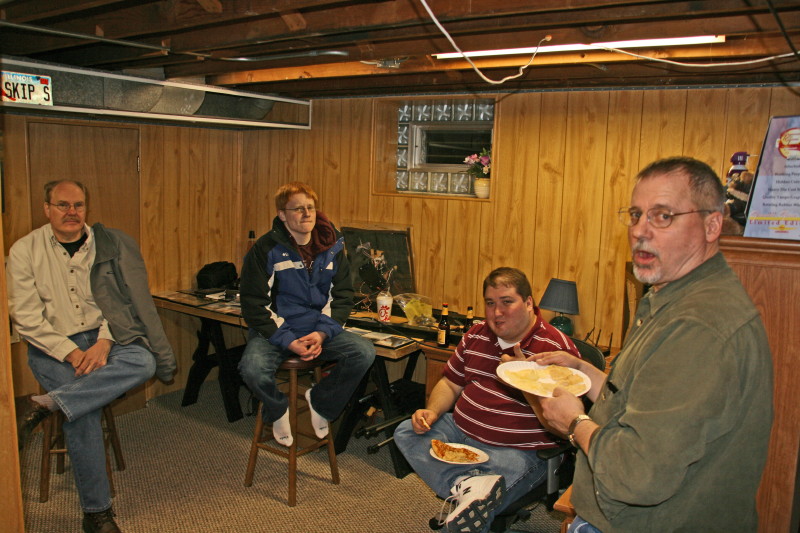
Saturday in Chicago was possibly the best inauguration of a new chase season that I’ve experienced. A little time to take in some of the Museum of Science and Industry; then watch Sean Casey’s long-awaited new Imax film, Tornado Alley; then head over to Skip Talbot’s place and hang out with fellow chasers and watch storm chasing videos…what could be better?

It was good to reconnect with Michigan native Ben Holcomb, whom I hadn’t

seen since he moved to Oklahoma City last year; with fellow Michiganites Nick Nolte and B. B. and L. B. LaForce; and with Scott Bennet, Adam Lucio, and Danny Neal, comrades in arms along with Ben from the infamous Field Fiasco of May 22 in South Dakota. Plus, it was a pleasure to finally be able to meet some people whom I’ve known of for a long time, including Skip Talbot, who hosted the fete.

My buddy Bill Oosterbaan and I left Grand Rapids for Chicago around 10 a.m. Saturday and arrived at the museum with time to spare. Fifty or sixty miles down the road, I realized that I had left behind a couple 4-packs of barley wine which I had bought exclusively for the occasion. It was a minor downside to a great trip. Drat! Now I guess it’s up to Lisa and me to drink all that barley wine–an onerous task, to be sure, but we’ll manage it. In fact, we’ve already whittled away the workload by half, and I’m contemplating a bottle tonight after I’ve finished writing this post.

Watching tornado videos and hanging out with chasers has got me hankering to see some storms. It won’t be much longer now! And this year I’ve got everything I need to kick things up a notch or two with a great new camcorder and live streaming video. Wednesday I meet with one of the Channel 8 meteorologists to discuss doing some media chasing–connection courtesy of Ben Holcomb. Thanks, Ben!

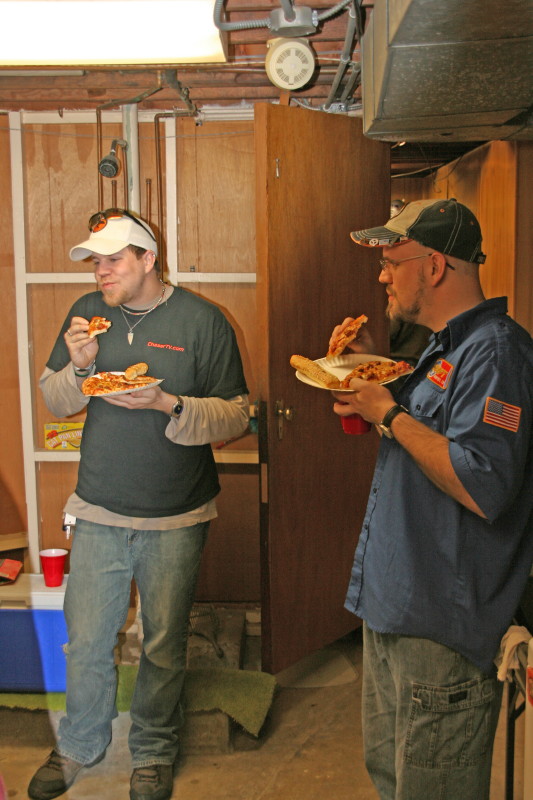
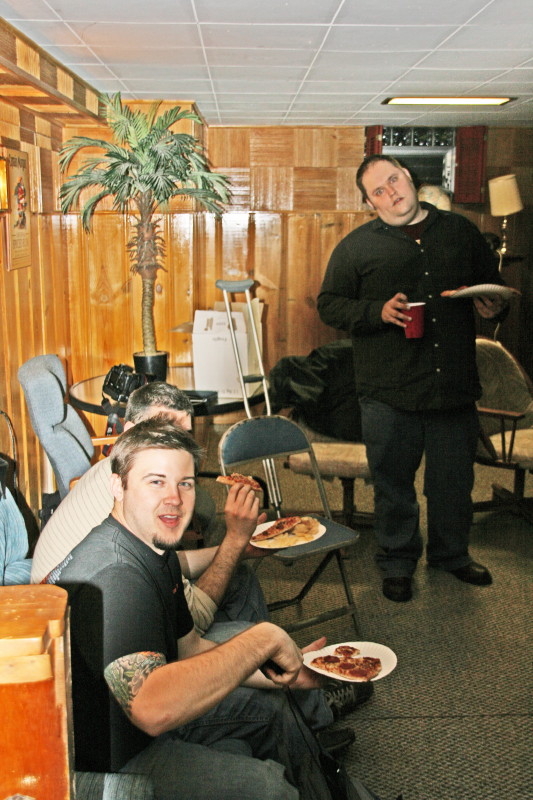
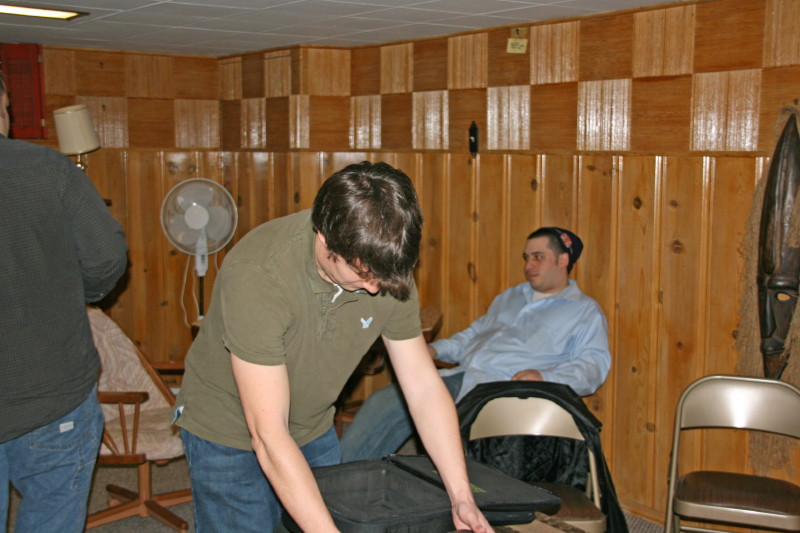
But back to the party, here are a few photos. If you were there and don’t see yourself here, sorry–I didn’t intentionally leave you out. I just didn’t get everyone, and these shots are merely representative.

Skip, thanks to you and Jenny for opening your home to us. To everyone else: great seeing you, and I look forward to crossing paths with you again at the edge of the meso.

What Do You Need to Chase Storms?

“How do I become a storm chaser?” If you’ve been asking that question, this post is for you. I write it with some reservation, knowing that there are people more qualified than I to address the topic. That being said, I’ve been chasing storms with some modicum of success long enough now that I’m confident my insights can have value for those who wonder what it takes to get started.

What do you need in order to chase storms? I’ve seen some lengthy lists developed in response to that question. The input is good, but it can overcomplicate matters, and too much of it all at once can be daunting. If you focus on the word “need,” the answer is much simpler. That’s my approach here: strip it down to the basics, then build from there.

The Foundational Stuff

Here, in my opinion, are the few things that a storm chaser cannot do without:

◊ A roadworthy vehicle, be it yours or a chase partner’s. By “roadworthy,” I mean one that can successfully manage the terrain you’ll be chasing in. If your territory is the flatlands of Illinois and Indiana, or if you intend to stay on main roads that aren’t likely to run out of pavement, then pretty much any vehicle will serve you. On the other hand, if you plan to chase down west Kansas backroads, then you’d better have four wheel drive and great tires; otherwise, the clay out there will slurp you down and ruin your day.

◊ Road maps. Self-explanatory, I think.

◊ Money. You need gas for the tank, right? And maybe a burger along the way.

◊ Basic knowledge of storm structure. Sure, you can chase storms without knowing anything about their features and behavior. But you can’t chase them safely, and the odds of your chasing them successfully are slim. So learn all you can. West Texas storm chaser Jason Boggs has created an outstanding list of educational resources that you can access as quickly as you can click your mouse. Jason’s list mixes basic and advanced material together without discriminating between them. It’s all good, but you should start with the fundamental stuff that deals with storm structure. Veteran chaser Gene Moore’s material on identifying storm features is a good first bet.

Also, a quick plug for Stormtrack, the online informational clearing house, learning resource, and virtual community for storm chasers worldwide. You’ll learn an awful lot just browsing the forum.

One final word on learning: there’s nothing like a mentor. If you can hook up with a seasoned chaser who’s willing to show you the ropes, grab the chance. You can shorten your learning curve significantly. But if such a person isn’t available to you, don’t let that stop you.

◊ Light bars for your vehicle. Absolutely mandatory. How is the world going to know you’re a storm chaser if your vehicle doesn’t resemble a mobile road block?

JUST KIDDING! Don’t worry about light bars just yet.

That’s it for the essentials. Pretty basic, aren’t they–just you, your vehicle, maps, money, and a bit of knowledge. It really doesn’t take any more than that to intercept storms. The main thing is to get out there and do it.

Assuming that you’ve got the fundamentals in place, let’s look next at a few things that will make your chases more successful and your experiences more rewarding.

Important Tools of the Trade

Can you chase storms without a laptop equipped with radar software and mobile data? Of course you can! Ask any chaser who’s been around ten years or longer and they’ll tell you. When the pioneer chasers began paving the way for the rest of us, they did it without all the trimmings. Even Rain-X wasn’t trademarked until 1972, and David Hoadley was chasing storms long before then.

For that matter, I didn’t have any of the following tools of the trade for many years during my own illustrious ascent as a storm chaser. Of course, I didn’t see any tornadoes, either, so don’t take your cues from me. I will tell you that I had a lot of fun learning the slow, hard way. However, my successes came when I started adding a few resources, concurrent with improving my knowledge of forecasting and storm morphology.

All that to say that while the items below aren’t absolutely indispensable, that doesn’t mean they’re not important. They’re very important, and not many chasers today, including the veterans, chase without them.

◊ Laptop computer. It’s your control center.

◊ Power inverter to power your laptop and charge your cameras.

◊ Radar software. Besides a laptop, this should be your first purchase on the list of storm chasing tools. I recommend GR3, at least to begin with. It’s the one used by most chasers, and for good reason: it’s a fabulous program designed specifically for storm chasing, with incredible functionality and flexibility. Just get it, okay? For $80, trust me, you can’t go wrong. For that matter, you get a free trial period that lets you play with the program for a few weeks before you slap down your money.

◊ USB modem and mobile Internet connection. Your best bet is to purchase a USB modem outright; that way you’re not locked into a 2-year contract, and you can deactivate your account during the off-season instead of continuing to pay for data you’re not using. As for Internet connection, Verizon currently provides the best data coverage nationwide, and a lot of chasers use it. Others prefer Sprint, also a good choice. Where you’ll be chasing is something to consider in making your decision.

◊ Radar data feed for GR3. You can use the free feed that NOAA provides. But a lot of chasers prefer a dedicated feed such as those provided by Allisonhouse and MichiganWxSystem. Priced around $10 a month, such a feed is well worth the money.

Nowadays more chasers are using Android phones with radar apps. Not being the geeky type, and also not having the cash, I haven’t looked into these setups. I like having a large display in front of me anyway instead of a tiny screen, but I’m not knocking those who are working with with handheld units. The point is, however you get it and however you display it, you want good, detailed radar information delivered to you with timely updates.

◊ GPS and mapping software such as De Lorme. You’ll also want a serial port emulator that will allow you to use GPS simultaneously with both your map and your radar.

◊ Rain-X. Worth every dollar it costs, and it doesn’t cost much.

SPC Convective Outlooks link. After all, all your great gear doesn’t amount to squat if you can’t find storms! Since you’re new to storm chasing, chances are you don’t have the knowledge to make your own forecasts. Start acquiring it now, beginning with the Storm Prediction Center’s convective outlooks page. It will do two things for you: 1) show you graphically whether and where storms are expected to fire, and 2) through its detailed forecast discussions, familiarize you with the terminology and thinking that go into severe weather forecasting.

◊ Light bars. Don’t leave home without them. How will drab, ordinary, non-storm-chasing mortals know you’re a storm chaser unless…oh, hey, wait a minute. Sorry, we’re still jumping the gun. Forget I mentioned light bars. You don’t need light bars. Not now, anyway. Patience, patience!

Moving On

◊ Station obs, upper air maps, and other forecasting data. Here’s where it gets fun! Making your own forecasts is what separates the be’s from the wannabe’s, and sooner or later you’ll want to try your hand at it. Luckily for you, a cornucopia of forecasting resources is available to you for free online. So start acquainting yourself with the tools of the trade. Check out the tabs at the top of my Storm Chasing page for starters. Also, take a peek at the resources available on my friend Kurt Hulst’s site, Midwest Chasers.

◊ Anemometers, weather meters, and other gadgets. Once you start chasing, you’ll soon run into vehicles tricked out with various devices useful for personal monitoring of wind speed, wind direction, moisture, barometric pressure, and other localized weather conditions. You don’t need any of this stuff in order to enjoy success chasing storms. But depending on how deep and techy you want to get, you might decide that some of it is for you. Just get it for the right reason: to enhance your chasing, not to impress the world with a mess of whizbangs and dingdongs ornamenting the top of your vehicle.

Me, I like to keep things simple. Nothing about my car shouts “storm chaser,” and the only gadget I use is a Kestrel 4500 hand-held weather meter. It’s a cool little device, a regular Swiss Army Knife filled with all sorts of nifty features that I don’t need. I use it mainly to get local, real-time reads on the dewpoint, temperature, and wind speed, information that I do find very useful.

◊ Camera and/or camcorder. A no-brainer if you want to capture visual images of your chases.

◊ Communication equipment. While it probably goes without saying, you should at least carry a cell phone with you. A lot of chasers are also HAM radio operators, and this spring I’ll be joining their ranks with a hand-held unit of my own. I’ve chased for fifteen years without HAM, but I’ve seen the benefits of having it.

◊ Spotter Network. A service of Allisonhouse, Spotter Network interfaces with your radar software and GPS to show other chasers where you’re at and to show you where everyone else is positioned. More importantly, it allows you to quickly and efficiently submit reports of severe weather online from your location.

◊ “NOW can I have a light bar? Can I? Pleeeeze?”

Oh, good grief. Yes, fine, all right, go, get your precious light bar if you must. Buy seven or eight of the damn things. Pick up a spotlight or two while you’re at it. Perish forbid that you should settle for anything less than the candlepower of a NASA launch pad.

My serious opinion: any gadgets you purchase should have a genuinely practical application. I don’t own a light bar myself because I don’t need one. I’m not trained as a first responder, and in the event of an emergency, my best response normally won’t be to clear the road for myself or alert others to my presence, but to get the heck out of the way of emergency personnel who need to get through.

You, on the other hand, may in fact have medical or emergency training and a legitimate use for a light bar. If so, then get one. If not, what’s the point?

And this leads me to comment on one final, vitally important aspect of storm chasing…

Your Attitude

Even as storm chasing has captivated the public through documentaries and reality TV shows, it has also gotten a black eye in some parts of the country due to the misbehavior of irresponsible yahoos. More of these jokers are surfacing all the time. So let’s be clear: chasing storms does not give you license to act like a self-centered idiot. Use common sense. You don’t own the road, so drive safely and respectfully. If you want to stop and film, find a safe place to pull aside so you don’t impede traffic. Drive at a sane speed that doesn’t endanger others, and bear in mind that hydroplaning is a more serious danger to chasers than tornadoes.

Also, have some respect for people who have been chasing for a while. Some experienced chasers have expressed disgust, anger, and disinclination to continue sharing their knowledge after encountering know-nothing newbies who think they know it all. So remember, as a neophyte you’ll earn respect by showing respect. Humility, a thirst to learn, and passion for the storms will get you places that posturing and arrogance never will.

‘Nuff said. Good luck, stay safe, and have fun.

Tornado Safety: Is It a Good Idea to Seek Shelter in a Ditch?

With storm season nearly upon us, now is a good time to revisit a post on tornado safety which I wrote back in November.

Our understanding of tornadoes in the 21st century eclipses what we knew about them, or thought we knew, thirty years ago. Moreveover, our sophisticated warning system has made us much safer during severe weather events today than in decades past. Yet, while the NWS has done what it can to debunk them, some outdated myths still persist.

The notion that motorists who see a tornado approaching should leave their vehicles and seek shelter in a ditch isn’t exactly a myth. Rather, it’s a gray area that you may want to consider more deeply before you bet your life on it. So give this article a read–and we’ll both hope that you never have to put it to the test.

First Day of Meteorological Spring!

IT’S SPRING!!! Spring, spring, springity spring SPRIIIIIINNNG! O joy! O rapture! It’s springspringspringspringwonderfulwonderfulspring!!!!!!!!!!!

And lest I forget to mention it–it’s spring!

Oh, I know, you’re thinking I’ve lost my mind. Unless, of course, you’re a storm chaser or a meteorologist, in which case you know exactly what I’m talking about. As for the rest of you, forget about that old astronomical calendar that wants to make us all wait almost three more weeks for spring to arrive. That way of thinking is so passe, so limiting. Embrace a new outlook full of fresh, springy-sproingy possibilities. Think meteorological spring, which begins March 1–today!

This is the day all you storm chasers have been looking forward to, and I know from reading a couple of your notes on Facebook that a good number of you have been doing air somersaults and cartwheels. You’re happier than Tigger on pot, and I don’t blame you one bit, because we all know what has just entered the room: Storm Season 2011.

That’s right, boys and girls. Dust off your laptops, put your hail helmets in the back seat, and pour yourselves a nice, stiff shot of Rain-X, because it’s time for a toast. Here’s to moisture rolling in from the Gulf. Here’s to a higher sun, warmer temperatures, and longer days. Here’s to strong mid-level jets, deep lows, and gonzoid helicities. I wish you all safe chasing and classic supercells, my friends, and ample reason for steak and beer at the end of your outings.

L’chaim!

Let the games begin. It’s spring!

New Website on 1965 Palm Sunday Tornadoes (and the Truth about “The Twins”)

Someone has finally done it. Elkhart County native Jenni Siri has set about developing a website dedicated to the 20th century’s second worst tornado outbreak, the infamous 1965 Palm Sunday Outbreak. Like me, Jenni has been shaped by the outbreak in a way that has remained with her. In her website, she has provided a forum for survivors of that day to share their experiences.

A few days ago, in an email exchange, I shared my thoughts with Jenni concerning a peculiar controversy which arose out of the Palm Sunday event. It concerns what is probably the most celebrated tornado photograph of all time: Elkhart Truth photographer Paul Huffman’s award-winning photo of twin funnels sweeping across US 33 between Goshen and Elkhart, Indiana.

In his newspaper account, Huffman described the tornado approaching and demolishing the Midway Trailer Court. Yet others have insisted that they saw “The Twins,” as they have been called, strike the Sunnyside Division in Dunlap, nearly 3 miles up the road.

Who is right? After nearly 50 years, the issue still persists. Can it ever be settled?

I believe both sides of The Twins controversy have told the truth about what they saw, and I have a very good reason for thinking so. When I shared my thoughts with Jenni, she asked whether I’d be willing to post them on her site. I had planned to save my theory for my book on the Palm Sunday Tornadoes, but that book is taking a long time to write. Meanwhile, why not try to resolve a conflict which, to my thinking, was never necessary. There’s an explanation that makes truth-tellers out of everyone, liars out of no one, and strikes me as just plain common sense.

But you can’t read it here. Believe me, once I finished my writeup, I was sorely tempted to post it in this blog! But a promise is a promise after all. So instead, I invite you to check out my article, “The Truth about ‘The Twins,'” on Jenni’s excellent site.

This Year’s Regional Focus for Tornadoes: What Do YOU Think?

My last post has now got me thinking ahead to the spring weather season. I’m going to do something I haven’t done before on this blog: rather than share my thoughts, I’m going to ask you for yours.

Here’s the question: What part of the country do you think the focus for tornadoes will be this year? Southern plains, northern plains, farther east…where and how do you think things will play out, and why?

This isn’t a hardcore survey. It’s for fun and curiosity to see how people think. Please click the “comment” tab to respond. If I get a few meaty, thoughtful responses, I’ll share the highlights and interact with them in another post.

Bear in mind that this is a La Nina year. While no research exists that solidly establishes a link between La Nina and tornado outbreaks east of the Mississippi, nevertheless statistics show a correlation. It’s one among various things to consider in what will probably still end up as a roll of the dice. The weather just doesn’t care about our reasonings! But it’s still fun to think about this topic, and a few months from now will tell how close (or far off) we were.

So, what part of the United States do you think will keep storm chasers busy this spring–or will this be a dead year for tornadoes? Lean in and give your nickel’s worth.

Update: Music Posts Now Partially Restored

To those of you who follow this blog: Thanks for your patience as I rewire it following a recent and important transition. While I’ve experienced some setbacks, I’m nevertheless making progress and want to let you know where things presently stand.

The current status will be of greater interest to musicians than weather weenies. In a nutshell, my music posts dating back to November 19, 2009, are now all properly linked to the correct images. When you click on an active link for a particular exercise or solo transcription, now the enlarged image that appears will be what you’d expect to see rather than a photograph of a tornado or a wild orchid!

I know you’re not seeing the image thumbnails! But you can still click them and view the full-size images.

Something appears to be screwed up with my image plug-in, NexGen. The past couple of NexGen updates, rather than improve the plug-in, have degraded its functionality, and the last one evidently stripped the image thumbnails from my pages, leaving white placeholders in their place.

Fortunately, the placeholders are active. So if you click on them, you’ll get a full-size image. Obviously, that’s not a satisfactory long-term situation–the thumbnails need to be restored–but one thing at a time. Right now I want to focus on the things that I can easily fix on my end; then I’ll tackle the NexGen issue. My hope is that meanwhile NexGen will release an update that fixes the problem.

My plan: first fix all the music posts, then the weather.

I’m taking this approach for three reasons. First, the music posts get more traffic through the entire history of the the posts. The exercises, transcriptions, and articles deal with information that doesn’t get dated, and since there seems to be a strong, ongoing interest in those posts, I want to get them restored as quickly as possible.

Second, the music posts aren’t as image-intensive as my storm chasing posts, so they’re easier to fix, and I can have them back in shape relatively quickly. I’m already MORE THAN HALFWAY FINISHED with them.

Finally, this is the off-season weatherwise, and while I know that the weather never takes a break–as I write, an intense winter storm is shaping up for much of the CONUS for tomorrow and Wednesday–nevertheless, we’ve got a ways to go before the spring storm season kicks in. This isn’t to say that I’m not anxious to get the storm chasing stuff–not to mention the other aspects of this site such as my photos page and CopyFox page–hooked up with the correct images. It’s just that I’ve got to tackle this job in an orderly fashion.

Bear with me, because I’m hammering away on this thing as best I can. Getting this blog fully restored and coasting along with all sails catching the wind is a huge priority for me. So stay tuned. My next update will probably come soon, once all the music posts are fixed.

YAAAAYYYYY!!!!! Life in Stormhorn Land Is Lookin’ Up!

What I thought was going to take several weeks of work, maybe a month or more, manually restoring my blog images and broken links one by one now has been drastically reduced to a much more manageable project.

My sweetheart, Lisa, is the absolute Bomb, and today her inner geek came through like a champion–with, I might add, considerable patience and supportiveness for technically challenged me. That combination of her knowledge, helpfulness, and gracious attitude has made a huge difference today, on a morning when I woke up feeling depressed about life in general and Stormhorn.com in particular.

I still have my work cut out for me, but the amount of it has been reduced astronomically, and a big, biiiig, what appeared to be majorly headachy part of it is already taken care of with the complete reinstatement of my NexGen image galleries and a simple correction that has fixed a bazillion broken internal links just like that. Within a few hours this morning, this site has gone from a basket case to well on the road to recovery.

On the reader side, though, Stormhorn.com may still appear to be pathetically busted. You still can’t access most of the images, whether solo transcriptions and jazz patterns or radar grabs and weather maps. You may notice that I’ve even removed my CopyFox page from public view. I mean, who’s going to hire a copywriter whose own business site resembles the victim of a shark attack?

Relax, though. I can say, with confidence and a good deal of relief, that everything will be back soon and once again chugging merrily along.

Here’s What Needs to Be Done

I need to reorganize my NexGen image gallery, which won’t take terribly long. Then I need to go into my posts and pages, one by one, and replace bad image links with good ones. That will takes some time, but you should start seeing the beginnings of the restoration today. I’ll be starting with my most recent posts and working back from there into my older posts until everything is as it should be.

Some other, less pressing details also need attention, but all in good time. What I’ve described above is my first priority. It’s now largely a matter of grunt work, but as I’ve said, the workload has been greatly reduced and I feel far better about things than I did last night.

Thanks so much for your help, Lis! You’re awesome, babe!

ADDENDUM: Yes, I Know That Lots of the Images Are Wrong!

Again, I’ve got some messed-up links to correct. So if you find yourself looking at a weather map where a musical exercise ought to be, take it in stride. It’ll all get sorted out in due time.