COD Severe Weather Symposium

The College of DuPage will host its fourth severe weather conference in Downer’s Grove, IL, on Thursday, November 5, through Saturday, November 7. At $220 a pop for non-students, it’s a pricey proposition. But considering its proximity, Great Lakes chasers may want to invest their shekels. I’ve attended two conferences hosted by Paul Sirvatka et al some years back, and they were very worthwhile. With its cast of preeminent presenters, and topics that include the preliminary findings of Vortex 2, this year promises to be particularly rewarding.

According to the FAQ on the symposium website, “This conference is intended to present the latest in severe weather meteorology to a diverse group of severe weather professionals and students. National conferences present some of this material but time contraints do not allow for a detailed look into the state of the science.”

In the words of COD:

The conference is intended for professional operational and research meteorologists, upper-level undergraduate and graduate students of atmospheric science, storm chasers, severe weather spotters and severe weather enthusiasts. We assume that attendees will have some understanding of severe weather meteorology in order to receive maximum benefit from the severe weather sessions. The focus of the conference is primarily on understanding the latest techniques for severe weather forecasting, the use of meso-scale and storm-scale modelling, physical processes leading to the development of supercells and tornadoes and the effective use of remote sensing in severe thunderstorm evolution and behavior.

This symposium will also highlight some of the preliminary results of VORTEX II.

Rooms at the DoubleTree Hotel and Suites, where the conference will be held, are available for $95 per night and will accommodate four persons.

So there you have it. If you can afford the hotel prices and the cost of the conference, which includes an evening banquet, then this is one event you’ll want to make. I’m contemplating my cash flow, holding my breath, and getting set to register.

Rotten Nice Weather We’re Having

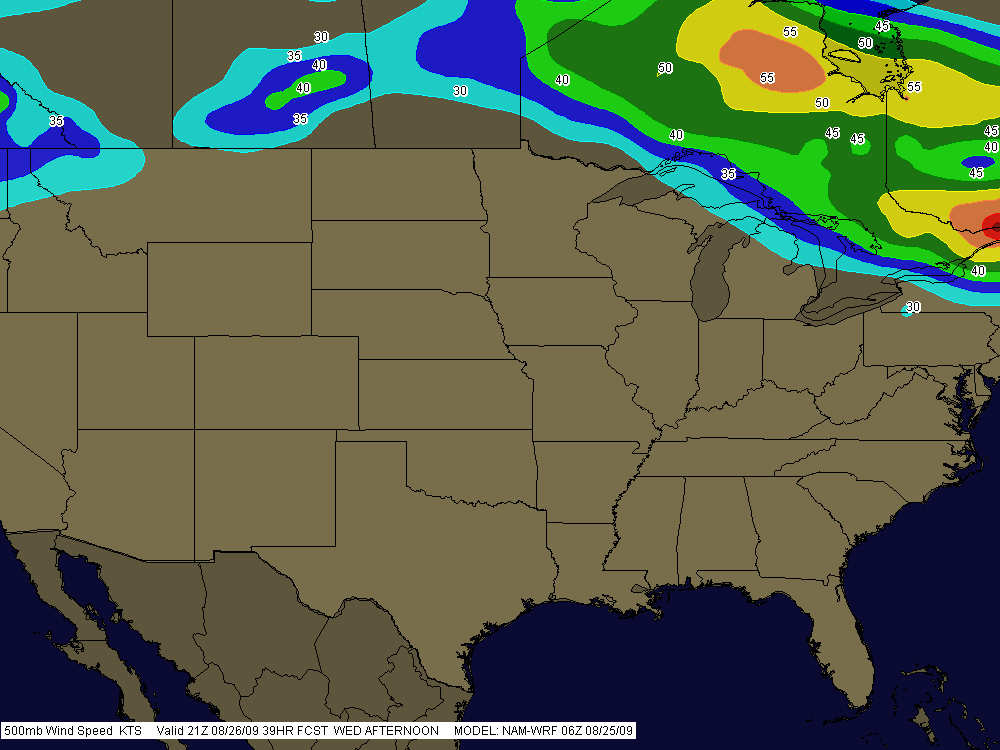
Boy, is it ever summer. The day has dawned a glorious blue, with nothing in the way of convective mayhem in sight anywhere in the nation. Nothing but pop-up thunderstorms on the menu for today here in Michigan, and the 500 mb jet is like a limbo bar raised high enough for most of the CONUS to squeeze under.

SummerPattern

It’s what you expect this time of year, and it’s what we’re getting. The SPC’s long-range outlook is calling for possible troughing by the weekend, so maybe we’ll see a round of severe weather yet. Who knows. But I’m not making any plans. This is August. Might as well be January so we can get winter over and done with, except…well, there’s still always hope this time of year, and the late season to look forward to.

So why am I writing when there’s nothing to write about? Just to wish you a nice day. Enjoy this beautiful weather we’re having here, cuss the luck.

Some Reflections on the Icons of Jazz and Storm Chasing

I just finished looking through a couple forum threads on Stormtrack.org, one of them about what makes a person a “true” storm chaser, and the other about storm chasing legends, about the forerunners who have risen to icon status. In reading the latter thread, I was struck by a similarity between jazz and storm chasing that I had never seen before: each is a distinctively American art form.

While today both jazz musicians and storm chasers hail from all over the world, yet we owe our respective crafts to a handful of American pioneers who, guided by passion and a quest to learn and excel, first set forth into uncharted territory and showed the rest of us the way.

Both pursuits are young. Jazz has been with us for only a century. Storm chasing has existed half that time, a little over fifty years. In the history of both, the progression of discoveries and advancements has been rapid, even dizzying. One obvious difference is that the patriarchs of jazz have passed on, whereas most of the veterans of storm chasing are still with us. Louis Armstrong is long gone, but David Hoadley remains a present inspiration, and while I’ve never met him, I assume from his occasional input on Stormtrack–the online descendant of Hoadley’s trade magazine for chasers–that he’s still fairly active.

I suspect that Hoadley wouldn’t see himself in the same light as Louis Armstrong. From all accounts of David, he’s a humble man who likely would feel surprised to be compared with the likes of Louis. Yet both men are innovators. Both followed their instincts to accomplish something that had never been done before. In Armstrong’s case, the result was the birth of a brand new musical language of feeling, inflection, and improvisation. With Hoadley, it was the acquisition of knowledge and insights that could only come from actively pursuing tornadic storms rather than passively waiting for the storms to come to him.

Louis Armstrong, Benny Goodman, Charlie Parker, Dizzy Gillespie, Miles Davis, John Coltrane.

David Hoadley, Tim Marshall, Jim Leonard, Chuck Doswell, Al Moller, Howard Bluestein.

The lists are only partial, and over time they will grow. Storm chasing probably has more potential for true innovators to rise within its ranks than does jazz, for similarities aside, jazz is driven primarily by creative explorations that have for the most part already been made, whereas storm chasing deals with a subject about which much still remains unknown, and is influenced to a much greater degree by advances in meteorology and technology. Regardless, the icons of each field occupy a special, venerable position that can never be duplicated. The rest of us–whether we’re small-town musicians or world-renowned artists, or whether we’re neophyte chasers or OKU grad students with plenty of chase seasons under our belts–can only do the best we know how to carry the torches lit by our predecessors.

From our ranks, too, new knowledge will come and new beauty will be birthed, and from time to time, someone truly remarkable will rise to the surface. Let’s hope that person’s generosity of spirit will be in keeping with his or her abilities.

As was Louis’ Armstrong’s. As is David Hoadley’s.

Finding Jazz in the World Around Us

My sweet lady, Lisa, and I took a trip to Meijer Gardens earlier this week. Today, sifting through the photos I took as our tram ride wound along the curvy path through the world-class outdoor sculpture garden, and afterward as we strolled through the remarkable plantings in the children’s garden, I’m struck–as I often am–at how the elements of music are woven into the very fabric of our world.

Jazz is all around us. Form, space, unity, diversity, rhythm, dynamics, improvisation, color, texture, contrast, creativity–whether in music, nature, speech, literature, art, human relationships, or above all, our relationship with God, you’ll find the same qualities working together to create beauty and interest.

Consider the qualities of space and contrast. In a jazz solo, the notes you don’t play are as important as the ones you do. Too much clutter, too many notes in endless procession, ceases to communicate. As in writing and conversation, well-placed punctuation–held notes, brief pauses, and longer rests–helps to shape musical ideas and gives them breathing room. Yet the furious density of artfully placed double-time passages creates another form of color. Both space and density can be overdone; it’s the contrast between the two that helps raise a solo from the doldrums to vitality.

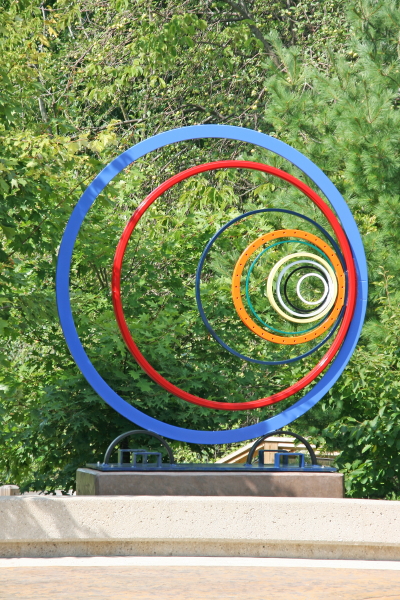
The massive red iron piece titled “Aria” is a great visual representation of the interrelationship between music and art. The piece has a rhythm to it, shape, space, contrast–all the aspects of a well-crafted jazz improvisation.

Aria: like a jazz solo cast in metal.

Aria: like a jazz solo cast in metal.

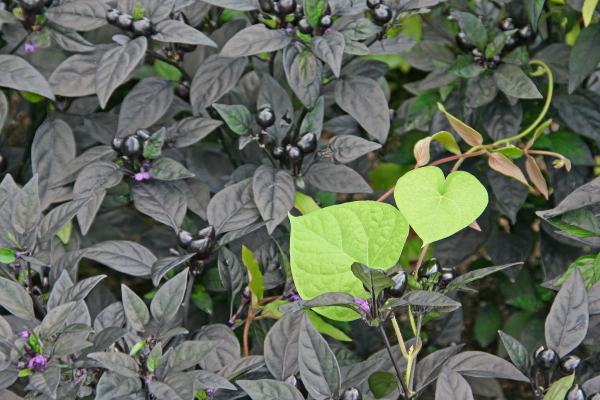
Here are a few more images from the sculpture garden and children’s garden that remind me of music and jazz.

What musical elements can you detect? Space? Sequence? Color? Dynamics?

What musical elements can you detect? Space? Sequence? Color? Dynamics?

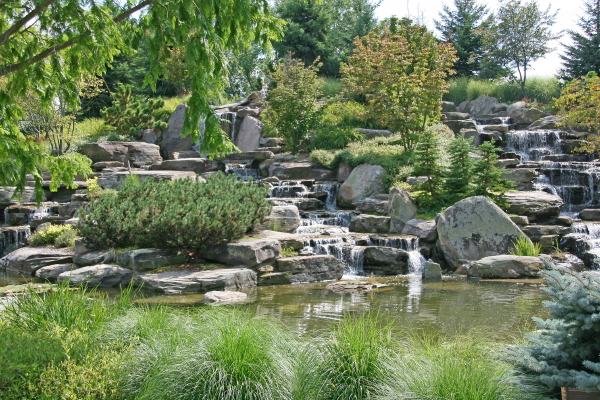
This landscape sculpture creates unity out of contrast and serenity out of movement.

This landscape sculpture creates unity out of contrast and serenity out of movement.

If only I could play a solo as creative, spontaneous, and cohesive as this!

If only I could play a solo as creative, spontaneous, and cohesive as this!

Lisa: the beautiful song God has brought to my life!

Lisa: the beautiful song God has brought to my life!

The 2009 Storm Season: A Good One or a Bad One?

Reading a thread in Stormtrack, I came upon a comment in which the poster briefly griped about how the 2009 storm chasing season had been a lousy one for him. In the post that followed, another member mentioned that it wasn’t fair to blame the weather for one’s personal lack of scalps when the season itself had been pretty solid. The context was lighthearted, though I read enough pointedness to the second comment that it made me stop and think.

The first commenter never said there weren’t plenty of tornadoes; he just said that he’d had a lousy season. My own season hasn’t been that hot either. For the thousands of miles I’ve driven, I’ve only got one tornado to show for it–at least, one that I’m certain of. Sure, I’ve witnessed some beautiful structure and gotten beaned by some big hail in northwest Missouri, but this year has been nothing like 2008.

Am I blaming the weather? No. Those who were in a position to chase all the slight risk day in the Great Plains, from the southern plains to the Canadian border, had plenty of opportunities and did great. But me, I live in Michigan. Much as I’d like to be out there chasing slight risk days in Kansas, Nebraska, Colorado, and the Dakotas, logistically it’s just not feasible for me to do so. I’ve got a livelihood to earn, and gas and lodging cost money.

Add to that the fact that I made at least one poor judgment call that took me and my buddy south when we should have gone north, and I’ve had what amounts to a mediocre to poor storm chasing season. If I lived in the heart of Tornado Alley, I think I’d have enjoyed a much better one. But where I live, I have things to factor into my chase/don’t chase decisions that wouldn’t be as much of a concern if I lived in, say, Oklahoma City or Topeka, Kansas.

That’s not the weather’s fault. It’s just a matter of geography and personal circumstances. If I were to blame the weather for anything, it would be for putting in a substandard performance so far in the central Great Lakes, an area that never fares as well as the plains states to begin with. But of course, it’s pointless to blame the weather for anything, period. Weather isn’t an ethical entity–it just does what it does, and those of us who chase after it have to make our judgment calls the best we know how.

Living in Michigan, I’d be a fool to go after synoptic setups that I’d be an equal fool to pass up if I lived in Kansas instead. That’s the reality, at least for me, though I think I’m by no means alone.

So no, this hasn’t been a bad season for chase weather, not at all. But if you’re me, it hasn’t been a very good season for getting to much of the action.

Maybe the secondary season this fall will create a few more opportunities. I hope so. Give me another setup like October 18, 2007, and I’ll be a happy man.

August Lightning

Kurt Hulst and I got together to chase a little lightning last Sunday, August 9.  With dewpoints in the low to mid 70s, temps in the low 90s, and CAPE around 3,000, there was plenty enough gas in the convective tank. Borderline bulk shear and unidirectional winds meant that tornadoes wouldn’t be the order du jour, but it was nice to just get out and watch some storms.

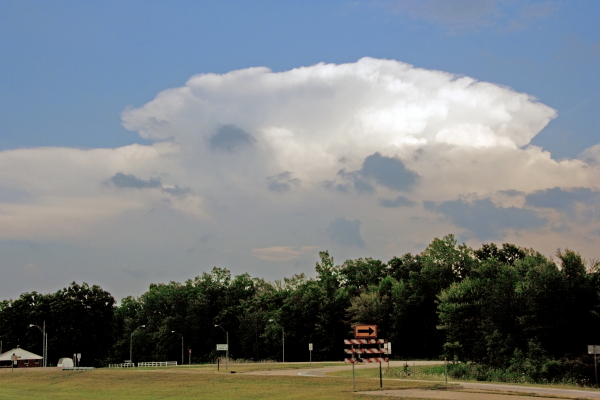
Strong thunderstorm south of Lansing.

Strong thunderstorm near Lansing.

Strangely, even though Kurt and I both knew that it probably didn’t make much difference where we went, north or south–there were a lot of storms to choose from–we had a hard time choosing where we wanted to go. I guess there’s always something that lurks in the back of my head that thinks, I know there won’t be any tornadoes, but just in case, where would one be likeliest to form? It’s dumb, but it’s what goes on in my head and probably what goes on in Kurt’s too, and it tends to needlessly complicate simple choices.

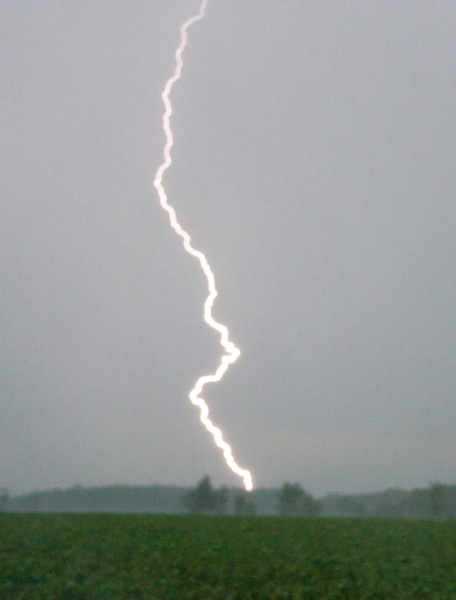
Anyway, we opted to head north and wound up near Saint Johns, where we parked and let a gust front munch us with high winds, spotty but heavy rain, and infrequent lightning.

A lightning bolt strikes outside of Saint Johns, Michigan.

A lightning bolt strikes outside of Saint Johns, Michigan.

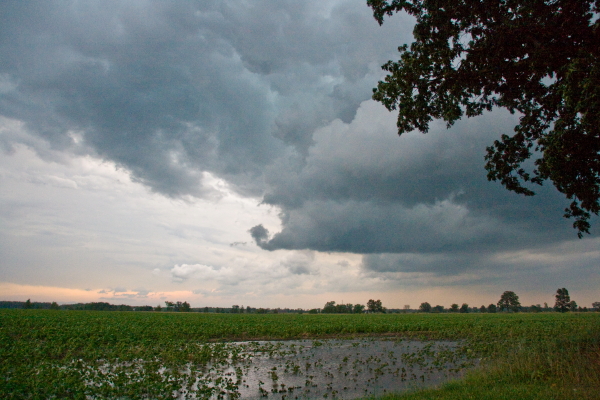
Evening colors tinge receding storm clouds.

Evening colors tinge receding storm clouds.

Afterward, we dropped south on I-69 to Charlotte and caught another cell moving in. Kurt got at least one nice lightning shot. I didn’t get anything at that location, but I didn’t mind. The sunset was extraordinarily beautiful, with melon-colored light filtering through wandering rainshafts and turning the sky to a patchwork of clouds, some catching the sunset rays and others concealing them, like a wardrobe filled with glowing garments and gray rags.

Later that night, a second batch of storms blew through Caledonia, and these ones were most sincere. The lightning was nonstop, but the time was late, I was in bed, and I decided to forgo trying to shoot lightning from my balcony and simply lie there and enjoy the show.

Jazz Goatee

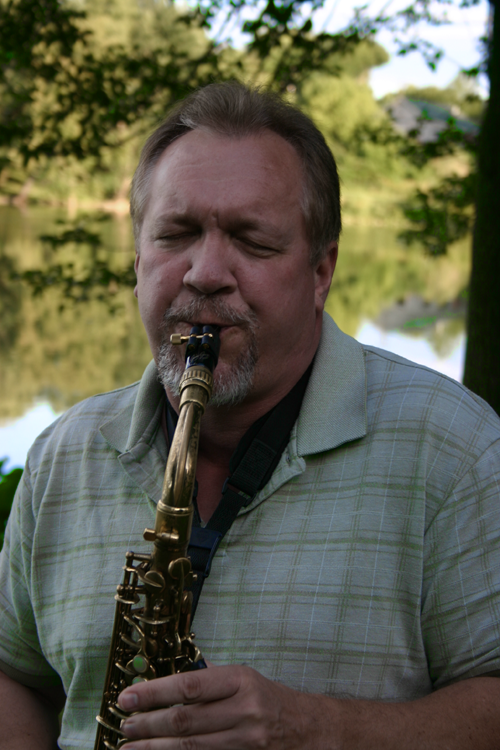
Having nothing much to say tonight, I thought, what the heck, maybe you’d like to see a recent photo of me. The goatee is something new. I’ve had one in the past, but I got tired of it and trimmed it off. However, I fancy that I look rather good in a goatee, so I thought I’d take another whack at growing one. After all, a goatee is a pretty jazz musicianly thing.

closeup11

Mine has more salt in it than seems right for a guy who’s only thirty years old and has been for quite a few years. But that’s okay. I’m told it makes me look dignified. I’m far too young to look dignified, but I’ll take that over looking ugly.

Besides, my buddy Dewey assures me that people will treat me with more respect and take me more seriously now that I’m sporting a goatee. Of course, it’s hard for me to take Dewey seriously when he tells me this, since he himself is not wearing a goatee.

No matter. What counts is, my lovely woman Lisa thinks I look good, and she made me look fairly decent in this photo. A bit red-faced, but that comes with blowing a saxophone, something I’ve been doing for over forty years now. I think you’ll have to agree that’s a pretty neat trick for a guy who’s only thirty years old.

“Will I Ever Become a Good Jazz Improviser?”

What does it take to become proficient at improvising jazz? Will I ever become a decent player?

Have such thoughts ever nagged at you? Perhaps you’re at the stage where you’ve acquired a decent technique, but you’re uncertain how turn it into flowing, musically cohesive improvisations. Will you ever be able to make the leap between mere good chops and great jazz solos?

Or maybe you’ve been playing the sax for a while and you think you’re making strides. Then you come across a YouTube video of some young firebrand who’s blowing circles around anything you ever dreamed of playing, and your heart sags. At that point, you think one of two things: What am I wasting my time for? or I can be that good too if I work at it.

Depression or determination. I’ve felt both emotions at different times. When I was 26 years old, I took a year of music at Wayne State University in Detroit. During my time there, living on campus, I made arrangements to practice after hours in the music building, where I normally woodshedded from 9:00 p.m. to as late as 3:00 in the morning. I worked hard, doing scale exercises, running patterns, and memorizing solos from the famous Charlie Parker Omnibook.

One evening I walked into the building early and heard sounds of music drifting from the auditorium, where one of Detroit’s high school jazz bands was playing a concert. I listened for a bit. They sounded pretty good! But I had work to do, so I broke away and headed for one of the empty classrooms, which I preferred over the smaller practice rooms. Then I assembled my horn and began to work on one of the Omnibook transcriptions I was memorizing.

A few minutes later, several of the high school band members walked into the room. The concert had ended, and they had heard me playing down the hall and decided to get an earful. Cool. I didn’t mind if they hung out and listened. I chatted with them a bit, and then the bass player said, “Hey, we gotta get James.” The other guys agreed that James definitely needed to be gotten, and one of them left to look for him.

I continued to work on my Bird transcription. Pretty soon, in walked a fourteen-year-old kid with a tenor sax tucked under his arm. He listened to me for a minute, then said, “Oh, ‘Ornithology.'” He put his horn to his mouth and started to rip through the Parker solo from memory as flawlessly as if his genetic makeup included an ‘Ornithology’ chromosome. Then, having demonstrated his mastery of a solo that I was only beginning to get my arms around, the kid proceeded to double-tongue a chromatic scale up into his horn’s altissimo register, high enough to sterilize the flies in the room.

I wanted to slap him.

The kid went on to tell me how he planned to master not just the saxophone, but all of the woodwind instruments. Whether he has entirely fulfilled that lofty ambition in the years since, I can’t say, but I do know that today, jazz virtuoso James Carter plays a large number of the woodwind family in addition to the tenor sax.

Fellow saxophonist Tom Stansell, whose family owns and operates the celebrated Blue Lake Fine Arts Camp in Muskegon, where Carter spent a summer as a student years ago, once commented, “No one ever told the kid that it’s hard to play fast.”

As for me, I just kept plugging away at my saxophone. My journey as a musician hasn’t taken me to New York at age 21 or on international tours. Rather, it has placed me in Caledonia playing for cows in the pasture at the west edge of town and taking gigs as they come, which they seem to be doing more and more of lately.

And they should be. Because while I’m no James Carter, I’m a good sax player. I’ve been told on different occasions that I don’t realize how good I really am, and maybe that’s true. I hope so. Coming from capable musicians, compliments like that certainly encourage me, because I’ve worked hard to bring together all the technical stuff–the scales, arpeggios, patterns, solo transcriptions, and everything else I’ve labored at over many years–into something that sounds interesting, original, personal, passionate, and…well, musical.

I hadn’t initially planned to share the above anecdote, but there’s a point to it: discouragement and inspiration often come from the same source, and they’re just a matter of how you look at things. Maybe you’re not playing the way you wish you could play today. But if you stick with it, one day you’ll look back and realize how far you’ve come. The technique that you’re presently unsure what to do with will have become your servant, the building material of ideas which you spin with confidence and ease out of your horn. You may not be the next Michael Brecker–or maybe you will be–but that’s not what it’s about. Do what you do for the love of what you do, and everything else will follow in its time.

Not all of us have the same advantages. Not all of us grew up in musical families or were steeped in jazz at an early age. Not all of us have the same natural aptitude, the same educational opportunities, or the same life circumstances that permit us to practice as much as we’d like. But all of us have the ability to choose whether to persevere or give up. So…

“Will I ever become a good jazz improviser?”

If you quit, the answer is no.

If you keep at it, studying the music, listening to great players, and practicing diligently and consistently, the answer is yes.

Don’t rob yourself of the joy of playing music worth hearing. Don’t deprive the world around you of the pleasure of hearing you. And don’t belittle the talent God gave you, because into that talent is woven a purpose that is higher than you may imagine.

Stay with it. You’ll be glad you did.

Changes Coming to Stormhorn Blog

Greetings, friends and readers of Stormhorn.com!

I want to fill you in on some changes that are in the works for this blog. They’re not here yet, but they are impending, and I anticipate that they will help take the blog, and eventually its parent Stormhorn website, to the next level.

At the moment, the most significant change in the works is a brand-new, custom theme. My lady friend, Lisa, who is absolutely brilliant at website development, online marketing, and all things computer, has been beavering away steadily at the new version. When it is done, this blog will have a new look and much greater versatility. I’m excited about what Lisa has got planned, and I can’t wait to roll it out once it’s ready, see how you like it, and get your feedback.

Concurrent with the new theme, I’ve been thinking about adding an extra element of interest by featuring guest bloggers from time to time. They will be from the worlds of both music and storm chasing. I like the idea of offering you insights and perspectives besides just my own, and I hope that doing so will provide an added value for my readers as well as a positive experience for my contributors.

About my Jazz Improvisation E-BooK: While this project has been on the back burner for a while, I do anticipate picking it back up at some point. I’ve already got several installments written; however,  because I tend to be pretty thorough, each lesson takes me considerable time to develop, and with other more pressing matters to deal with, I just haven’t had time or focus for the e-book. Stay tuned, though, because it is by no means a dead project. As this blog and website continue to develop step by step, I will at some point get the e-book back on track.

So, there you have it: changes are coming to Stormhorn.com, and the first of them is right around the corner. Meanwhile, I’ll continue to post with the existing format, which has served me well thus far. I hope you’ve enjoyed your visits here, and that you’ll enjoy them even more as this blog enters an exciting new phase.

Cool-Weather Wall Clouds

So there I was, driving down I-96 toward my mother and sister’s house in Grand Rapids this afternoon, when I saw what at first glance looked like a wall cloud. It looked like one at second glance, too, and third, hanging off of a cumulus tower in the distance.

Severe weather wasn’t in the outlook today, and in fact, the afternoon was coolish and not particularly moist, with spotty showers but no thunder or lightning. I was unaware of any reason to be on the lookout for abnormal weather, though the extent of the vertical development in the cumulus clouds coupled with their nicely sheared look would have been a tip-off under more propitious circumstances.

Anyway, I was intrigued by the cloud formation, but not quite prepared to call it anything more than a lowering at that point. It was falling apart over Grand Rapids by the time I turned north onto the East Beltline. But the show was far from over. Another large towering cumulus several miles to my northwest was exhibiting an even larger, blocky lowering which wasn’t showing any signs of dissipating.

That did it. It was time to get close enough to this thing to see just exactly what it was. This was a simple matter. The cloud was drifting quite slowly, and intercepting it involved nothing more elaborate than continuing north up the Beltline past 7 Mile Road, then pulling into a small turn-in, where I had an unobstructed view from maybe half a mile away.

The cloud was indeed a wall cloud. I could see a weak updraft dragging scud up into it, and even a hint of an RFD. More important, the cloud was circulating–very slowly, to be sure, but unmistakably. As it moved closer, I even observed a small, anticyclonic vortex spinning almost directly overhead. There was obviously enough shear and helicity in the atmosphere to create some interest, and I had a nice front-row seat. Just wish I’d had my camera with me, but as I said, I wasn’t expecting anything weatherwise today that would have made me think to grab it.

What I was seeing struck me as more fascinating than threatening, but I decided to call KGRR and report it anyway, just for the record. The met who took my information said he wasn’t surprised. He told me that the office had already received several reports of waterspouts out on Lake Michigan, plus other reports of funnel clouds. Sounded like a cold air funnel outbreak.

My buddy Kurt Hulst called later to tell me that he, too, had seen a wall cloud over Caledonia from where he lives in Kentwood. If I’d been home, it would have been a front door delivery, but of course I wasn’t. Seems to me, though, that Kurt said he got some photos. I hope so, because I’d like to see what I missed.

Days like today just go to show that the weather does what it wants, when it wants. Maybe the local WFO will offer an analysis of today’s conditions. That would be cool.

Lesson learned: take my camera with me wherever I go.