Preparing for Storm Season 2009

Out of curiosity, I just ran the GFS down to 384 hours. The SPC has posted a light risk for parts of the South on Wednesday, but that may be just a foretaste of an upcoming active period. Did I already write about this recently? Not sure, but if so, I’m writing again.

Long-range prognostication is something like reading tea leaves, but consulting the numerical models still beats going to a groundhog for your two-week weather forecast. At around 204 hours, a nice surge of moisture appears to unlock the the Gulf of Mexico for several days, with 55 degree  dewpoints extending as far north as Missouri, southern Illinois, and Indiana.

Am I hanging my hat on this? Heck no. I’m just thinking, quite wistfully, how nice it would be if what I just saw bore some resemblance to how things actually play out nine days hence. In February, one dreams if he’s a northerner and shudders if he’s a resident of Dixie Alley.

I’m anxious to to see some great storms this year. Last year was fabulous, but I blew some great photo ops because I didn’t know how to use my camera. This year I think I’ve overcome that concern. Now if only the weather and my finances will cooperate.

Meanwhile, I’ve decided to make the best of the holding pattern by signing up for Tim Vasquez’s severe weather forecasting class. It’s a small group setting that will be held on Sunday, March 8, in Norman, Oklahoma. I just shelled out my hundred bucks today and am really looking forward to attending this thing. My chase partner, Bill Oosterbaan, will be joining me. This ought to be a perfect way to really tighten down our forecasting skills for storm chasing season 2009 by learning from one of the foremost gurus of the field. I own nearly all of Tim’s books, and also his Forecast Laboratory software. It’ll be cool to finally pick his brain for eight hours in a focused, fairly personal setting.

More immediately, though, this evening the sun set at 6:17 here in Caledonia, and tomorrow the temperature is supposed to spike to a sweltering 36 degrees. I’ll take that and like it for now. It presages good things to come.
Blowing Strong: National Storm Chaser Convention and a Great Gig with Francesca

What a fun and interesting weekend this has been! I had the rare pleasure of indulging both of my two main passions in life, storm chasing and playing jazz.

Fellow chasers Bill Oosterbaan, Kurt Hulst, and I got together Saturday at Bill’s house and spent the day watching live, streaming video of the eleventh annual National Storm Chaser Convention in Denver, courtesy of SevereStudios.com. When 6:30 rolled around, I broke away and played a gig at One Trick Pony in downtown Grand Rapids with Francesca Amari. The engagement was a blast and we were well received; tunes included a vocals-sax duet on “Good Morning, Heartache,” as performed on Francesca’s new CD, Better Days. Then this morning, I got together with Bill again and we watched the rest of the conference.

The entire conference was great, but from my perspective, the last part was the best. This included talks by Dr. Greg Forbes, Jon Davies, and Rich Thompson on forecasting and mesoscale analysis. I learned a couple things that will definitely be helpful for this coming chase season, which is just around the corner.

All in all, a most enjoyable couple of days. I finished by spending an hour or so practicing my saxophone, which is performing beautifully for me after coming back from the repair man.

Another point of interest: I’ve been invited to put together a little unit to play for the Thornapple Jazz Festival on April 17, hosted by the Thornapple Arts Council of Barry County. I’m excited about this, and pleased that the festival coordinator, my friend and fellow jazz musician Joe LaJoye, thought to ask me. I’ve already got two standout players lined up for my rhythm section, and am considering whom I’ll use for the last one.

Lots going on, and much of it good. Today it snowed, but with temperatures in the thirties, even the cold weather is warmer than it was a few weeks ago. From storm chasing conferences to jazz festival invitations, there are signs that spring is on the way.

The Wisdom of Not Chasing Storms in February (or, Gee, I’m Glad I Practiced My Sax Instead!)

When it comes to chasing early-season severe systems, I’m getting better about reining myself in. Today was the big test. With a whopper of an H5 jet max–upwards of 120 knots–pushing through northern Kentucky into southern Indiana and Ohio, it was tempting to make the drive down to Xenia and parts thereabouts. True, the whole thing looked to be a massive straight-line wind event, but you never know, right? Particularly when you’ve been cooped up all winter with a nasty case of SDS (Supercell Deficiency Syndrome).

I’m patting myself on the back for not going. In fact, I didn’t chase squat today, not even the grunge that was drifting north from the border and offered at least the possibility of a little lightning. That would have been nice to see in February, but I just couldn’t muster the enthusiasm, and now I’m congratulating myself for my restraint.  The wind event did in fact materialize, but way to the south, down in southern Ohio, Kentucky, Tennessee, and on to the east, and not a solitary tornado report do I see in the whole batch of SPC storm reports. So I’m very glad I managed to ward off the temptation to grasp at straws. Not only am I not presently driving the long 350 miles home, wondering what on earth I was thinking that brought me down there in the first place, but I invested my time into practicing my saxophone, a much more profitable activity.

I worked with my new copy of Emile and Laura De Cosmo’s book The Diatonic Cycle, which arrived today in the mail. It’s fun to work with a practice book again. These days, I do so much of my practicing straight out of my head, and the De Cosmos‘ well-conceived, organized, and interesting approach comes as a welcome new way to work on my scales and keys. It should keep me occupied for a few months as I work my way through all twenty-four major and harmonic minor scales as presented in the book.

Opting for practicing my horn over chasing storms was a smart move today. Yesterday, on the other hand…well, if I lived 500 miles closer to Oklahoma, I’d have been all over yesterday’s severe weather. Sadly, that weather marked the year’s first tornado fatalities. It appears that the sirens weren’t working as a large, violent wedge rototilled the town of Lone Grove, Oklahoma, west of Ardmore, doing EF4 damage and taking fifteen lives. According to reports, some people were caught out in a parking lot. How awful. February is not a time when folks in the Great Plains expect such things, and I’d imagine that many people were caught off guard.

Looking ahead, the Gulf of Mexico appears to be opening up for business in Dixie Alley, but we won’t be seeing any of that moisture this far north again in the foreseeable future.  Tonight we plunge back into snowy conditions. This is, after all, February in Michigan.

Remembering the Super Tuesday Outbreak

A year has passed since a swarm of eighty-seven tornadoes churned across Dixie Alley, claiming fifty-seven lives over a two-day period from February 5-6, 2008. Beginning on the day when twenty-four states were holding their Democratic primary elections, the Super Tuesday Outbreak has gone down in the books as the deadliest tornado outbreak since the full implementation of NEXRAD, and one of the worst in history.

The outbreak packed twenty-one confirmed strong tornadoes, including five rated at EF3, and five violent EF4s. One of the latter carved a 122-mile swath across Arkansas–the longest continuous tornado path in that state’s records.

My storm chasing partner Bill and I made it as far south as Louisville, where we intercepted one supercell and then headed back east to Corydon, Indiana, parked, and let the squall line slam into us. You can read my chase account here. Had we left a little earlier, we’d have made it farther south and likely would have seen some of the tornadoes. One came as close to our position as Brandenburg, Kentucky, just a handful of miles away.

Storm season 2009 is drawing near. Today the skies are blue, clouds are scooting along on a brisk low-level jet, and temperatures are in the fifties. This next week looks to be an active one, and while I don’t expect much more than rain in the Great Lakes, it’s nice to see the Gulf of Mexico setting up shop and giving us a taste of springtime weather. Rain instead of snow is good! And warmer temperatures will be with us for at least this next week. I doubt we’ve seen the last of mid-teens, cold-air intrusions, but if we have, I won’t go into mourning.

Storms of 2008 DVD

I just received my new Storms of 2008 DVD in the mail a couple days ago, and I have to say, it’s fabulous! Having been thoroughly smitten with its predecessor, Storms of 2007, featuring its remarkable coverage of the historical Greensburg, Kansas, EF5 tornado, I was skeptical that any subsequent effort could live up to such high standards. But I have to say, this latest in the celebrated “Storms of…” series has more than met the challenge. Simply put, this is a stellar work, and if you’re at all a fan of storm chasing, you need to buy it, period.

And when you make your purchase, know that your $24.95 goes directly to helping disaster victims across the United States. The “Storms of…” series is an organized effort on the part of the storm chasing community to make a tangible difference in the lives of people who have been directly affected by severe weather and other natural disasters.

Judging by the remarkable footage in this DVD–often sublime and at times mind-boggling–you’d never guess that it is a grassroots effort. Yet, as with all the videos in the “Storms of…” series, Storms of 2008 is strictly a product of the storm chasing community. As such, it is a tour de force of the remarkable talent pool within that community. Videographers, meteorologists, seasoned storm chasers, gifted amateurs…all these and others besides have worked hard and long to produce a world-class video and a true labor of love.

The history-making Super Tuesday Tornado Outbreak that scoured Dixie Alley on February 5…the late-May tube-fest that blotted SPC storm reports with red for the better part of a week…the beautiful Dighton wall cloud…the Quinter EF4 duo…the tragic Parkersburg, Iowa, EF5…they’re all here plus a whole lot more, complete with synoptic analyses and topnotch narration.

Am I saying that you have absolutely gotta, gotta, gotta purchase this exceptional DVD? Yup, that’s what I’m saying. Just do it, okay? You can thank me later for being so pushy. Your money will help to make a real difference in people’s lives, and trust me, you’ll love what you get in return. Storms of 2008 is the definitive anthology of last year’s convective Armageddon in the United States. Buy here. Or visit the Storms of 2008 website to obtain more information and view a video trailer.

To the devoted cast of producers, editors, and engineers who faced the challenges and frustrations of making Storms of 2008 happen–BRAVO! And thanks!

Emile De Cosmo and the Polytonal Rhythm Series

I got a most pleasant surprise today while checking my voice mail. A gentleman named Emile De Cosmo had left a message saying that he had run across my post on jazz contrafacts while researching the topic online, and inviting me to call him back. Emile mentioned that he is a jazz educator who has written twenty-six books, and wondered whether maybe I’d heard of his material.

Are you kidding? Heck yes, I’d heard of his books, and of Emile. I’ve known of Emile since back in my college jazz studies days, when I first encountered an ad in Downbeat for his Polytonal Rhythm Series and ordered one of the books from that series.  Good grief–Emile De Cosmo, calling me? What an honor!

Of course I returned Emile’s call, and we had a most enjoyable chat. Besides being a passionate and thoughtful jazz educator, Emile is a genuinely nice, warm, down-to-earth guy, easy to talk to and well worth listening to. Unfortunately, our conversation got cut short by a bad signal on my cell phone, but I look forward to reconnecting with Emile and picking up where we left off. At 84 years old, he’s still going strong, writing books and developing his didactic concepts in jazz. He may be retired from university instruction, but the educator in him doesn’t appear to have taken so much as a breather.

Having visited Emile’s site, I’m struck by how much thought and time the man has invested into perfecting his ideas about helping others develop a fluent technique and “big ears.” The Polytonal Rhythm Series was a magnum opus in itself, but Emile and his wife, Laura, have developed more material over the years. With my interest reawakened, I purchased The Diatonic Cycle and have my sights set on The Path to Jazz Improvisation. I’m also intrigued by The Tritone Cycle, but that can wait. I expect that I’ll have my hands full for a while with the first book once it arrives. The timing is perfect; I’ve been wanting something to help me expand my saxophone practice in a different direction.

Emile, if you read this post, it was great talking with you! I look forward to our next chat. Keep up the great work!

Of Sunset Calendars and Skunk Cabbage

February. Ah, February. From the beginning to the end of this month, we gain an hour and twelve minutes of daylight here in Caledonia, Michigan. That’s thirty-seven minutes in the morning and thirty-five minutes in the evening. Sunset on the 28th will be at 6:31p.m. I call that a pretty good deal, and I’m pleased to see warmer temperatures this weekend giving us a taste, however temporary, of longer, pleasanter days to come.

It’s amazing how much the sunrise/sunset times vary from north to south and east to west in a single state. I won’t cite examples, but if you’re curious enough to find out for yourself, here’s a link to the U.S. Naval Observatory chart to help you do so. Time is stated in military format for the time zone of the particular town you choose, whether EST for Shamokin, Pennsylvania, or MT for Denver, Colorado.

Anyway…the days really are getting longer. Believe it or not, the beginning of the spring wildflower parade isn’t all that far away. It starts subtly, though, and humbly, with the lowly skunk cabbage. I love this odd-looking little plant that sends up its mottled, marroon-and-green hoods in the swamps, often amid melting drifts of snow. Smell a broken piece from any part of the plant and the aroma of burnt rubber and raw onions will quickly tell you that the name skunk cabbage is an apt one. But the plant is nonetheless one of my favorites, both because of its quirky nature and because it is a true harbinger of spring.

As is true of most people, there’s far more to the skunk cabbage than meets the eye. In fact, I smell a post coming up for a future WaterlandLiving blog. Can’t wait to see this pioneer of the wildflowers start putting in its appearance, possibly as early as the end of this month and certainly by mid-March. Once I spot the skunk cabbage, I know that spring is underway at last. And I’m ready for spring, aren’t you?

Sunset Photos and Sax Licks

We finally got a break in the gray skies and snows. Today’s morning sun rose into a flawless sky, and sunshine predominated all day long, along with warmer–which, at thirty-two degrees, is not to say warm, but an improvement on what we’ve had–temperatures.

I grabbed my saxophone and my camera and headed out to Grand Ledge this afternoon, and on the way out there, I grabbed my first workout in months. I haven’t been in the gym since last October, I’ve been feeling the lack of exercise, and I finally decided the time had come to get back into my workouts. So I dropped in at a modest but great little weight lifting gym out by Lake Odessa and ran through a quick, twenty-minute break-in routine. One set per movement is enough; I’ll be feeling the pain Monday when it comes time for my next bout in the gym.

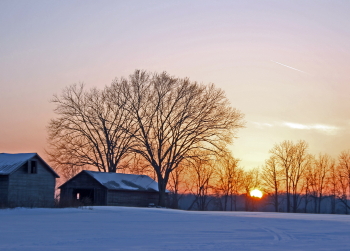
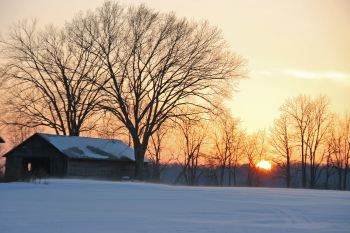
Anyway…I took a number of photos out near Grand Ledge. The ones I liked best were of an old, deserted farmstead at sunset. Thought I’d share a couple with you.

Old Shed at Sundown

Old Shed at Sundown

The Sun Sinks Lower

The Sun Sinks Lower

Afterwards, I found a place to park my car and practice my saxophone. It has been a while since I’ve spent time on my horn. I’ve been writing a book and have been singularly focused on that, and I need to exercise a little balance, tend to other things that are also important. Staying on top of my sax is right up there at the top. It felt good to limber up my fingers and run through some Charlie Parker licks.

It takes discipline to be a good jazz musician. Licks and ideas you think you own for keeps can desert you after a while if you don’t practice consistently. Fortunately, I’d only been away from my axe for a bit, not long enough to damage me. But it always feels good when I pick it back up.

Why I Hate Snow

I really don’t hate snow. Loathe it, yes.  Wish it would rot in hell like the fourfold abomination it is, certainly. But hate? Come, now, what is there to hate about snow, other than the fact that it’s cold, wet, miserable, a road hazard, and an overall royal pain in the keister?

Hmmm…judging from my attitude, we’re definitely moving on toward February, when attitudes toward snow here in Michigan tend to shift from  aesthetic appreciation to pragmatism. It takes both an artist and a pragmatist to live in this state year-round.

Okay, I confess: I really don’t hate snow. I just like to gripe about it, that’s all. Looking outside today at the large, white flakes drifting out of the late January sky, I don’t mind admitting that the stuff is downright pretty, and winter wouldn’t be winter without it. From a practical standpoint, we need all the snow we can get, lots and lots of it, to bring the Great Lakes levels back up to snuff from their alarmingly low levels. And just between you and me, speaking as an aesthete, I’d miss snow if we didn’t have it. It’s part of Michigan, and I sure do love this state.

So come on, snow! Hit me with your best shot and see if I don’t come up smiling and asking for more.

I probably won’t. But I’m still glad it’s snowing. Hurray for snow.

I hope it goes away soon, though.

Lake Michigan Ice Formations

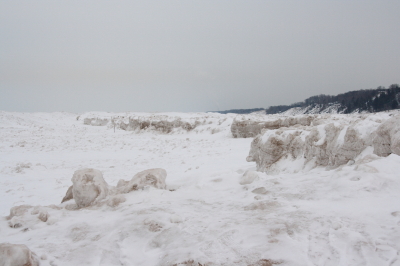
Ice Formations Along the Coastline

Ice Formations Along the Coastline

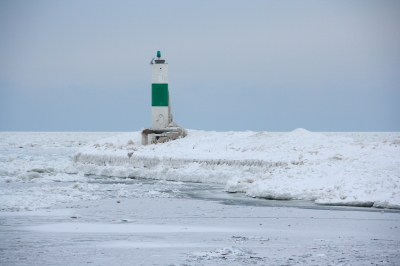
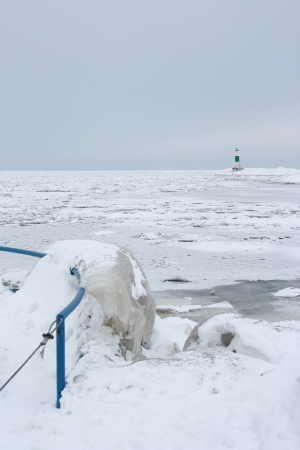
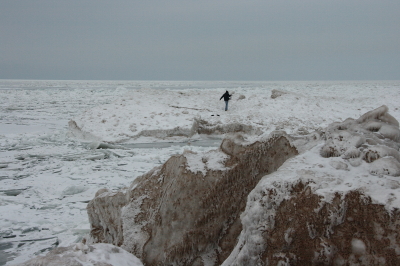
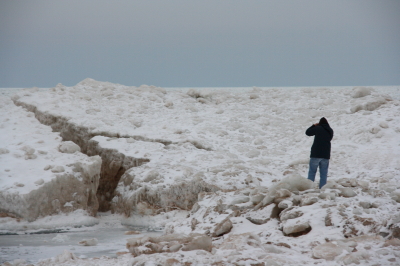
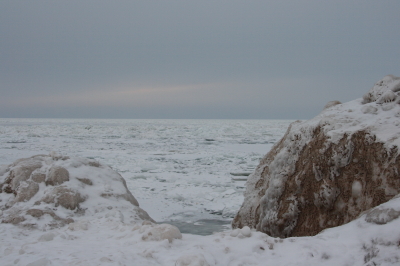
These past few days have been busy ones, but yesterday I took time to head out to Lake Michigan with my friend and fellow storm chaser Kurt Hulst to photograph the ice formations. They’re spectacular. If you’ve never heard of them, let alone seen them, I can assure you that you’re missing something. Ice forms all along the Great Lakes shores, but I have a hunch that the formations along the west coast of Lake Michigan are particularly scenic for the same reason that the sand dunes are: they’re a product of the prevailing winds that blow across the lake, whipping waves and spray across vast stretches to create, layer by layer, fantastic frozen sculptures of  ice, sand, and snow. A more austere landscape you can’t hope to find this side of the Arctic Circle–otherworldly, almost alien in its frigid beauty.

I’m not going to write much about the ice formations here because I want to save my creative juices for my next installment on the WaterlandLiving blog this Friday. But I am going to share a few images to give you a taste of one of the upsides of winter in Michigan. And be sure to check out Kurt’s site, too; he’s a great photographer, and I’m sure he’ll have some very cool (pun totally intended) shots of his own on display.

Lighthouse

Lighthouse

Lighthouse, Holland State Park

Lighthouse, Holland State Park

Kurt Out On the Ice

Kurt Out On the Ice

Crack in the Ice

Crack in the Ice

Lake Ice

Lake Ice