Hurricane Irene in North Carolina

Hurricane Irene demonstrated to me conclusively that hurricanes aren’t my thing. Maybe I’m too cautious; maybe I’m downright chicken; maybe I’m smart. Certainly I’m inexperienced; just as certainly, I’ve never felt the same fascination for the hurricane environment, as I’ve understood it, as I have for tornadoes and supercells. However these various factors work in combination, the bottom line is, while I’m glad I got the opportunity last weekend to experience an impressive degree of Irene, if not her full fury, I doubt that my future holds any more hurricane interceptions.

Hurricanes and tornadoes are different animals, and the mindsets required for a severe weather junkie to appreciate the two are worlds apart. A tornado is ephemeral, arriving and departing in minutes; a hurricane is a time commitment of hours, possibly a lot of hours. A tornado is something you go to see; a hurricane is something you go to experience. A tornado’s human impact is terrestrial; a hurricane’s, amphibious, bringing the ocean with it as it arrives onshore. A tornado is something you seek to avoid getting munched by; a hurricane is something you purposely allow to ingest you, and it requires that you be willing to risk circumstances of a kind and scope that can outstrip anything even the worst tornado can produce.
I’m by no means minimizing the lethal, wholesale destructiveness of tornadoes. I’m just saying, we’re comparing apples and oranges. Yes, both storms pack a heckuva lotta wind, both are capable of horrific impact on communities, and both can kill you equally dead. But beyond that, the similarities vanish.

Different personalities embrace the variables in different ways. My friend and long-time storm chasing partner, Bill Oosterbaan, is now hooked on hurricanes. His brother, Tom, enjoyed doing the eyewall with Bill at Morehead City, North Carolina, but I suspect that once was enough for him. As for me, witnessing the massive surf pounding Atlantic Beach as Irene approached, and watching tropical-storm winds and hurricane-force gusts blast our hotel inland at Greenville, was all the taste of Irene I needed. Don’t get me wrong–the experience was thoroughly exhilarating, and I’m really glad I went. I just can’t see doing it again, particularly with a stronger hurricane than Irene.

I never expected to go to begin with. As Bill and Tom were making plans a few days in advance, I chimed in on the discussion, but I had neither the money nor the driving desire to join them, though I confess that I was intrigued. Then Bill called me three hours before their departure with the news that their trip would be underwritten and wouldn’t cost a cent. Would I like to go?
It was a kind, thoughtful offer. Bill knew that this storm season–historic and record-breaking as it has been for tornadoes–had been a miserable one for me as far as chasing went. Between family responsibilities and personal finances, it had been an utter washout, to the point where I’ve felt awkward even calling myself a storm chaser. Yeah, I’ve earned the merit badge over the last 15 years, but you wouldn’t know it judging by this year. Bill and Tom, good friends that they are, knew that I had felt the disappointment keenly and wanted me to have at least something to show for circum 2011.

So, making a last-minute decision, I grabbed the opportunity, threw some clothes into my softside, grabbed my gear, and off we went.

GPS and Live-Stream Hassles

Bill had made arrangements with WOOD TV8 to live-stream Irene using his new, super-fast Asus quad-core laptop. Unfortunately, DeLorme’s serial port emulator wouldn’t work with the laptop’s 64-bit Windows 7 OS, nor would Bill’s GPSGate recognize the DeLorme puck. The long and short of it was, while Bill could stream through iMap, there was no way of showing his location, rendering his live stream useless.

My computer isn’t as fast as Bill’s, but it’s fast enough, and it didn’t pose the same problems. However, for some reason, I kept losing my mobile signal Friday as we headed towards Morehead City. Worse yet, my output on iMap appeared jerky and horribly pixelated, to the point where I finally just gave it up. So much for live streaming for both of us. And so much for getting the trip underwritten.

Big Surf at Atlantic Beach

Friday, August 26. After checking into our hotel in Greenville, North Carolina, we set off for Morehead City. When we arrived, the bridge to Atlantic Beach beckoned, so over we went. We parked in a lot occupied by various media crews as well as casual sightseers. With just two hours before law enforcement intended to start kicking people off the island, we bundled on our rain gear and took in the massive waves pounding the shoreline.

The eye of the hurricane was still a good 150 or more miles south of us, but the wind was stiff and the sea a maelstrom of spuming breakers and brown, roiling undertow. My YouTube video doesn’t do justice to that wild, watery scene. The waves farther out in the video had to have been a good 15 feet high, their tops trailing spray into the gale as they raced toward shore.

By the way, that’s me in the rain jacket and shorts, cavorting in front of the waves. Hi, Mom!

Bill was determined to stick around and experience the eyewall, and I had the nervous sense that he wanted to hang out on the barrier island. My concern was that the island might wind up underwater, and that even Morehead City could get inundated by floodwaters, or the storm surge, or both. It just didn’t seem wise to me to locate ourselves that close to the Atlantic shoreline. Irene, which the day before had been forecast to make landfall as a category 3 storm, had by now been downgraded to a top-end category 1, but she was still an abnormally huge hurricane. I was concerned that our escape routes would be cut off and we would find ourselves stranded, with nowhere to go and the ocean encroaching on us as Irene’s eye moved in. High winds I’m fine with–bring ’em on; I like it. But I prefer them as a dry-land phenomenon, not a maritime experience.

Ultimately, I wimped out. The guys graciously brought me back to our hotel in Greenville, which was where I’d thought we would ride out the storm to begin with. I felt ashamed of myself for inconveniencing them, and I knew that Bill was disappointed. We’ve shared so many storm adventures over the years, but this wouldn’t be one of them. To be fair to myself, my reasonings–not all of which I’ve elaborated on here–were, I believe, fairly sound. Plus, again, I’ve never felt drawn to hurricanes the way I am to tornadoes and severe thunderstorms. Still, I had moved from an asset to a liability.

I beat myself up for quite awhile, so in case anyone reading this post feels inclined to pitch in their two cents, spare yourself the effort. I already did the job for you. That said, there was something to be said for peeling off my sopping clothes–which, thanks to a catastrophic failure on the part of my Helly Hansen rain suit, had gotten totally drenched–and then kicking back on a dry bed to watch the unfolding coverage of Irene on TV.

Saturday, August 27

When I awoke, Irene was making landfall at Morehead City. I picked up the phone and called Bill. No answer, and no surprise. I wasn’t certain whether the cell phone towers were working, but I was sure that the guys had their hands full. The television showed the west side of Irene’s eye squarely over their heads.

Outside, the wind was lashing a tree out in the courtyard and blowing a fine spray of rain against the window. Hurricane rain is not like the rain you get with an ordinary thunderstorm. The hydrometeors are smaller, halfway between droplets and wind-driven drizzle. But what a drizzle! Watching the stuff lash horizontally across the landscape, alternating between lighter respites and sudden, heavier bursts that tumble along like fog shot from a cannon, you really can’t fathom just how much is actually falling. The answer is, lots, an almost inconceivable amount.

By and by, I got curious what the view offered from a vantage point other than my fourth-floor room. Grabbing my video camera, I took the elevator downstairs and headed for the hotel entrance. There, for the first time, I got a good taste of Irene. Greenville may not have been in range of the hurricane’s full force, but the westward extent of her tropical-storm winds had surprised forecasters, and my location lay within a concentrated area of those winds. With sustained speeds of 55 mph and gusts as high as 75 mph, there was more than enough to hold my interest.

The higher winds in a hurricane are associated with its rain bands. When you see one of those bands approaching your location on radar, you can count on two things happening simultaneously: It is going to get very rainy, and it is going to get very windy. The transition occurs with a suddenness that verges on explosive, and in Greenville, its effect was everything you could imagine. Trees were down, and more were going down all the time. Branches were snapping. Power was out over a large area. In the hotel, the electricity flickered off and on, off and on, but amazingly, it somehow stayed with us for all but one two-hour stretch. As for Internet connection, forget it. I had been without radar updates since shortly after 8:00 a.m. So much for getting GR2AE volume scans of Irene while she was over Morehead City. They’d have made a nice memento for the guys, but there was no accessing the data.

The Storm Troopers Return

Bill and Tom returned around 3:00 in the afternoon, exhilarated and exhausted. After showering up, they headed back out into the wind and rain to catch dinner at one of the few open restaurants. They returned in an hour and filled me in on their eyewall experience. It sounded awesome, and I’m glad it was everything they’d hoped for. I can honestly say I didn’t mind having missed it, but I was pleased that they got what they were after. Particularly Bill. Experiencing a hurricane is something he’d been wanting to do for several years, and now that he’s gotten it in his blood, I’m quite sure he’ll do it again.
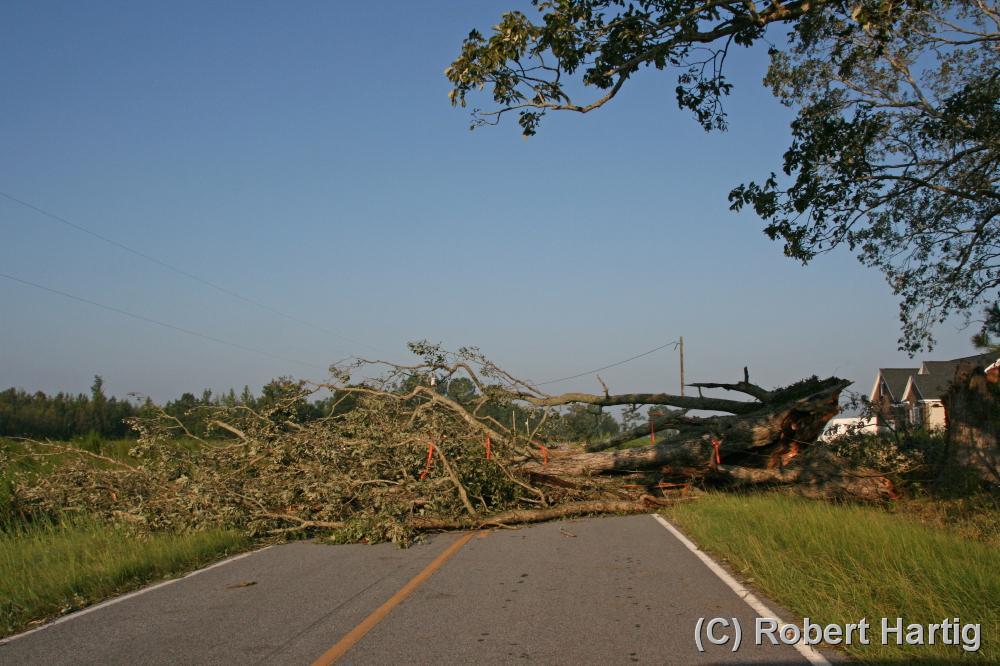
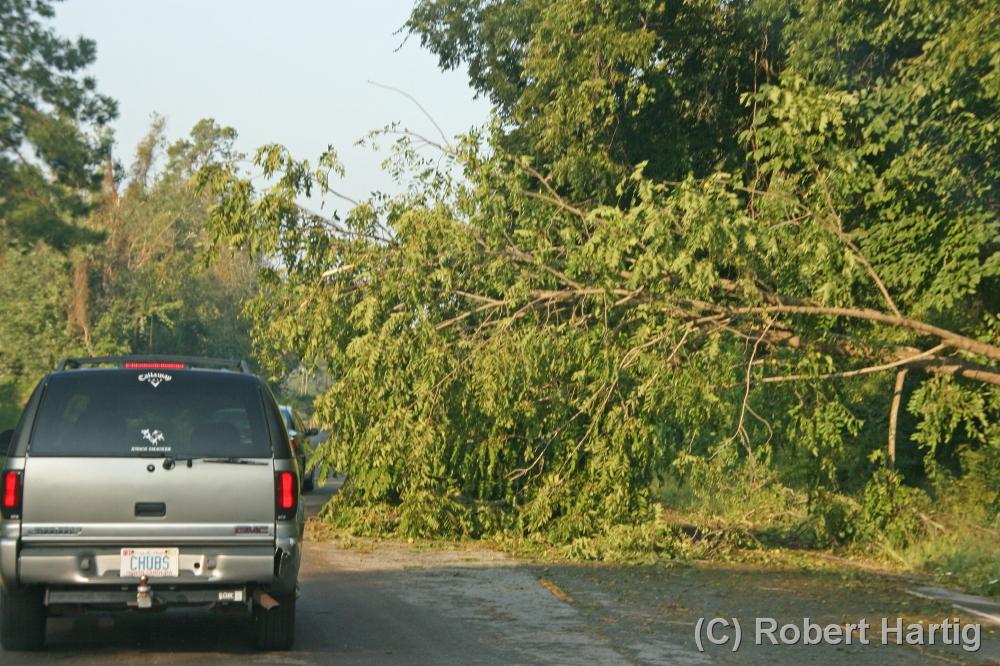
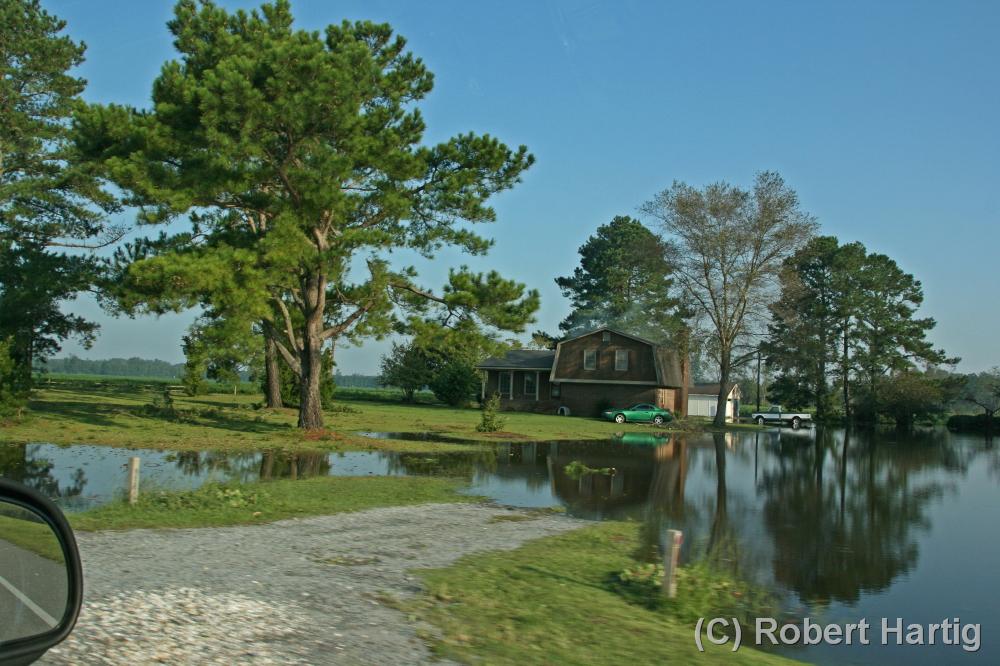
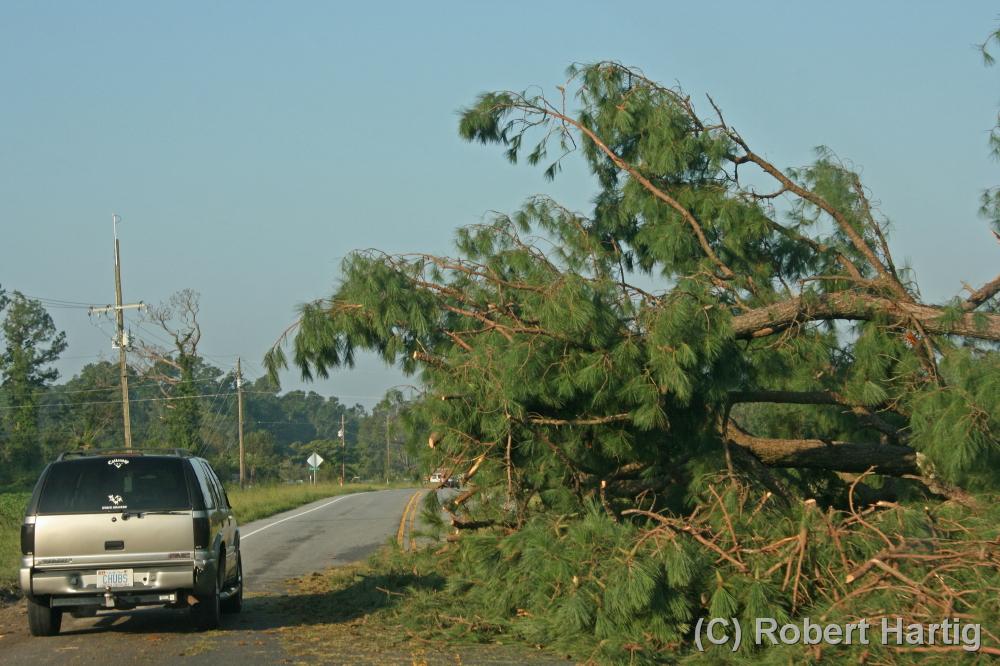
We started for home around 8:00 Sunday morning. The first 25 to 30 miles westward were littered with downed trees. Some of them blocked the road, requiring us twice to find an alternate route. In a few places, yards and even homes were flooded. Corn fields had been flattened by the wind and rain, and the tobacco, while not appearing as badly ravaged, had clearly taken a hit. Other more compact crops such as cotton and soy beans had fared better.

Fourteen hours later, a few minutes after 10:00 p.m., we rolled into Bill’s driveway, and a short while afterward, I was in my own vehicle driving east down M-6 toward home and my sweetheart, Lisa.

Will I do another hurricane? Well, I didn’t entirely do Irene for reasons I’ve at least partly explained. I did, however, get enough of a taste to confirm my sense that hurricanes don’t exert the same pull on me as tornadoes. I’m grateful to Bill and Tom for wanting me to join them–thank you so much, guys! I really appreciate it. Those middle rain bands in Greenville may not have been as intense as what you witnessed, but they were a blast, and I’m very glad I got to see at least that much of Irene.

However, lacking the passion required for accepting the risks involved, I would likely be just as reluctant to commit to a landfall intercept in the future as I was this time, and thus I would simply detract from the experience for others. That wouldn’t be fair to them or enjoyable for me.

So, while the old saying may be, “Never say never,” I seriously doubt that another hurricane lies on my horizon. Not anytime soon, anyway. If you enjoy multiplied hours of wind, water, sweat, and uncertainty, then a hurricane just might be your thing. Me, I’ll stick with tornadoes. They’re not so all-fired comprehensive.
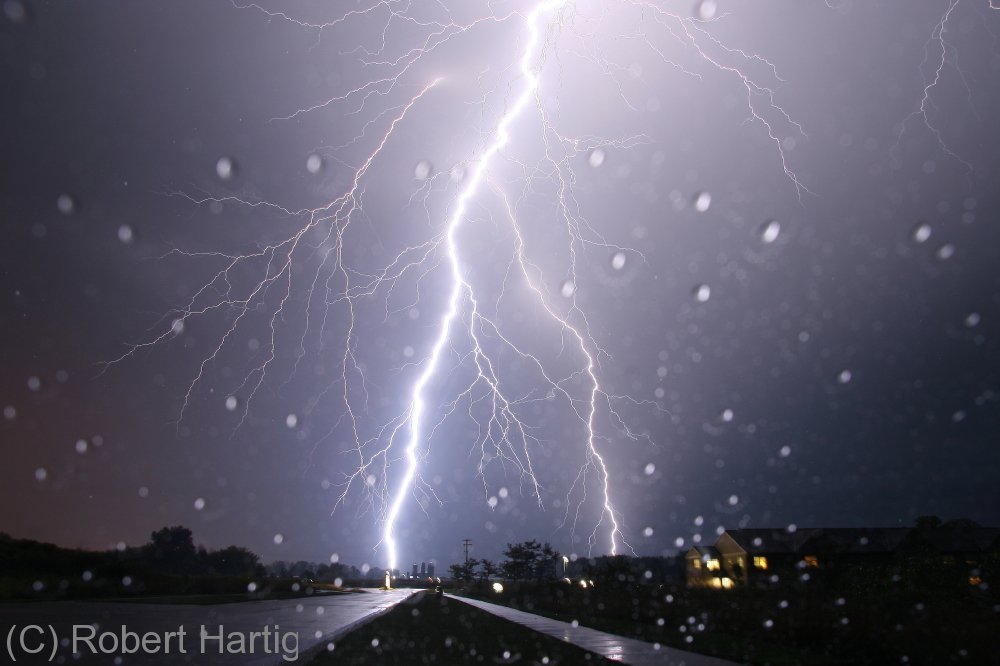
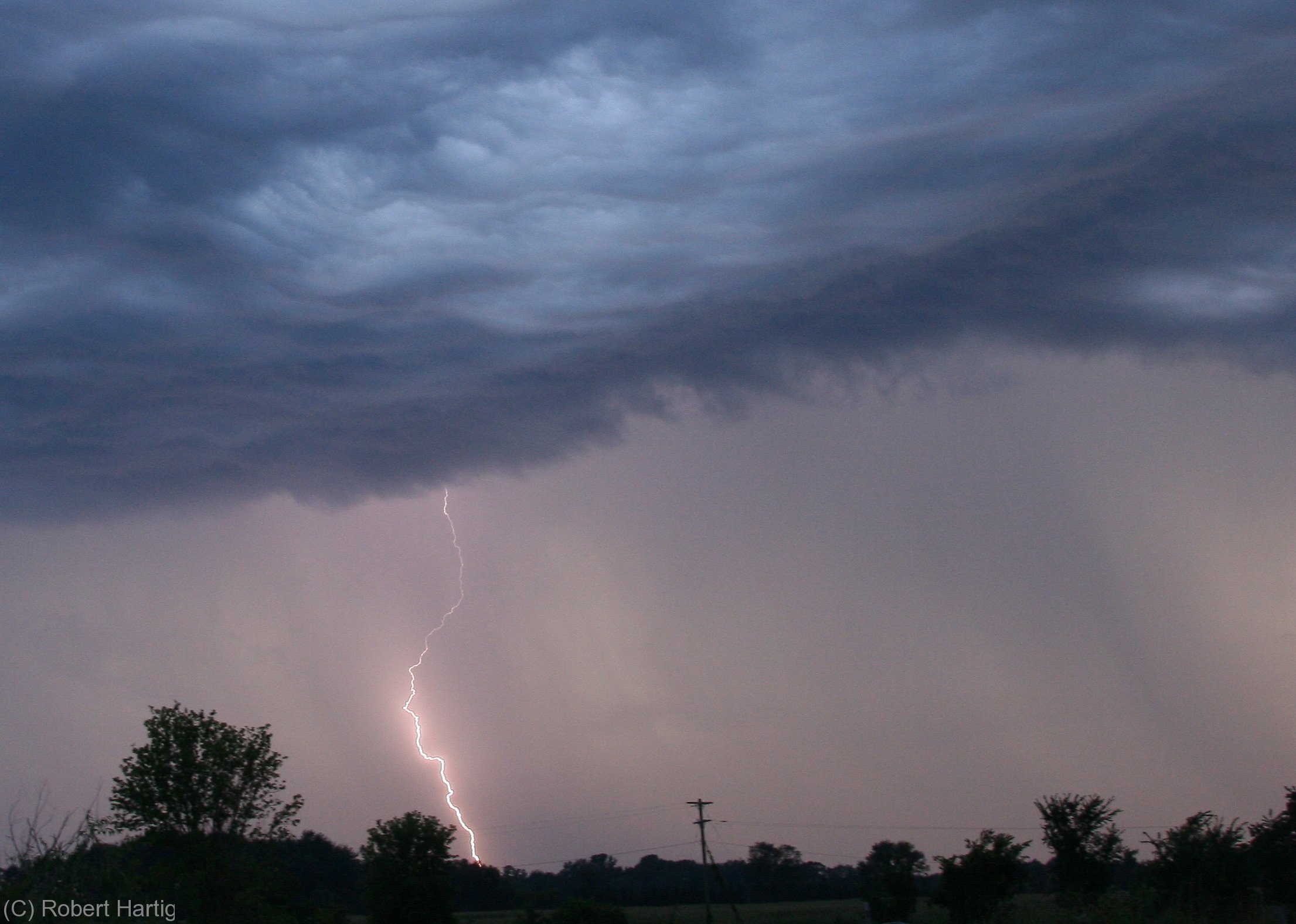
August 23 Lightning over Caledonia

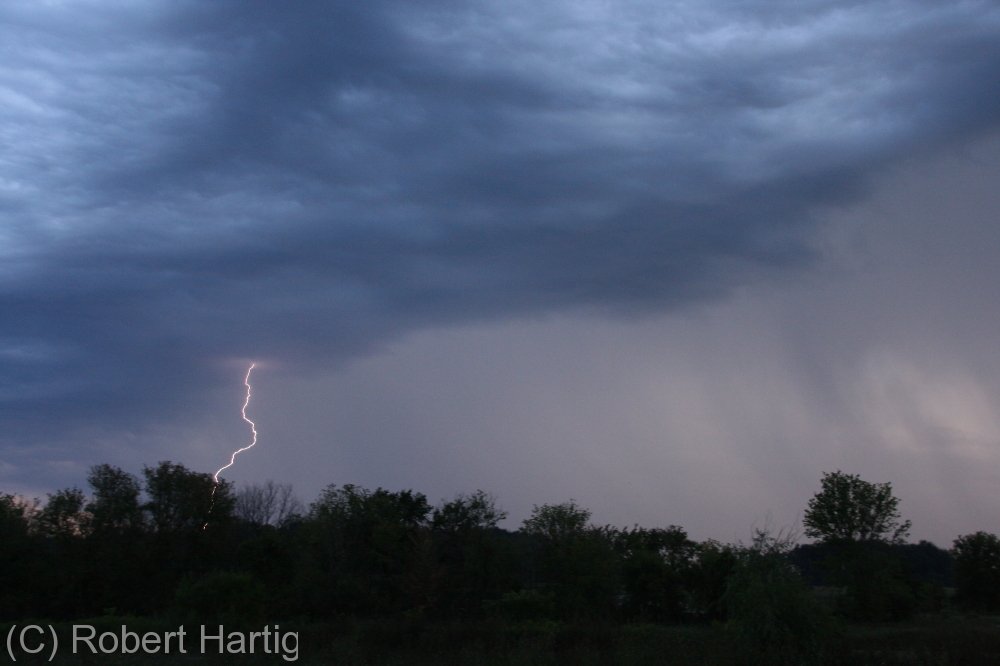
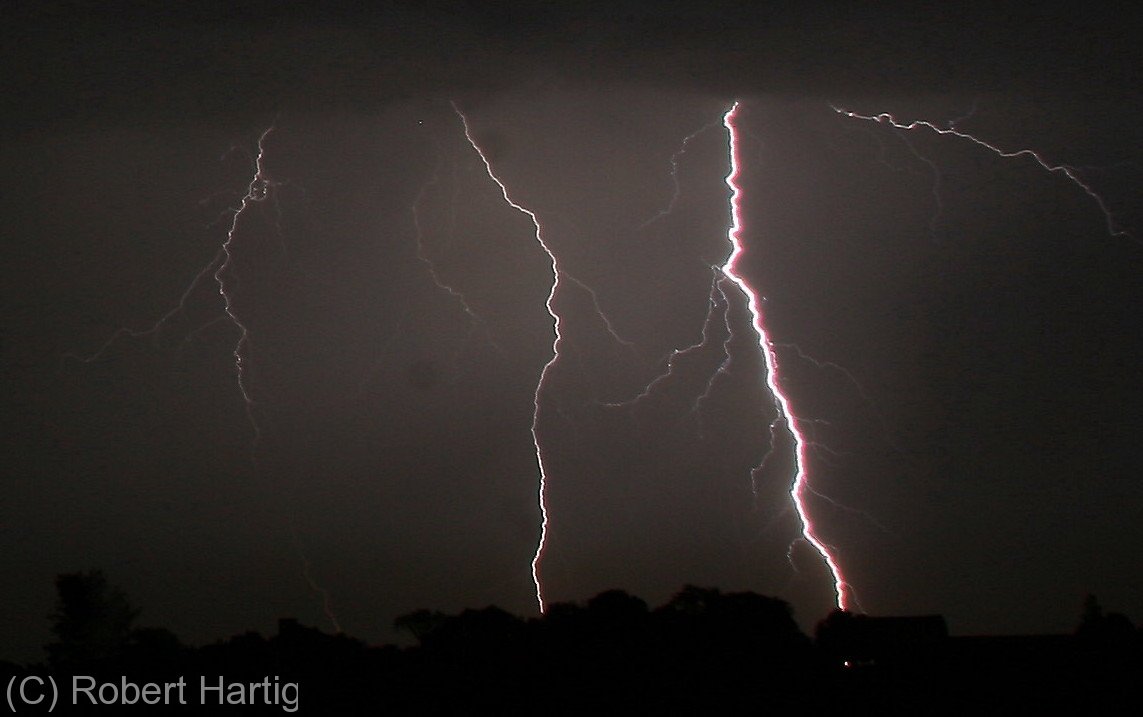
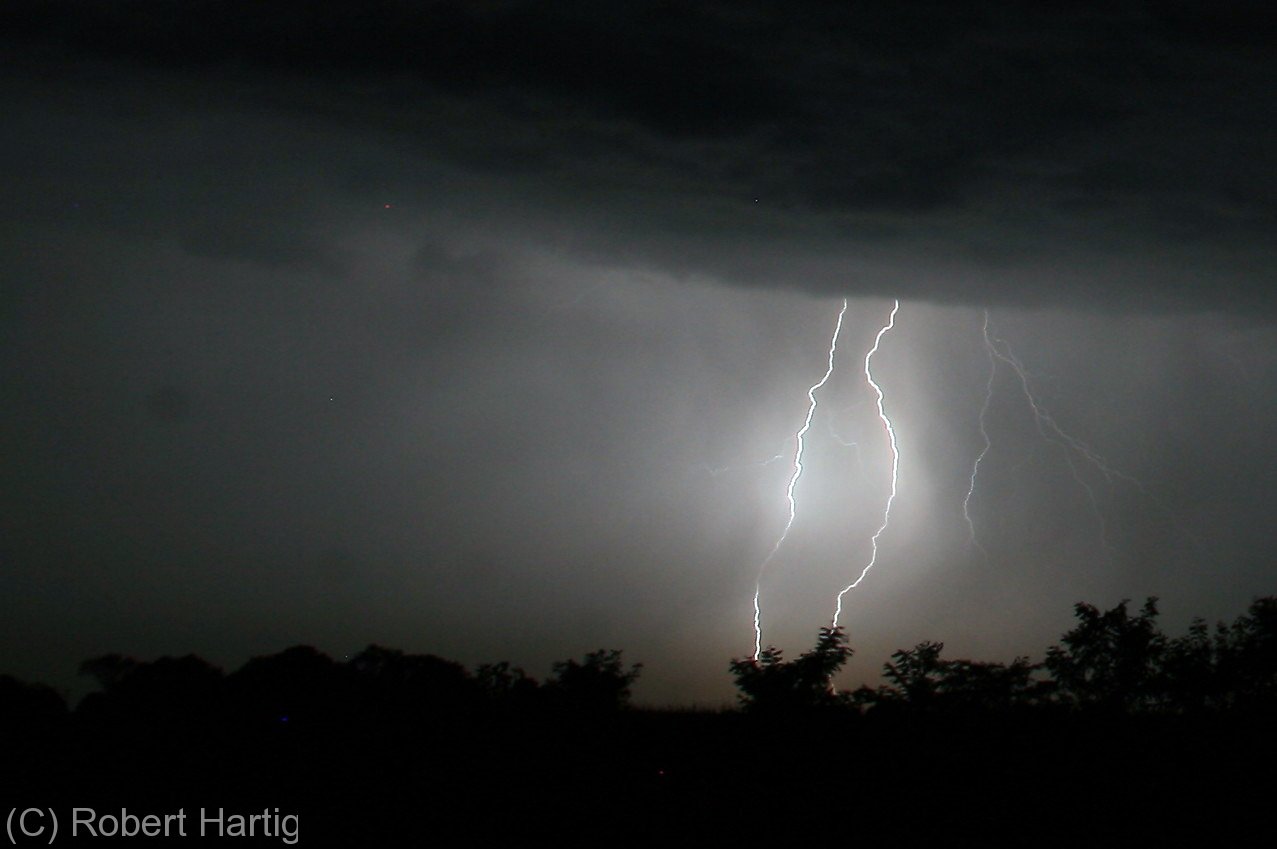
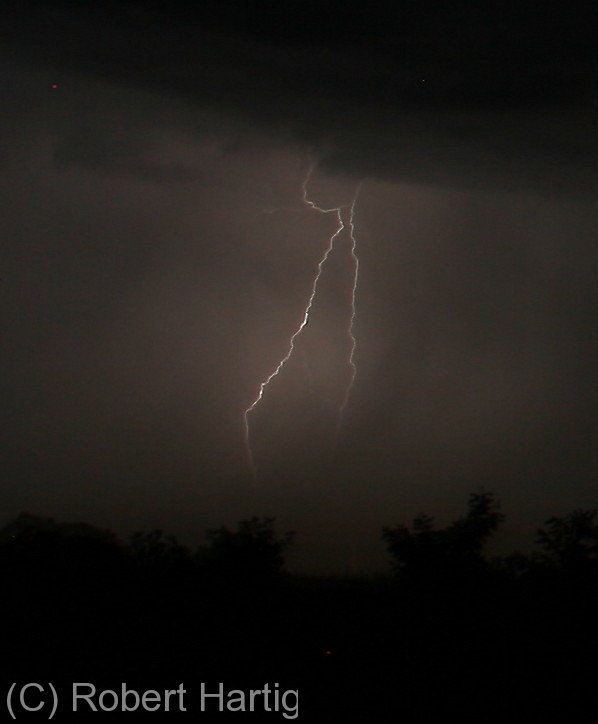
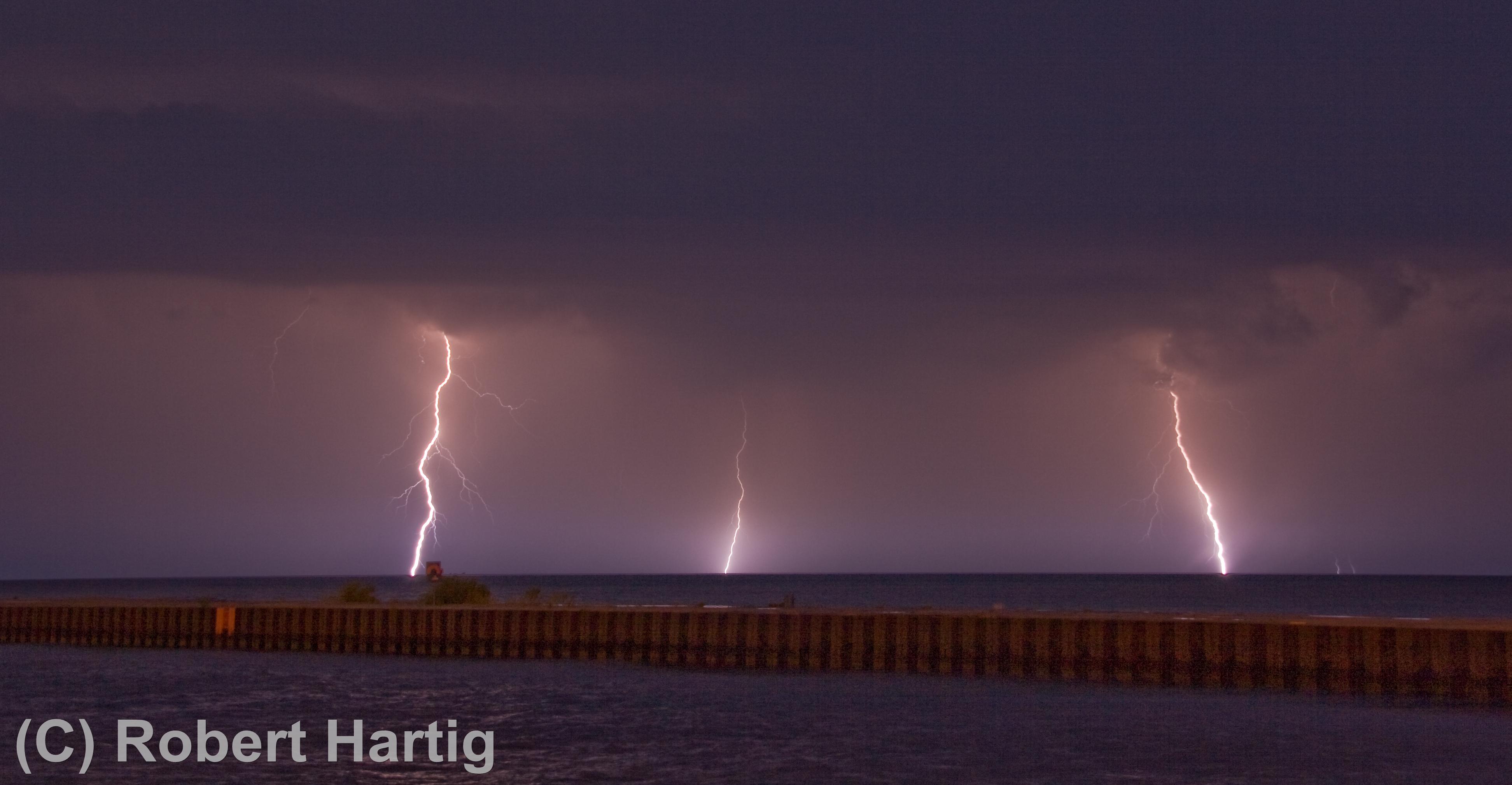
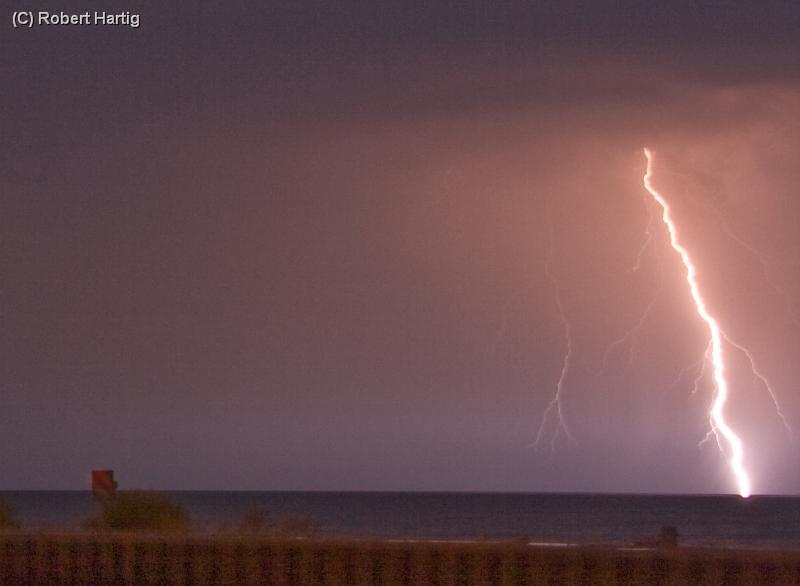
Last night brought a nice electrical display to the Michigan skies, and my little town of Caledonia was smack in the center of the action.

Today looks to present still more possibilities. With a cold front sweeping in to kick up around 3,000 J/kg CAPE in the presence of 45 knots 0-6 km shear and adequate low-level helicity, southern Michigan is outlooked for a 5 percent tornado risk. It had to happen sometime. Looks like today could be play day for my area on toward the southeast part of the state.

But that’s for later this afternoon, and this post is about last night with its lightning extravaganza. I had initially set up shop in a parking on the edge of town off of 100th Street, but when the action appeared to be migrating south of me, I dropped down six miles to Middleville. Eventually I wound up

back in Caledonia just a couple hundred yards from where I had initially positioned myself. That’s where I got the dramatic shot of the big bolt at the top of this post, as well as the rest of the night-time photos.

For that matter, the earlier photos were also taken in Caledonia. The color in those photos is pretty true. I was captivated by the bluish hue and undulating, textured look of the clouds. Really beautiful, and quite something to see.

Tornadoes in North Central Nebraska

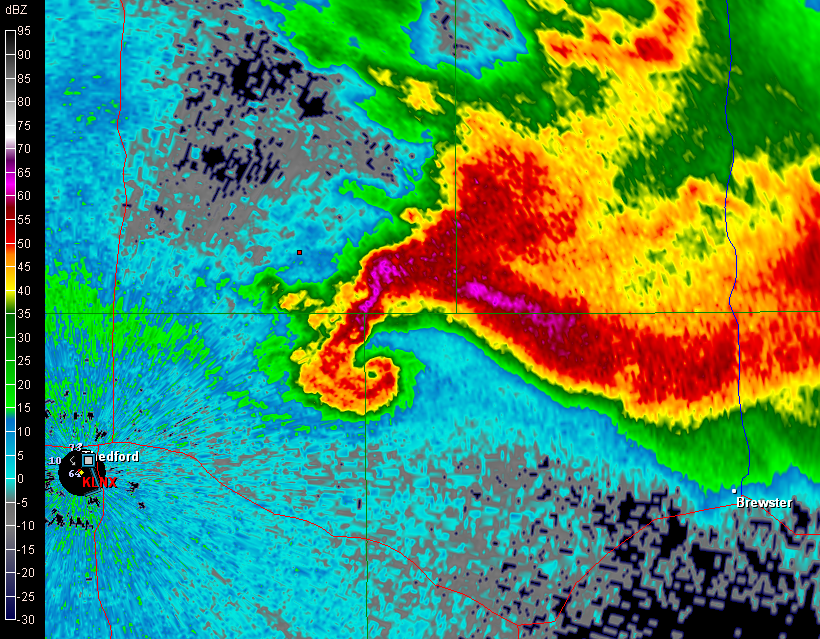
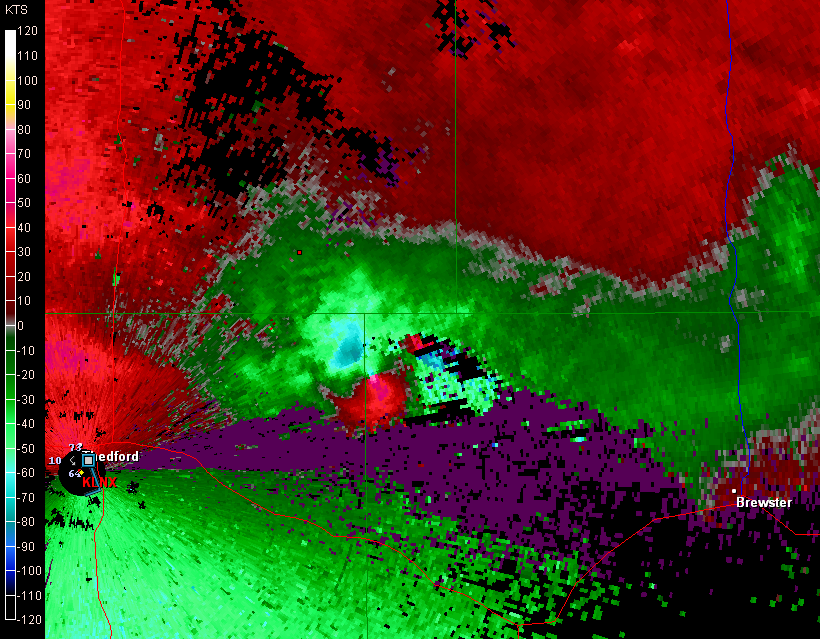
With family visiting from various long-distance places of the globe, I’m not posting much these days. However, last night provided an interesting spate of late-season tornadic activity in north-central Nebraska that I’d be remiss in not slapping up a couple images from GR2AE at the peak of the activity.

Look at that pinhole in the reflectivity knob! I was even better defined in the ensuing scan, after which the rotation became more diffuse and the storm began to weaken. Prior to this, a few dedicated and fortunate chasers videotaped a nice

stovepipe tornado near Wood Lake. All this in northwest flow with the storms moving in a south-southeasterly direction.

First Public Speaking Engagement

Yesterday morning I delivered a presentation on storm chasing for the residents of Covenant Village, a retirement community on the west side of Grand Rapids. The event was my baptism as a public speaker, and it went very well. The positive comments I received encouraged me that I did a good job for a greenhorn. But then, I had a compelling topic and plenty of material to make up for my lack of experience behind the podium.

I spent most of the previous day organizing my notes and photographs. By the time I was finished, sometime around midnight, I had a collection 37 images, including two radar screens. I also had seven pages of notes that covered

• who storm chasers are, what they do, and why they do it; and my own growth as a storm chaser;

• severe weather in Michigan, using this year’s May 29 straight-line wind event in Battle Creek as an example;

• basics of a tornadic supercell, tracking the June 5, 2010, Elmdale, Illinois, storm from initiation to tornadogenesis to impact on a small community;

• and finally, my most intense personal experience to date, that being May 22, 2010,  in “The Field” near Roscoe, South Dakota.

Inviting my audience to interject with questions made for more organic, interesting communication. A number of  people responded with some excellent questions, and I liked how those freed me from the tyranny of my notes. I really don’t like to getting my nose stuck in a pile of notes–they interrupt my flow. Hopefully I’ll get more speaking opportunities, and those will help me to internalize my material, at which point I’ll be able to jettison the notes entirely.

At the request of organizer Linda Kirpes, I concluded my talk with a rendition of “Stormy Weather” on my saxophone, followed by my theme song, “Amazing Grace.” Probably most speakers don’t cap their presentations in such fashion, but it suited me, and I’ll do it again if I get the chance. The storm and the horn of “Stormhorn” go together, after all.

Lightning at the South Haven Pier

Yesterday’s slight risk for Michigan looked more impressive in the models than it did up close and personal. With dewpoints as high as a sultry 78 degrees Fahrenheit in Caledonia (courtesy of my Kestrel 4500 weather meter), MLCAPE upwards of 3,500 J/kg, and 40 knots at 500 millibars, the ingredients were all present for a decent severe weather event. Backing surface flow even suggested the possibility of tornadic spin-ups, though winds at the surface were weak.

For all that, the storms when they finally arrived were pretty garden variety, with one exception: the lightning was absolutely spectacular, a

nonstop flickerfest bristling with CGs. The lines rolled across Lake Michigan in two rounds. Thanks to some good input from Ben Holcomb, I chose to set up shop at the South Haven beach, a great strategic location, arriving there in plenty of time to intercept round one. Kurt Hulst met me there, and we got our live streams going and tripoded our cameras as the northern end of the line bore down on us.

It was too dark to see the shelf cloud very distinctly. I tried to capture it with my camcorder; I haven’t viewed the footage yet, so I don’t know how it turned out, but I soon realized that I’d be better off working with my still camera, which I got mounted right about the time that the gust front arrived. The rain was near-instantaneous, escalating within moments from errant droplets to a horizontal sheet, and I scurried back to my car while collapsing my tripod as fast as I could.

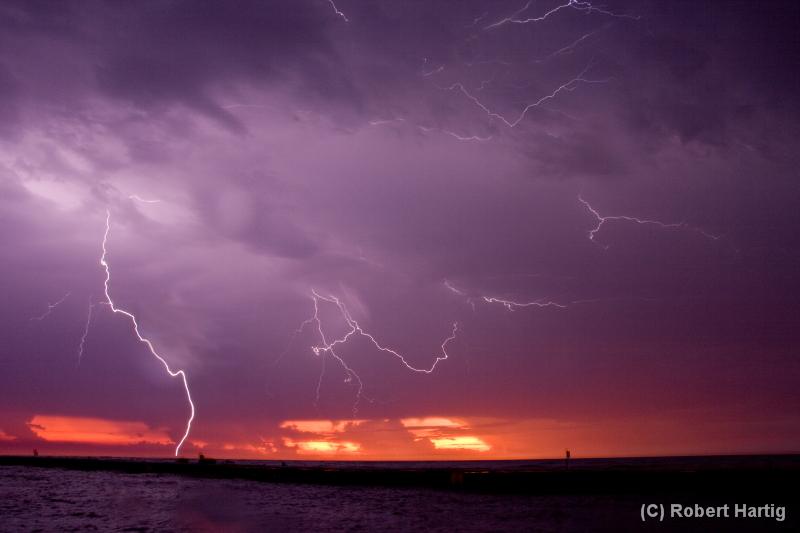
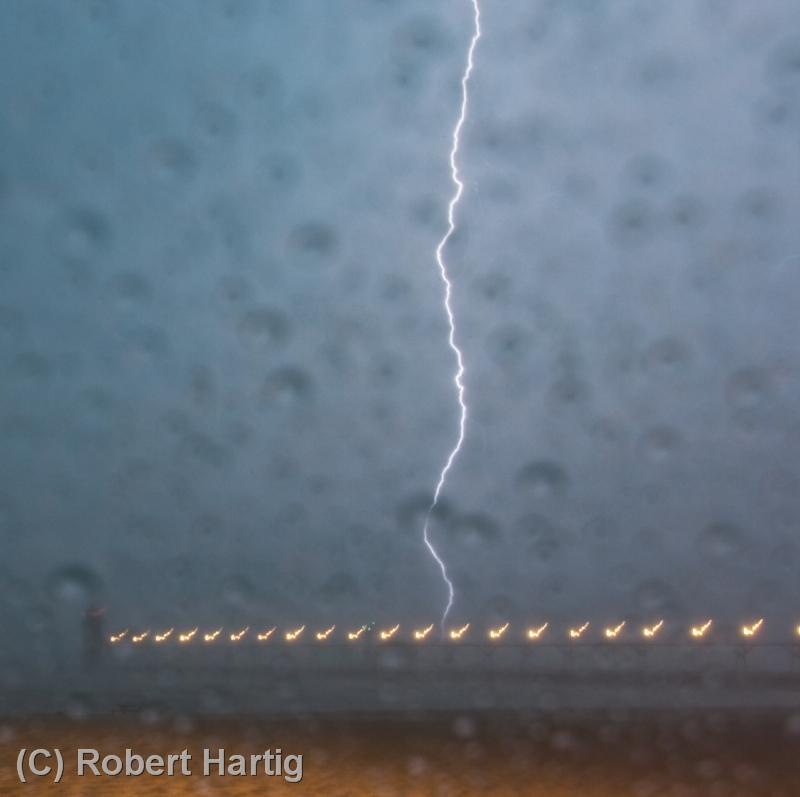
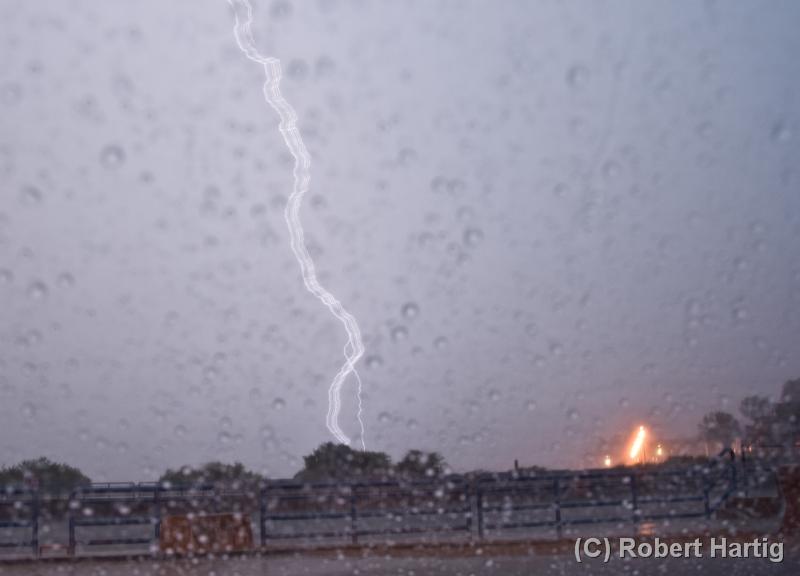
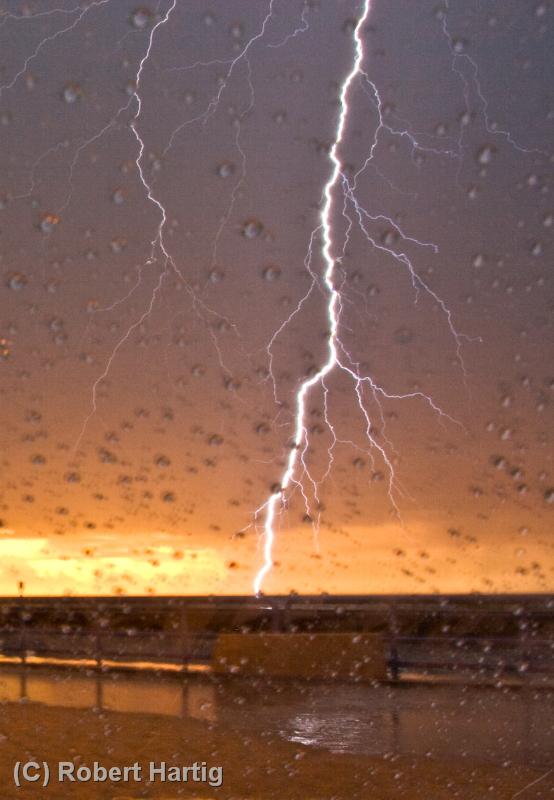
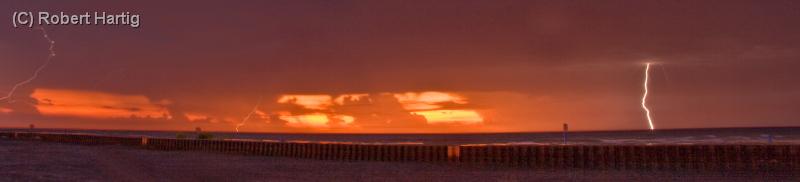
What a great light show! After a lot of teasers this year, I finally got a chance to get some good lightning shots, particularly as the storm moved off to the east. With CGs ripping through the air over South Haven, anvil crawlers lacing the sky overhead, and now and then a brilliant bolt tracing a path from the sky to the lake across the canvas of a molten sunset, yesterday evening was a lightning photographer’s dream. Kurt is a great hand in that regard, and he captured some fantastic images. But for once, even I managed to get some shots I’m pleased with. Here are some of my better ones. Click on them to enlarge them.

As the storm moved on, a good number of people returned to the beach with their cameras to capture the amazing sunset and the lightning display. Storm chasers aren’t the only ones with an eye for the drama that the sky provides!

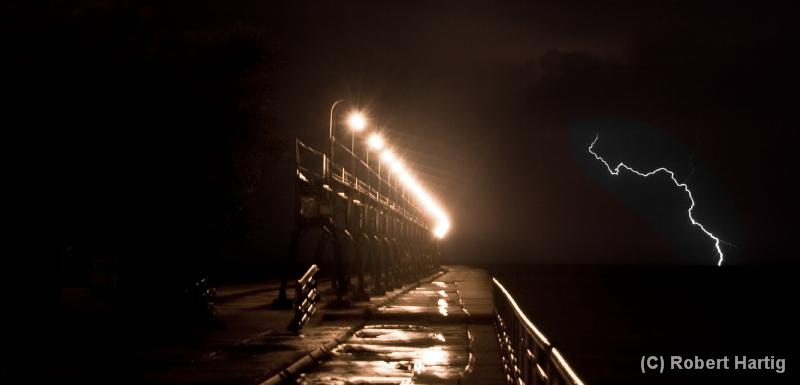
Some of my photos were taken later on, as the second line of storms was moving toward the shore. I’m particularly pleased with my shot of a lightning bolt off to the right of the pier; it’s a moody, mysterious image, and I intentionally left plenty of dark space at the bottom left.

I might add that the pics with raindrops all over the foreground were taken from my car during the height of the first storm. While I’d of course prefer nice, clear images, I don’t mind the drops. They lend a somewhat Impressionistic feel to the photos. At least, that’s what I tell myself.

Distant Storm: Impressions of the Michigan Summer Sky

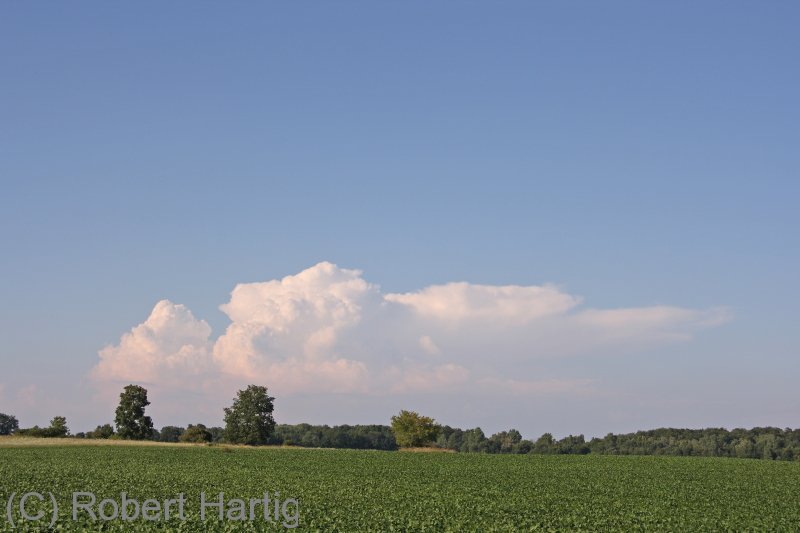
With the humidity scoured out of the air by a cold front that had passed overnight, and with high pressure dominating the area, yesterday was hot but pleasant. Patches of fair-weather cumulus grazed overhead like sheep in a high, blue pasture, but they disappeared as the afternoon progressed. By evening, the sky was a flawless blue, except to the north and northeast, where a few isolated turrets were trying to push through the cap.

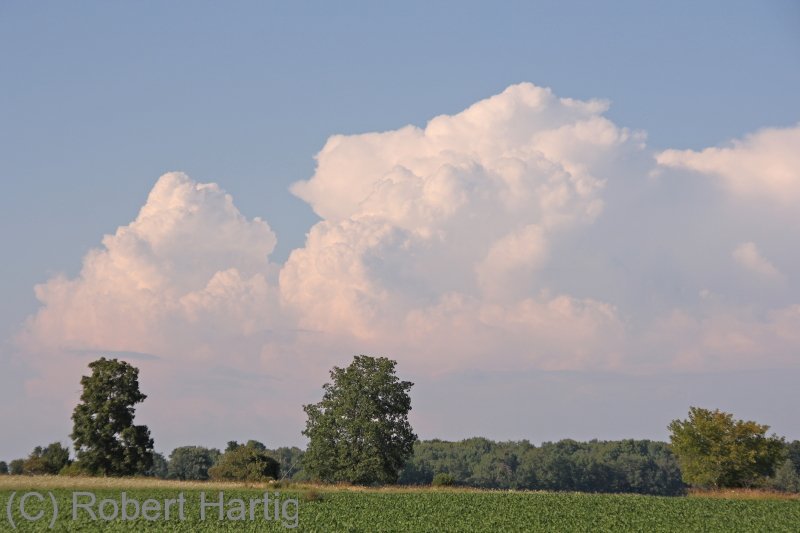
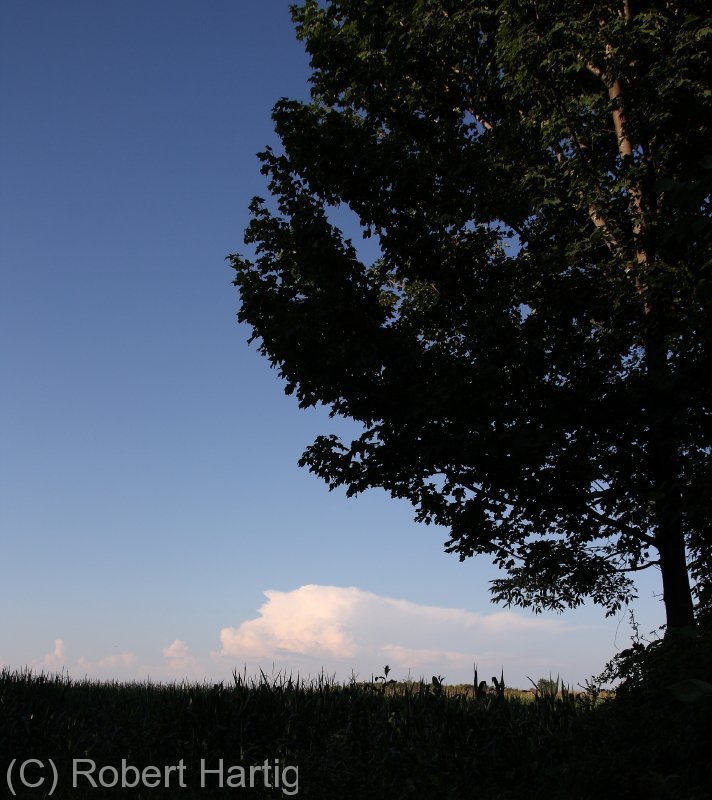
Thinking they wouldn’t succeed, I paid them little attention. So I was surprised when one of them muscled up into a nice little multicell thunderstorm near Mount Pleasant. I was in Portland at the time, and with the storm almost directly to my north and me having nothing better to do, I decided to get a better look. It was a weak cell with a high base and a mushy anvil, but it was also the only storm going. And there is something about a solitary cumulonimbus drifting through the broad blue heavens that captivates me. Even a garden-variety, multicell summer storm is a sublime thing when mounted in the gracious frame of azure sky and green Michigan landscape, with miles and miles of farmland and forest stretching outward from one’s feet into forever.

Naturally I snapped a few photos. Then I let the storm go. It was too far away, and it wasn’t anything worth chasing. But it was lovely to watch, and a beautiful accent to a pleasant late-July evening.

Sunset at Hall Lake

The biggest weather news lately has been the heat wave that continues to brutalize the central and eastern United States. Thankfully, these last two days have been easier to take here in Michigan. Friday evening a weak cold front passed through and dropped the dewpoints down into the livable mid-60s for a short while, and since then, variable cloudiness has helped to modify the temperatures.

Yesterday we were in a slight risk area, but with a warm front laying along the Indiana border, the southern tier counties are where convection broke out in Southwest Michigan. One cell near Cassopolis showed sustained, deep rotation on the radar, and Kurt Hulst and I discussed going after it. Given the distance and marginal conditions, we decided to let it go.

Instead, I headed out the door later on with my saxophone and my fishing rod, as well as my camera and laptop just in case storms developed within easy range. Not that I expected any, and none materialzed to divert me from casting a line into the water for the first time in a couple of years.

It felt good to get back at fishing, and picturesque Hall Lake in Yankee Springs Recreational Area was the perfect place to do so. Forty-two acres in size and sporting a small island in its middle, Hall Lake attracts just a handful of fishermen, to whom it offers a tranquil option to the much larger, all-sports Gun Lake to its west. Tucked in a wooded valley, where it is bordered to the south by Gun Lake Road and cradled by the glacial hills of Barry County, it is a place where a man can go to withdraw from the madly rushing world, stand at the water’s edge casting topwater lures into the evening, and let his thoughts slow down to a casual stroll.

I’m no great fisherman. What I do with a rod and reel is more accurately described as dredging. But the fish were eager feeders yesterday, and it took only a few casts before I landed a nice little 12-inch bass–big enough to keep, but I released him. I viewed it as my Father smiling at me for getting back to a hobby that I’ve never mastered but always enjoyed.

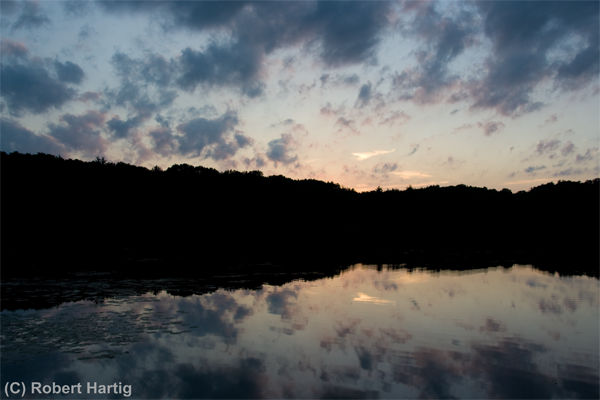
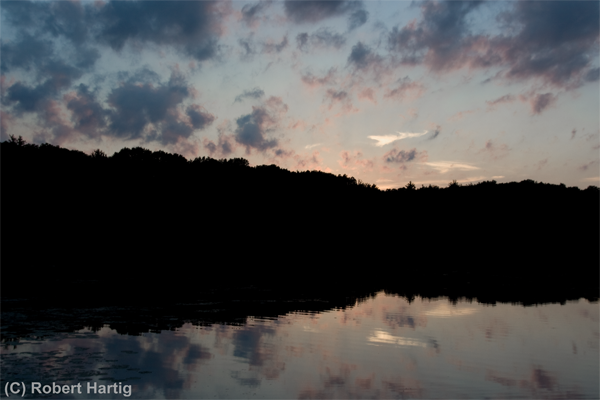
More casts netted me nothing, and presently my interest shifted to the sky. The sun had slipped below the treeline, and a flock of fractocumulus passing overhead articulated the twilight. No fiery sunset, this, no Van Gogh sky; just a gently fading afterglow filled with nuance and calm emotion, silhouetting the forested shoreline and glimmering, spirit-like, in the quiescent mirror of the lake.

It was a scene worth capturing with my camera, and I have done so. Click on the images to enlarge them. I like them, and I hope you will too.

Worst of the Michigan Heat Wave

This has got to be the crest of the heat wave that is assaulting the nation, at least as far as the western Great Lakes is concerned. Here at my apartment in Caledonia, Michigan, I just took a read with my Kestrel 4500 weather meter of 98 degrees F temperature and a dewpoint of 81. Eighty-one freaking degrees! And a heat index of 122 F.

I couldn’t believe my eyes. Then I thought, okay, I logged that data on my third-floor balcony, where I keep my well-watered collection of carnivorous plants. Sensitive as the Kestrel is, it may have picked up on the moisture from the planters.

So I scooted downstairs and took another read, and this one produced more modest results of 91/76/102. Not as bad as out on my balcony, but still just downright nasty.

A weak cold front is forecast to move through here sometime this afternoon and lower the dewpoints a few degrees. I hope it happens; I’m all for taking five or so degrees of dewpoint temperature and shipping them off somewhere where they’re needed. As things stand, I don’t even want to venture outside. But I’m afraid I’ve got to. Once this post is published, it’ll be time for me to hop into my oven-like Buick Century and head over to my mother’s house, there to perform my weekly ritual of vacuuming the carpet.

Whatever would we do without air conditioning on days like this? I don’t know how people manage who don’t have it.

Here Comes the Heat

The ridge that is setting up over the central and eastern CONUS looks like it’s intent on sticking around for a while. The GFS and Euro differ in the details, with the Euro painting a more meridional pattern farther out, but either way, high pressure not only is paying us a visit, but seems intent on securing long-term lodging. Lacking access to the full range of the ECMWF, I can’t compare it and the GFS beyond 168 hours. Beyond that time frame, though, the GFS doesn’t look pretty. Today’s 6Z run shows the ridge expanding and flattening out before ultimately retrograding and bringing in a cool-off in the Great Lakes sometime the week after next.

Until then, it looks like we’re in for some prolonged sweltering. With temperatures moving up into the nineties and dewpoints hitting the low to mid seventies, there are going to be a lot of air conditioners going full-tilt from the South through the heartland and eastward. If you’ve got a boat or easy access to the beach, you’re in business. Otherwise, with heat indices around 100 degrees forecast here in West Michigan for this coming week and probably on into the next, being outdoors is not going to be a pleasant experience unless sweating like a sprinkler system is your passion.

So much for my humble forecast. I’ll leave it to the NWS forecasters to paint in the daily details and will be glad for whatever popcorn cells bring a welcome shadow, a spate of rain, and brief coolness to the area. Today looks to be the first day of the warmup. From here on, things get nasty and tank tops will be de rigueur.

The Historic 2011 Tornado Season in Review: A Video Interview with Storm Chaser Bill Oosterbaan, Parts 2-4

This post continues from part one of my video interview with Bill Oosterbaan on his storm chases during the monumental tornado season of 2011. Since the interview involves one chaser’s recollections, it obviously can’t and doesn’t embrace the entirety of this year’s significant tornado events, such as the April 9 Mapleton, Iowa, tornado and the April 14–16 outbreak.

The latter event was historic in its own right, the worst outbreak to occur since February 5–6, 2008. During most years it would have been the biggest headline maker for spring storms; yet in 2011, it got eclipsed three weeks later by the deadly super outbreak of April 25–28; and again on May 22 by the heartbreaking disaster in Joplin, Missouri, where 158 lives were lost.

The tornadoes of 2011 will long be remembered for for their violence, size, and path length; for their sheer number; and for their devastating impact on large towns across the South and Southeast. In the following videos, my friend and long-time chase partner Bill talks about his experiences in Arkansas, Alabama, Oklahoma, and Nebraska. If you haven’t already seen Part 1, I encourage you to start there and view the entire interview in sequence.

These videos constitute a person-to-person conversation, not a series of tornado clips. In fact, due to issues with his camera, Bill regretfully didn’t get the kind of video record he hoped for. He did, however, manage to film the Vilonia, Arkansas, wedge; and, equipped with a new camcorder on June 20, he captured some interesting and exciting footage in Nebraska, some which you can view here and here.

Bill, while I couldn’t join you on most of your chases this spring, I’m glad you had such a successful season. I know the dues you’ve paid over the years. You’re the McCoy.