Playing Jazz on the Local Level

Last night I spent an enjoyable evening playing in the orchestra pit for a production of the stage musical, “You’re a Good Man, Charlie Brown,” in Hastings, Michigan. Tonight I’ll be there again, and tomorrow night. The cast is all high school kids, and they do a great job. My buddy, Ed Englerth, is sitting in on guitar, and Mark Ramsey on keyboards serves as musical director and does by far the bulk of the actual playing. My job is to keep my ears open and provide improvised sax work wherever it seemed appropriate.

If that sounds like a rather loose approach, it is. But the informality and spontaneity are a good part of the fun for me. You see, we’re not talking some high-pressure effort here that has involved weeks of practice (my preparation consisted of attending the dress rehearsal, then walking in last night and playing the gig). This is a local, grassroots production–which is by no means to minimize the talent, just to recognize a difference in approach that I really enjoy. That’s what’s nice about local efforts: they have an irreplaceable, homespun feel; they are high in entertainment value; they are often very well done; and they tap into and foster the gifts that are right at hand. Some surprisingly bright stars may be shining far from the Big City in a small town near you.

This has been my first time playing with Mark Ramsey, and I’m impressed by his level of professionalism. Hastings, the capital of Barry County, Michigan,  is a small town blessed, as is many a small town, with a number of good musicians. My friend Ed Englerth, for instance, is an absolutely brilliant songwriter. Trumpet man and vocalist Joe LaJoye, the town’s retired band director, is the driving force for jazz in the community and the spearhead of its annual jazz festival. And Mark is the first keyboard player I’ve encountered in the area who demonstrates a well-rounded command of his instrument, one that shows a grasp of many idioms ranging from jazz to show tunes to classical and more. And he’s a very nice guy to boot. No attitude, just a humble spirit and a love for what he’s doing, qualities that make him a joy to work with.

As for the cast of the show, these kids are clearly having a good time. They’re taking their roles as actors seriously, and they’re having fun doing so.

My point is, living in a small town doesn’t necessarily mean lack of opportunity for a jazz musician. Depending on the community, you may delightfully surprised at what you find. Hastings is fifteen miles down the road from where I live in the cow town of Caledonia. My home town being an outlier of Grand Rapids, I have access to a broader music scene that I can tap into. When it comes to playing jazz, some of the musicians I play with reside in Grand Rapids, but others, like me, live farther out–far enough to enjoy the countryside, yet close enough to be a vital part of the West Michigan music scene.

If you work hard at your instrument, and if personal growth as a musician is its own reward for you, then sooner or later you’ll connect with other capable players. You’ll make music. You may not make a living at it, but you’ll find opportunities to share your talent with appreciative ears.
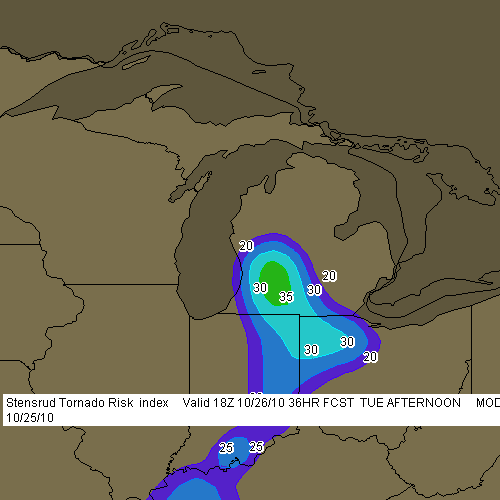
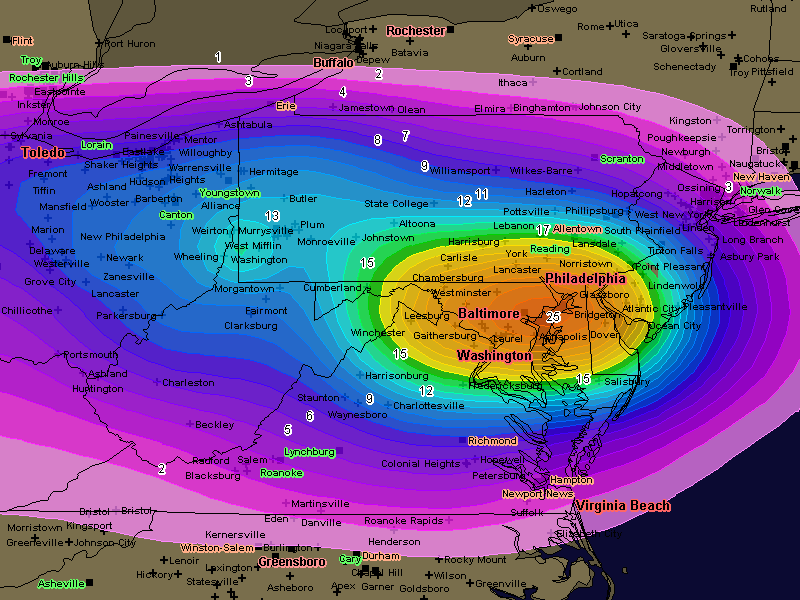
Moderate El Nino Firmly Entrenched through the Winter

While a few skeptics will no doubt persist, it now appears certain that the present, moderate El Nino will stay with us through the winter, and possibly even strengthen. Here is what the Climate Prediction Center has to say in its November 23 update:

•  During the last four weeks, positive equatorial SST [sea surface temperature] anomalies persisted across the central and eastern Pacific Ocean.

•  During the last 30 days, equatorial SST anomalies increased in some regions across the eastern half of the Pacific.

•  Nearly all ENSO models indicate El Niño will continue through the Northern Hemisphere winter 2009-10. The models disagree on the eventual strength of El Niño, but a majority indicate at least a moderate strength El Niño (greater than +1.0°C) through December-January-February 2009-10.

•  A majority of ENSO models indicate El Niño will continue through March-April-May 2010.

All of the above adds up to the fact that the western Great Lakes region is in for a mild winter. Those of us in Michigan who remember last year’s 200-inch snowfall and bone-freezing cold will welcome the above-average temperatures and below-average precipitation.

The South will also be seeing relief, albeit in a different but no less welcome form. Average to cooler temperatures and above-average precipitation will bring relief to at least some of the areas blasted by last year’s severe drought. Texas looks to be a major beneficiary.

The plenitude of rainfall in store for the southern Gulf Coast and Texas suggests that whatever concerns we may face during next year’s storm season, moisture won’t be one of them. Particularly after last May’s huge letdown, it’s nice to think that in 2010 there ought to be plenty of gas to fuel the convective engine.

Of course, that’s still a long way off. Right now, the best we can do is cross our fingers and hope for no repeats of 2009’s death ridge. I have a hunch that this coming year will be a good one. But first we’ve got a winter to get through, and it’s nice to think this one won’t be as nasty as its predecessor.

Storm Chasing Musicians

When I started the Stormhorn blog two years ago, I envisioned two distinct readerships: storm chasers and musicians. Knowing nothing about blogging, I naively figured I could reach both audiences. I mean, what the heck, why not?

Amazingly, it seems to be working. The whole world may not be flocking to Stormhorn.com, but enough of you are finding your way here, and I’m encouraged to see the numbers steadily growing. Maybe that’s because musicians and storm chasers possess some important traits in common: a penchant for the unusual; a passion to excel; a thirst for personal involvement with something that is intense and deep; a fascination with how and why things work; a high degree of commitment and self-motivation; and a love of beauty.

For some of you, the focus is music. For others, it’s storm chasing. But both pursuits are fascinating and rewarding, and I’ve felt from the start that there’s a connection between them, and plenty of crossover appeal.

In fact, a good number of you bridge both worlds. In a recent thread in Stormtrack’s Bar & Grill (sorry, no link to the thread–B&G is a “members only” section), fellow chaser Wes Carter posed the question, “Who plays musical instruments?”

A fair number of you do, it turns out, including at least one who earns his living at music. That would be Huntsville, Alabama, blues man Dave Gallaher. Both as a solo act and with his trio, “Microwave Dave and the Nukes,” and also as a disk jockey for his twice-a-week radio broadcast, “Talkin’ the Blues,” Dave has made an impressive mark regionally, nationally, and internationally. A musician doesn’t accomplish something like that without paying some serious dues; it takes not only world-class skill, but also great crowd appeal and tremendous perseverance. You really want to check out Dave’s website.

Then there’s Brandon Goforth. While these days I’ve been hesitant to post YouTube links due to their unpredictable shelf life, I’d be remiss not to steer you toward this link featuring Brandon’s rock guitar artistry.The guy can play.

Dave and Brandon are just two stellar examples of people who are both musicians and storm chasers. There are plenty more. Maybe you’re one of them. Do you consider yourself primarily a musician who chases storms, or would you call yourself a storm chaser who plays music? Or are you, like me, so passionate about both pursuits that the question is irrelevant? Regardless, there’s an interplay between the two disciplines which suggests active minds with large appetites for life and learning.

By the way, I’m never without my saxophone. I take it with me wherever I go, and that includes out to the plains when I’m chasing storms. Some chasers toss a football while waiting for initiation; I practice my sax. So to my fellow chasers who play an instrument (most likely guitar): if we cross paths and you’ve got your axe with you, we just may have the makings of an impromptu Great Plains jam session.

Keep your eyes open for me this coming spring. And if any of you happen to know of a good jazz venue in Tornado Alley, please let me know. Such places are hard to come by out west.

What Storm Chasers Do During the Off Season

What do storm chasers do when there’s nothing to chase? Watch the “Storm Chasers” series on Discovery Channel.

Of course I don’t speak for all storm chasers. But a good number of you, like Tom, Bill, and me, have been parked in front of your televisions on Sunday nights, watching Reed dominate, Tim deploy turtles, and Sean wipe his face in frustration. Once a week, we all get to vicariously relive this year’s chase season–the storms we got, the storms we failed to get, the days we wished we had chased, the days we’re glad we didn’t.

Here are some photos of me droogs that I took during last night’s “Storm Chasers” session. Just a nice, pleasant evening of buddies, beer, pumpkin pie, and tornadoes. Bill supplied the pie

and I brought the Golden Monkey, a Belgian trippel whose potency I had forgotten but swiftly recalled. It’s one of those beers where, once it gets a hold of you, the best thing you can say is as little as possible. Just shut up and enjoy the show. Last night’s was great. Next week’s, featuring the Aurora, Nebraska, tornado, looks to be awesome.

Once the series winds down, whatever shall we do? View old tornado DVDs and mutter a lot, I suppose. Think thoughts like, “Only 120 days till April.” Stay away from sharp objects. Or, if you’re like Mike Kovalchick who just looooooves winter, hope for a good blizzard so you can go chase thundersnow.

Mike is probably onto something. It beats sitting in a dark corner cutting out paper dolls with a blunt-nosed scissors. Or maybe not. I may give the doll thing a try once the snows roll in.

Black Ice Alert: Are You Prepared for Winter Driving?

At the time of this post, 29 people have already died as a result of accidents caused by icy roads during a winter that has not yet even begun. The tally for last winter was 477, with Michigan tying for fourth place with Illinois and Pennsylvania, all at 29 fatalities. The worst state for ice-related traffic deaths was Indiana at 50 fatalities.

Not surprisingly, the northern states, particularly the Great Lakes states, are the top offenders. But nowhere in our country is exempt. Last winter’s ice-related death toll for Texas was 19; for Oklahoma, 16; for Arkansas, 13. This year so far, Oregon holds an unenviable first place at six fatalities. And so it goes. The point is, icy roads kill no matter where you are.

They kill because no one expects them to. When we head out the door into a freezing drizzle, the word that comes to mind is “annoying,” not “lethal.” Most of us don’t picture such conditions as something that, ten minutes later, will cause us to spin out on a sheet of black ice and go skidding in front of a tanker on the Interstate. But that’s exactly what will happen this winter to people just like you and me.

Storm chaser Dan Robinson is doing all he can to reduce the number of ice-related road fatalities by heightening public awareness. I pulled all of the above statistics from his superbly crafted and highly informative Icy Road Safety website. You’ll find much more there besides what I’ve shared: icy road warning signs, winter driving tips, and some downright scary videos.

Living in Michigan, I’m more alert to the lethality of slippery roads than someone living in, say, South Carolina. But being alert by no means makes me bulletproof; it just gives me an advantage over someone who isn’t regularly exposed to hazardous winter driving conditions. Dan’s website goes a long way to fill in the knowledge gaps and help us all approach icy roads with the caution they deserve.

I urge you to visit Dan’s site. It’s well written and beautifully executed, and it merits attention. Read through it, equip yourself with its potentially life-saving information, and then send the link to family members and friends. Help spread the word: ice kills, but it doesn’t have to.

A Rant about Spam Comments

Like most bloggers, I love to get comments. I work hard to create well-conceived, literate posts that I hope you enjoy reading, and I really enjoy hearing from you, my readers, in return.

What I do NOT appreciate are vague comments which are clearly intended only to advertise the sender’s URL. If you yourself blog, then you know exactly what I’m talking about: brief one-liners that praise one of your posts without ever specifically addressing its content, or that use a key word or phrase in an entirely unconvincing manner. You click on the sender’s URL and find a website touting an online college education, or nutritional products, or a porn site, what have you–nothing at all related to what your blog is about.

I realize that spam comments are simply a part of the blogging landscape. But lately, I’ve been getting more and more of them, so please permit me just a moment to rant. These generic comments disgust me. To say that they smack of insincerity is to pay them a compliment they don’t deserve, since they’re no more capable of something as personal as insincerity than a piece of trash. Not being a computer and Internet geek, I don’t know exactly what technology is involved in sending such stuff my way, but I do recognize mass distribution when I see it.

That’s why I screen every comment that comes through. I look for an indication that its content is truly personal, a genuine interaction with what I’ve written; and I check the URL to see whether it leads to a website that is relevant to jazz or weather, or else is of value to my readers or at least personal in nature. I’ve gotten fooled once or twice, but I’ve learned, and I’ve backtracked and deleted a few spam comments that got past me at first. I’m a ruthless eradicator of junk.

The irony of it is, I fully expect that at some point, I’ll receive comments on this post that say something like, “I really like this!” or, “Wow, this post has changed my life, much the way that getting a master’s degree can change yours.” I promise you, such baloney will never be published on Stormhorn.com. My aim is to provide you with a quality reading experience, and part of doing so includes editing out the bullshit before you ever get a chance to smell it.

Thanks for indulging my little rant. And as for your own authentic, relevant comments, please write anytime. I greatly appreciate it when you add value to this site by sharing your thoughts.

–Bob

The Old Carlton Center Church in Charlton Park

With nothing hot brewing on my mind in the way of jazz, and certainly nothing in the weather other than a beautiful, unseasonably warm day, I thought I’d post a photo from yesterday’s excursion to historic Charlton Park.

For me, this shot of the old Carlton Center Church captures the essence of November: forlorn, empty, bereft of the vivid hues of autumn yet not quite committed to the black and white of winter. November is the month when Mother Nature seems to pause and hold her breath before exhaling her first icy blast.

I took a number of photos of the church. This one is actually the runner-up to another that I’ve selected for my weekend article for Waterland Living, but I kept looking at this image and thinking, “With a little more trimming…” I like it. Hope you do too.

If you want to see a few more shots from Charlton Park, a historic village located on Thornapple Lake between Hastings and Nashville, Michigan, go to my Photos page. The park on this day felt like a ghost town, but that’s November for you.

An October Great Lakes Wind Machine

Geeze, is it ever blowing out there! The low pressure system that I’ve been harping about this past week has been moving through the Great Lakes, bringing with it temperatures in the low 70s, rich dewpoints, heavy rain, and wind gusts as high as 48 miles an hour.

Here’s a grab of the current conditions at 9:15 eastern time. Click to enlarge.

The 980 mb low has nudged off the Minnesota border into Ontario and continues to deepen rapidly as it heads east. You can see the line of storms firing along the cold front all the way down into the Gulf. Mississippi and Alabama got hammered earlier with an outbreak of supercells, but that action seems to have died down now. Not so the wind here in Grand Rapids, Michigan. It began picking up from the south in the afternoon, but it has now veered to the southwest with the passage of the cold front.

Temperatures have dropped over ten degrees over the past hour or so. The KGRR station ob says 58 degrees, but just 60 miles to my east, KLAN is registering 70 degrees.

There won’t be much left of the leaves come tomorrow morning. This system has been typical of a Michigan October–a wind machine that denudes the trees, delivering the coup de grace to the warm season and requiring those of us who live in the Great Lakes to gird our minds for winter. Ugh! These next five months won’t be fun.

The Farmers’ Almanac Secret Weather Formula: Even Eric Rasmussen Doesn’t Know It–But One Man Does

In a recent post, I poked a bit of gentle fun at the Farmers’ Almanac’s long-range forecasts, speculating that the Almanac’s weather sages were consulting woolly bear caterpillars to determine the nature of the coming winter.

Writing the article was good for a grin, but doing so got me to wondering: How the heck do those folks over at Farmers’ Almanac go about making such perilously far-out weather predictions, anyway? Surely they must have a few highly knowledgeable weather heads on staff with access to some extremely sophisticated technology, along with a formidable understanding of global climatology, oceanography, and whatnot.

So I posed the question on Stormtrack, and Lansing meteorologist Rob Dale responded with a link back to the Almanac which answered my question beautifully. Turns out the Farmers’ Almanac is far more advanced than I ever dreamed.

What’s their secret? A roomful of meteorologists hunched over sophisticated computers? A database brimming with decades worth of climatological statistics?

Nope. The Farmer’s Alamanac doesn’t need computers, and it doesn’t need no stinkin’ mets, climatologists, or databases. No, they’ve got something better: a solitary “calculator” named Caleb Weatherby and a nearly 200-year-old, proprietary formula developed by the Almanac’s founder, David Young, which allows Weatherby to calculate the Almanac’s forecasts several years in advance.

Did you get that? Several years. We are no longer talking weather forecasting here, we are talking prophecy. But perhaps prophecy is one of the secret ingredients blended into Young’s incredible formula.

According to the Almanac, “Since 1818, this carefully guarded formula has been passed along from calculator to calculator and has never been revealed*.” No one else besides Caleb Weatherby knows it. Not the SPC, not NASA, not the CIA, not Chuck Doswell, not even your mother.

While the formula eludes even the lofty craniums at NOAA, who must resort to more primitive devices such as GOES, Doppler radar, atmospheric soundings, numerical models, and a fleet of high-tech computers, the Almanac assures us that their formula “considers many factors, such as sunspots, moon phases, and other astronomical and atmospheric factors and conditions.” They forgot to mention eye of newt, but I suppose that would be giving away too much.

Just in case you’re doubtful, the Almanac furnishes a long list of their forecasting triumphs. I have to tell you, though–and I don’t wish to shock you, but confession is good for the heart–that I’m nevertheless a bit skeptical. Spin is spin, and a lot of things can be spun, including the conclusions extrapolated from weather statistics and meteorological crapshoots.

To be fair, the Almanac admits that “weather forecasting still remains an inexact science. Therefore, our forecasts may sometimes be imperfect. If you are planning an outdoor event, we recommend that you also check forecasts from local sources.”

That last, modest caveat is a bit of good advice, and if you’re a fan of Farmers’ Almanac forecasts, you’d do well to take heed. Go ahead and plan your family reunion picnic at the park six months in advance based on what the Almanac says; but if I were you, when it comes down to the week of, I’d place a whole lot more faith in the predictive expertise of your local WFO than in something generated by the Almanac’s calculator several years prior. I mean, you never know–ol’ Caleb might have been missing a few essential chicken bones from his rattle when he was doing his forecasting dance for that day.

Now, please, please, please…if you’re a die-hard devotee of the Farmers’ Almanac, don’t take me too seriously. I’m just having fun, but I really think fondly of the Almanac. It’s a beloved and revered slice of Americana that bears a torch of genuine, irreplaceable folk wisdom, and if you swear by its forecasts, great. Continue to swear by them (or at them, when they don’t pan out quite the way you expected). I’ve personally enjoyed reading them, and they’re harmless enough. The world would be a poorer place without them, and certainly less amusing.

But when it comes to chasing storms or going camping, I’ll probably look elsewhere for my weather information. Punxatawney Phil, for instance. He’d make a great chase mascot, and I’ll bet he’s  a whiz at pinpointing storm initiation.

______________________

* All quotes excerpted from the Farmers’ Almanac article, “How does the Farmers’ Almanac Predict the Weather? [sic]” Article’s web page address at the time of this blog post: https://www.farmersalmanac.com/farmers-almanac-forecasts

The Farmers’ Almanac, Woolly Bears, and Government Cover-Ups

Given the unreliability of long-range forecast models, there’s a lot of justifiable skepticism in the storm chasing community when someone (like me, for instance) talks about an event that’s 120 or more hours out. Beyond maybe three days, trying to forecast weather events becomes increasingly like reading tea leaves. We watch the ECMWF and GFS for signs of agreement and consistency, and if they start showing up, we cross our fingers, knowing that a lot can happen between now and payday.

So I’m not sure what to think when the revered Farmers’ Alamanac gazes into its crystal ball and issues with serene confidence the following prognostication for the Great Lakes region:

November 2009
1st-3rd. Sunny, with increasing clouds. 4th-7th. Rain spreads in from the west. Turning clear and frosty. 8th-11th. Rapid temperature changes. Storm moves east, with heavy rain or wet snow. Frigid cold air follows. 12th-15th. New storm moves into Great Lakes. Heavy rain and/or wet snow. Then clearing and very cold. 16th-19th. Storm sweeps across the area, followed by very cold air. Fast-moving storm, reaching the region by the 19th. Heavy snow, followed by colder air. 20th-23rd. Cold Canadian front brings rain and thunderstorms for the Great Lakes region. 24th-27th. A wet Thanksgiving.  28th-30th. Few rain or wet snow showers. Turning colder.

December 2009
1st-3rd. Rain and wet snow shift into the Great Lakes, south to Kentucky, followed by clear and cold weather. 4th-7th. Storm Ohio River Basin deposits heavy rain and wet snow. Very cold air follows. 8th-11th. A “winterlude” for Great Lakes and the Ohio River Basin. Temperatures still well below seasonal norms. 12th-15th. Scattered snow showers and flurries. 16th-19th. Considerable cloudiness over most areas, but little precipitation. Nights are seasonably cold, days are mild. 20th-23rd. Rain and/or snow.

Not being a climatologist, I’m unaware of what sophisticated meteorological resources the Farmers’ Almanac may be tapping into. Possibly they’ve been consulting woolly bear caterpillars. According to folklore, you can tell how severe the winter will be by the ratio of brown to black banding on the woolly bears. Plenty of brown means a mild winter; wide black bands with little brown points to a nasty snow season. A few weeks ago, I found an all-black woolly bear. I knew that couldn’t be good.

If only we could get the woolly bears to cooperate when storm chasing season is underway. But the little critters have other things on their minds by then, namely, pupating and becoming Isabella tiger moths. So I guess we’re stuck with the Euro and the GFS. Or sacrificing chickens, though the research supporting the link between chicken sacrifice and improved storm intercepts is slim.

No doubt the government is covering up the information, just like they do everything that’s related to severe weather. They want us to remain ignorant, unsuspecting guinea pigs while the weather gods at Norman conduct their insidious experiments, using their array of antennas and radars to generate monster tornadoes 400 miles away and then guide them unerringly through populated areas. Take the May 13 Kirksville, Missouri, tornado, for instance. That one had Government Issue written all over it. The lack of a single shred of substantiating evidence just goes to show how expert Big Brother is at keeping the truth hidden.*

That’s why you’ll find no NOAA papers correlating tornado outbreaks and chicken sacrifice. Same with woolly bears and long, hard winters–though the Farmers’ Alamanac folks, bless their hearts, have obviously made the connection, and hence, they have the weather for November and December pretty well locked in. I call that kind of forecasting ability reassuring.

As for the rest of us, well, we’ve got the ECMWF, the GFS, and tea leaves. How do you like your tea?

_______

* The following disclaimer is intended only for those who take me seriously: I’M JUST KIDDING! Sad that I’ve even got to say it, but the truth is, some folks out there do in fact believe some damn crazy things about the government’s ability to manipulate the weather. I’m not one of them, and I wouldn’t want to be mistaken for such.

That being said, I would love to see the SPC’s research on chicken sacrifice and tornadogenesis.